
Achyranthes Root (Niu Xi) Extract Powder 10:1, 20:1, 50:1 TLC


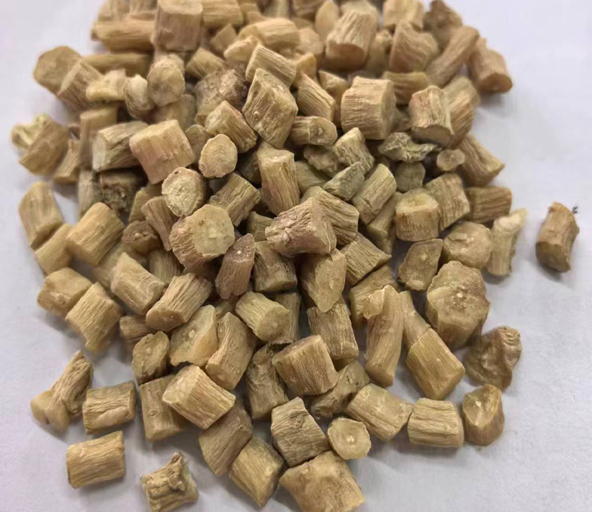
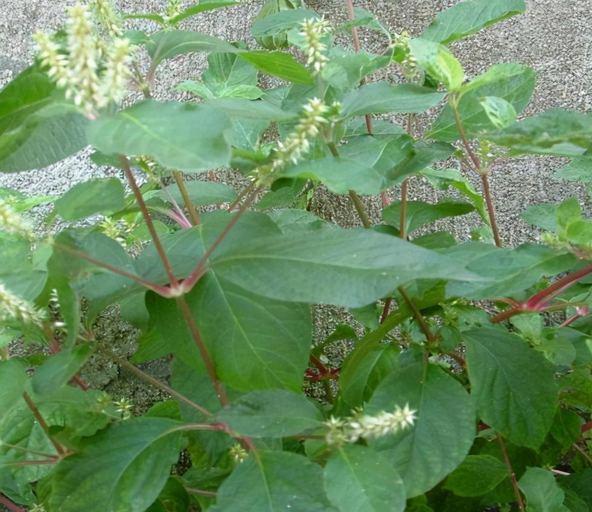
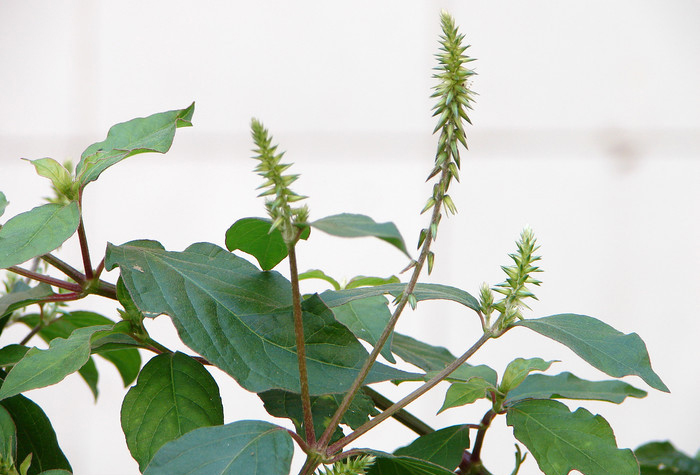
The functions of Achyranthes in traditional Chinese medicine include dispelling blood stasis and promoting meridian circulation, nourishing the liver and kidneys, strengthening muscles and bones, diuresis and promoting blood circulation. Used for amenorrhea, dysmenorrhea, lower back and knee pain, muscle weakness, gonorrhea, edema, headache, dizziness, toothache, mouth sores, vomiting blood, and bleeding.

Achyranthes Root (Niu Xi) Extract Powder 10:1, 20:1, 50:1 TLC
【Other names】: Niu Xi, Radix Achyranthis Bidentatae, Radix Achyranthes Bidentatae, Twotooth Achyranthes Root, Huai Niu Xi
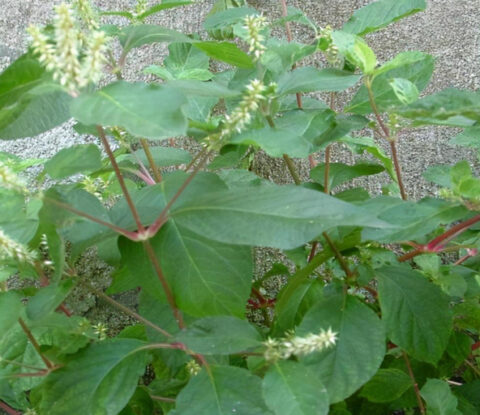
【Botanical source】: Achyranthes bidentata Bl
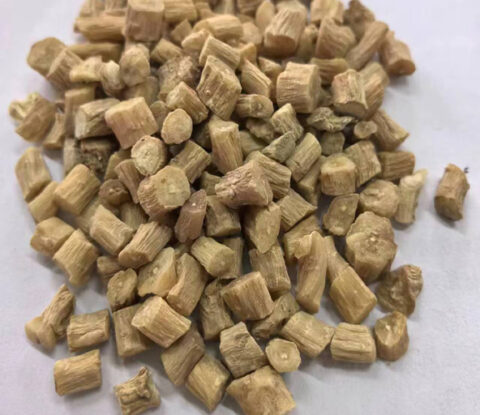
【Part used】: Dried roots of Achyranthes bidentata Bl, a plant in the Amaranthaceae family. When the stems and leaves wither in winter, dig them up, remove the roots and sediment, tie them into small bundles, sun dry until they are dry and wrinkled, cut the top evenly, and dry them in the sun.
【Specification】: 10:1, 20:1, 50:1 TLC
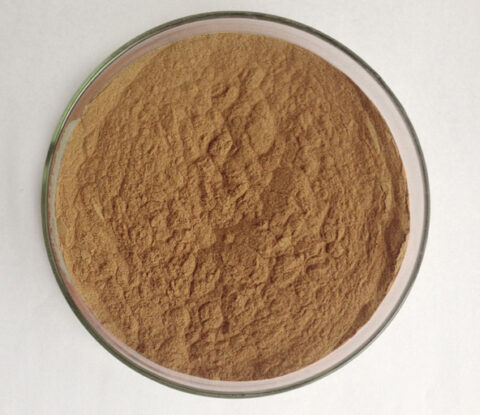
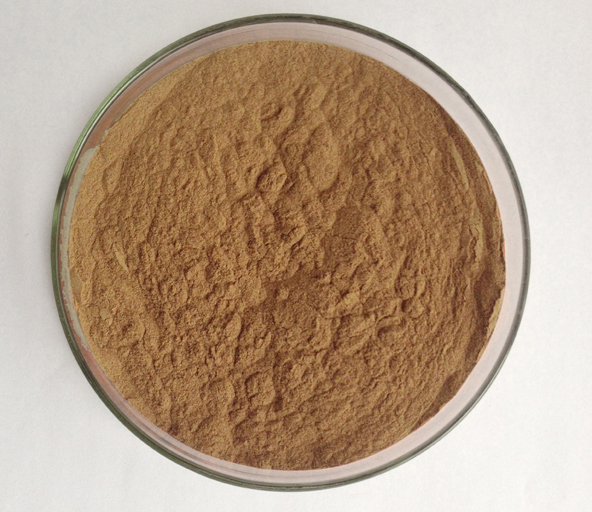
【Appearance】: Brownish yellow fine powder
【Particle size】: 95% pass 80 mesh size
Achyranthes Root (Niu Xi) Extract Powder Production Flowchart
Achyranthes Root (Niu Xi) raw materials – natural air drying–Coarse powder(40 mesh) -Low temperature water extraction – 1st Reflux Extraction(10 times water,2 Hrs) – 2nd Reflux Extraction8 times water,1.5 Hrs) – 3rd Reflux Extraction(6 times water,1 Hrs) – Extraction Solution-combine&Filtrate-Concentrate-Extractum-spray drying – screening – packaging – detection of physical and chemical indicators – warehousing
Specification Sheet of Achyranthes Root (Niu Xi) Extract Powder
| Product name: | Niu Xi Extract | ||
| Specification: | 10:1 TLC | ||
| Part used: | Dried roots of Achyranthes bidentata Bl | ||
| Solvent used: | Hot water | ||
| Process: | Raw materials crushed, extracted, concentrated and spray-dried to powder | ||
| Non GMO according to regulation (EC) 1829/2003 and 1830/2003 or United States requirements. Non allergen according to Directive 2007/68 amending Annex IIIa to Directive 2000/13/EC and US Food allergen labelling and consumer protection act 2004. | |||
| Heavy Metals: | |||
| Lead: | NMT 3ppm | Cadmium: | NMT 1ppm |
| Arsenic: | NMT 2ppm | Mercury: | NMT 1ppm |
| Residual solvents: | Comply to USP | ||
| Pesticides residues: | Conform to Regulation USP<561> | ||
| Microbiology: | |||
| Total plate count: | 10000cfu/g Max | Yeasts and molds: | 1000cfu/g Max |
| E.coli: | Not detected in (g)10 | Salmonella spp.: | Not detected in (g)25 |
| Staphylococcus aureus: | Not detected in (g)10 | Clostridium spp.: | Not Present in 0.1 g of food |
| Organoleptic quality | Method | Specifications | |
| Aspect: | Visual : ( CQ-MO-148) | Powder | |
| Color: | Visual : ( CQ-MO-148) | Brownish | |
| Flavor: | Sensory: (CQ-MO-148) | Characteristic | |
| Analytical quality | Method | Specifications | |
| Identification: | TLC | Conform | |
| Loss on drying: | USP <731> | < 10% | |
| Bulk density: | USP <616> Method I | 40 – 60 g/100mL | |
| Particle size: | Analytical sieving || USP <786> | 100% through 80meshes | |
| Packaging suitable for foodstuff. | |||
Extended Reading
Achyranthes Root (Niu Xi) Function and Efficacy Recorded in TCM
Achyranthes bidentata is an important medicinal herb commonly used in clinical Chinese medicine. Depending on the processing method and variety, its function and emphasis also vary significantly. Overall, it has the effects of promoting blood circulation, nourishing the liver and kidneys, strengthening muscles and bones, promoting diuresis and promoting diuresis, and inducing the flow of fire (blood, medicine).
In clinical practice, there are mainly two types:
Huaixi Achyranthes: Mainly produced in Jiaozuo, Henan Province (ancient Huaiqing Prefecture), it is known for nourishing the liver and kidneys, strengthening muscles and bones.
Sichuan Achyranthes: Mainly produced in Sichuan, Yunnan and other regions, it is known for promoting blood circulation, removing blood stasis, and benefiting joints.
1. Promote blood circulation, remove blood stasis, unblock meridians and relieve pain
Function: It can unblock blood vessels, guide blood stasis to flow downwards, and is a commonly used medicine for treating gynecological and orthopedic blood stasis syndrome.
Application:
Gynecology: Menstrual disorders, dysmenorrhea, amenorrhea, postpartum abdominal pain, etc. caused by blood stasis obstruction. Commonly used in combination with Angelica sinensis, peach kernels, and saffron.
Orthopedics/trauma: bruises, swelling and pain. Commonly used in combination with frankincense, myrrh, and tonics.
Internal medicine: Headache, abdominal pain, and joint pain caused by blood stasis.
2. Nourish the liver and kidneys, strengthen muscles and bones
Function: Mainly used for cultivating Achyranthes bidentata. The liver governs the tendons, and the kidneys govern the bones. Achyranthes can nourish the liver and kidneys, thereby strengthening the waist, knees, and bones.
Application:
Lower back and knee soreness, muscle and bone weakness: especially suitable for lower back and leg soreness and weakness caused by liver and kidney deficiency. Commonly used in combination with Eucommia ulmoides, Mulberry Parasite, and Rehmannia glutinosa (such as the famous formula Duhuo Parasite Decoction).
Rheumatoid arthritis: It is more effective for lumbar and knee joint arthritis with liver and kidney deficiency.
3. Promote diuresis and relieve stranguria
Function: Guide water to flow downwards and facilitate urination.
Application:
Used for urinary discomfort, astringency and pain (such as heat and stone), often combined with Plantago asiatica, Quercus acutissima, talc, etc.
4.Guide pathogenic fire downward (blood, medicine)
This is a very unique and crucial function of Achyranthes, which can be understood as a “guiding” or “descending” force.
Leading blood flow downwards: treating diseases caused by the upwelling of blood heat or the reversal of qi and blood.
Application: Upper heat syndrome such as vomiting blood, bleeding (nosebleeds), gum swelling and pain, mouth and tongue sores, etc. Can alleviate congestion and inflammation in the head and face.
Lead the fire downward: Treat inflammation caused by deficiency fire.
Application: For toothache, sore throat, and oral ulcers caused by yin deficiency and excessive fire, it is often combined with Rehmannia glutinosa, plaster, and Anemarrhena (such as the famous formula Yunu decoction).
Guiding the downward movement of drugs: As a form of “drug guidance”, it guides the medicinal power of other drugs directly to the lower body (waist, knees, legs, feet), enhancing the therapeutic effect of prescriptions for lower limb diseases.
Modern Pharmacological Effects of Achyranthes Root (Niu Xi)
The modern pharmacological research on Achyranthes bidentata is very rich, providing scientific evidence and in-depth explanations for its traditional Chinese medicine efficacy. Its main pharmacological effects can be summarized as follows:
1. Effects on the skeletal and joint systems
Promoting osteogenesis and preventing osteoporosis: The active ingredients of Achyranthes bidentata, such as steroids, especially Achyranthes bidentata steroids, can significantly promote osteoblast proliferation, differentiation, and mineralization, while inhibiting osteoclast activity. This can increase bone density, improve bone microstructure, and has clear potential for preventing and treating osteoporosis, especially postmenopausal osteoporosis.
Anti arthritis and cartilage protection: Achyranthes extract has significant anti-inflammatory effects, can inhibit synovitis and cartilage degradation in arthritis models, and has therapeutic effects on osteoarthritis and rheumatoid arthritis.
Promoting fracture healing: Accelerating fracture healing by improving local blood circulation and promoting callus formation.
2. The role of circulation and blood system
Improving blood rheology: It can reduce blood viscosity, inhibit platelet aggregation, and prevent thrombosis, thereby improving microcirculation.
Dilation of blood vessels: It has a vasodilatory effect, helping to reduce peripheral resistance and improve tissue blood supply.
Promoting soft tissue repair: Its blood activating effect helps eliminate edema and blood stasis, and promotes soft tissue repair after traumatic injury.
3. Anti inflammatory and immune regulatory effects
Anti inflammatory: By inhibiting the production of cyclooxygenase (COX), lipoxygenase (LOX), and key inflammatory factors such as TNF – α, IL-1 β, IL-6, it exerts a wide range of anti-inflammatory effects, which is the basis for its treatment of arthritis and various inflammations.
Immune regulation: It has a bidirectional regulatory effect on the immune system. It can enhance the phagocytic function of macrophages, improve the non-specific immunity of the body (reflecting the “tonifying” side), and inhibit excessive immune reactions and inflammation (reflecting the “clearing heat” side).
4. Effects on the reproductive and endocrine systems
Regulating uterine smooth muscle: Total saponins of Achyranthes bidentata have a selective excitatory effect on uterine smooth muscle, which can enhance uterine contraction. This provides a basis for its use in promoting menstruation, assisting childbirth, and facilitating postpartum blood stasis discharge. (This is also the core pharmacological reason for the prohibition of pregnant women)
Estrogen like effects: Some components have weak estrogen like activity and may participate in regulating endocrine function, which has a synergistic effect on relieving menopausal symptoms and preventing osteoporosis.
Protecting the kidneys: Studies have shown that it has the effect of reducing kidney fibrosis and improving kidney function, which is partially related to the traditional “promoting diuresis and promoting diuresis” effect.
5. Other pharmacological effects
Analgesic effect: It has an inhibitory effect on chemical and thermal pain.
Neuroprotection: Some studies suggest that it has a protective effect on neurons and may be beneficial for neurological diseases.
Antitumor: Some in vitro and animal experiments have shown that its extract has inhibitory activity against certain cancer cells, but it is still in the research stage.