
Alfalfa Extract Powder 10:1, 20:1, 50:1 TLC
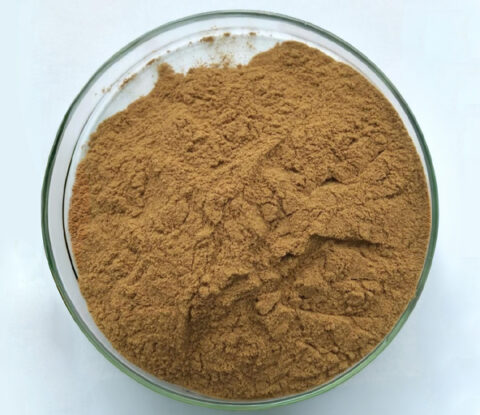
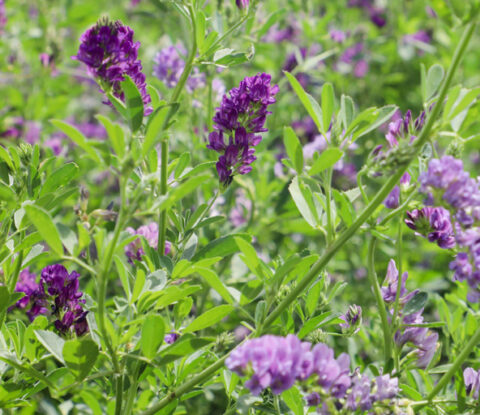


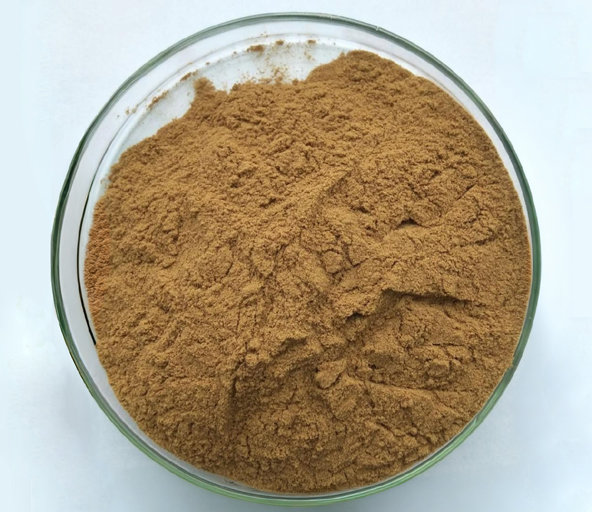
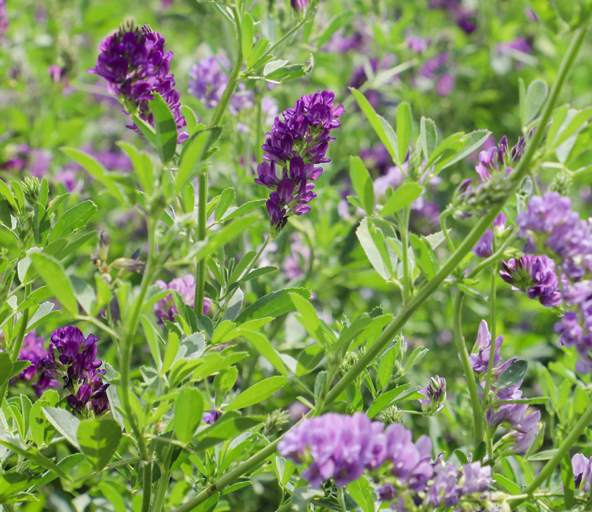
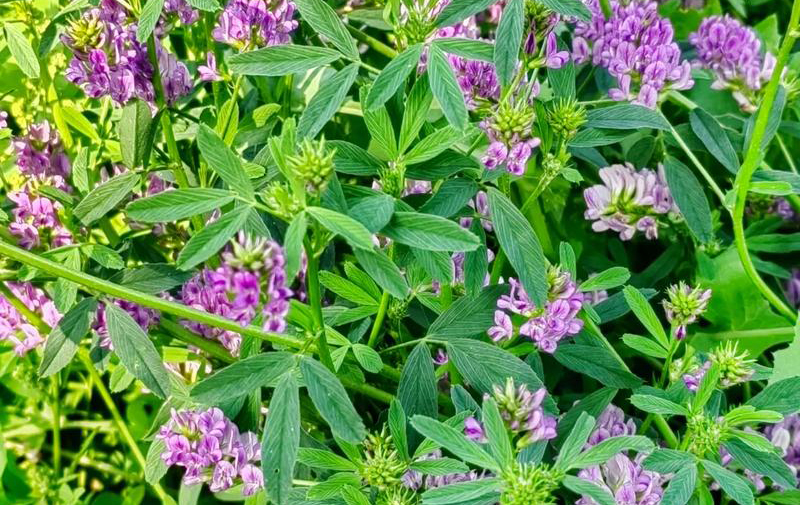
Alfalfa extract is a plant extract prepared from the whole plant of Medicago sativa L., a leguminous plant. It mainly contains active ingredients such as flavonoids, triterpenoids, alkaloids, coumarins, proteins, and polysaccharides. This extract has biological activities such as antibacterial, antioxidant, immune regulation, and cholesterol lowering. As a food grade raw material, it is widely used in the fields of food additives, health ingredients, and pharmaceuticals, and quality testing is carried out using thin-layer chromatography (TLC).

Alfalfa Extract Powder 10:1, 20:1, 50:1 TLC
【Botanical source】: Medicago sativa L.
【Part used】: Whole herb
【Specification】: 10:1, 20:1, 50:1 TLC
【Extraction solvents】: Water
【Appearance】: Brownish fine powder
【Particle size】: 95% pass 80 mesh size
【Main ingredients】: Alfalfa extract mainly contains saponins, flavonoids (such as alfalfa extract), isoflavones, and various vitamins. Its saponins help regulate blood lipids, flavonoids have antioxidant effects, and isoflavones exhibit phytoestrogenic activity. In addition, it also contains components such as coumarin and plant sterols, which together support its traditional applications in antioxidant and metabolic regulation.
【Storage conditions】:Store at room temperature in a sealed manner, away from light, and in a ventilated, cool, and dry environment.
【Shelf life】: 24 months from the production date
Alfalfa Extract Powder Production Flowchart
Alfalfa raw materials -Coarse powder(40 mesh) -Low temperature water extraction – 1st Reflux Extraction(10 times water,2 Hrs) – 2nd Reflux Extraction8 times water,1.5 Hrs) – 3rd Reflux Extraction(6 times water,1 Hrs) – Extraction Solution-combine&Filtrate-Concentrate-Extractum-spray drying – screening – packaging – detection of physical and chemical indicators – warehousing
Specification Sheet of Alfalfa Extract Powder
| Product name: | Alfalfa Extract | ||
| Specification: | 10:1 TLC | ||
| Part used: | Whole herb of Medicago sativa L. | ||
| Solvent used: | Water | ||
| Process: | Raw materials crushed, extracted, concentrated and spray-dried to powder | ||
| Non GMO according to regulation (EC) 1829/2003 and 1830/2003 or United States requirements. Non allergen according to Directive 2007/68 amending Annex IIIa to Directive 2000/13/EC and US Food allergen labelling and consumer protection act 2004. | |||
| Heavy Metals: | |||
| Lead: | NMT 3ppm | Cadmium: | NMT 1ppm |
| Arsenic: | NMT 2ppm | Mercury: | NMT 1ppm |
| Residual solvents: | Comply to USP | ||
| Pesticides residues: | Conform to Regulation USP<561> | ||
| Microbiology: | |||
| Total plate count: | 10000cfu/g Max | Yeasts and molds: | 1000cfu/g Max |
| E.coli: | Not detected in (g)10 | Salmonella spp.: | Not detected in (g)25 |
| Staphylococcus aureus: | Not detected in (g)10 | Clostridium spp.: | Not Present in 0.1 g of food |
| Organoleptic quality | Method | Specifications | |
| Aspect: | Visual : ( CQ-MO-148) | Powder | |
| Color: | Visual : ( CQ-MO-148) | Brownish yellow | |
| Flavor: | Sensory: (CQ-MO-148) | Characteristic | |
| Analytical quality | Method | Specifications | |
| Identification: | TLC | Conform | |
| Loss on drying: | USP <731> | < 10% | |
| Bulk density: | USP <616> Method I | 40 – 60 g/100mL | |
| Particle size: | Analytical sieving || USP <786> | 100% through 80meshes | |
| Packaging suitable for foodstuff. | |||
Extended Reading
Chemical Components and Modern Pharmacological Effects of Alfalfa (Medicago sativa)
Key Chemical Components:
Alfalfa contains a diverse array of bioactive compounds, including saponins (e.g., medicagenic acid), flavonoids (tricin, apigenin), coumarins (coumestrol), isoflavones (formononetin), alkaloids (L-canavanine), vitamins (A, K, C), minerals, and dietary fiber.
Modern Pharmacological Effects:
- Hypolipidemic & Cardioprotective: Saponins and fibers reduce cholesterol absorption and improve lipid profiles.
- Antioxidant: Flavonoids and phenolics neutralize free radicals, mitigating oxidative stress.
- Phytoestrogenic Activity: Coumestrol and isoflavones exert estrogen-like effects, potentially aiding menopausal symptoms and bone health.
- Anti-inflammatory: Modulates inflammatory pathways (e.g., NF-κB) and cytokine production.
- Hepatoprotective: Attenuates liver injury via antioxidant and anti-inflammatory mechanisms.
- Antidiabetic: Improves insulin sensitivity and glycemic control, partly through fiber and antioxidant effects.
- Diuretic & Detoxifying: Promotes renal excretion of toxins, supported by historical use.
References:
- Bora, K. S., & Sharma, A. (2011). Phytochemical and pharmacological potential of Medicago sativa: A review. Pharmaceutical Biology.
- Gray, A. M., & Flatt, P. R. (1997). Pancreatic and extra-pancreatic effects of the traditional anti-diabetic plant, Medicago sativa. The Journal of Nutrition.
- Bouabdelli, S., et al. (2023). Medicago sativa: A comprehensive review on its phytochemical and pharmacological profile. South African Journal of Botany.
- Święciło, M., & Ziaja-Sołtys, M. (2022). Biologically active compounds in alfalfa. Biomolecules.
Note: This summary is for informational purposes. It may interact with medications and is contraindicated in certain conditions. Consult a healthcare professional before therapeutic use, particularly regarding its estrogenic activity.