
Deadly Nightshade (Atropa Belladonna) Extract Powder 10:1, 20:1, 50:1 TLC
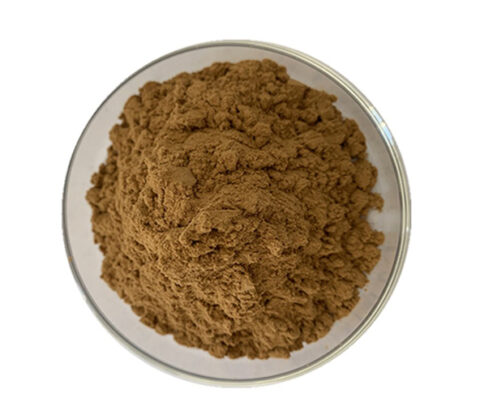
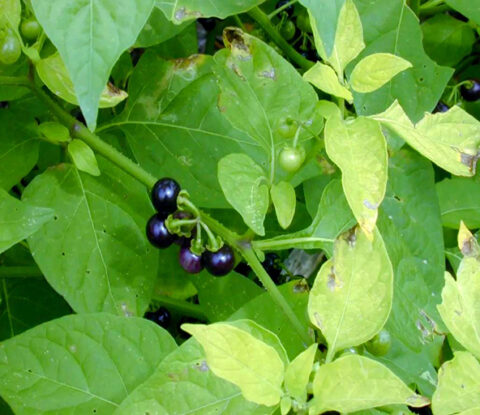


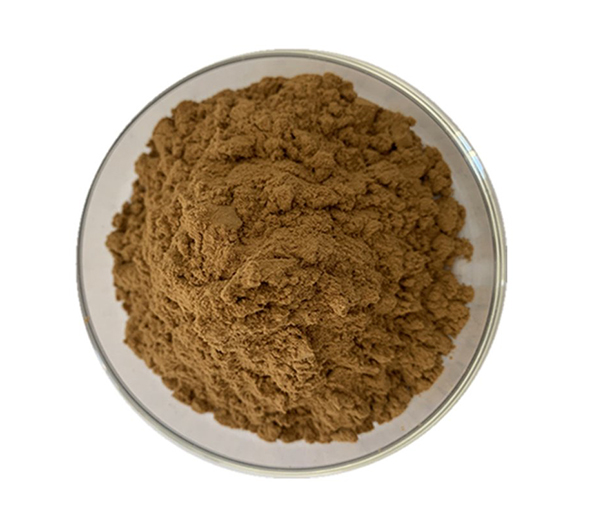
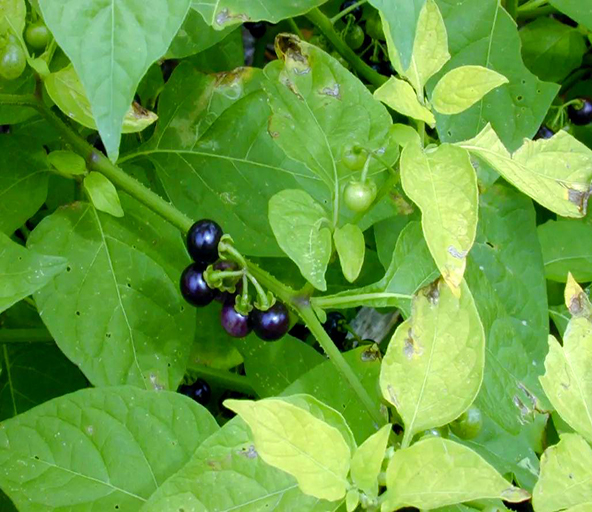
Belladonna extract can act as an anticholinergic drug, relieve smooth muscle spasms, and inhibit glandular secretion. Used for gastric and duodenal ulcers, gastrointestinal, renal, biliary colic, etc.

Deadly Nightshade (Atropa Belladonna) Extract Powder 10:1, 20:1, 50:1 TLC
【Botanical source】: Atropa belladonna L.
【Part used】: Dry whole herb
【Specification】: 10:1 20:1 50:1TLC
【Appearance】: Brownish fine powder
【Extraction solvents】: Water
【Particle size】: 95% pass 80 mesh size
【Main ingredients】: The main ingredient is belladonna alkaloids (containing scopolamine, molecular formula: C17H23NO3, molecular weight: 289.36). This extract is an anticholinergic drug that can relieve smooth muscle spasms and inhibit glandular secretion. It is clinically used for the treatment of diseases such as gastric and duodenal ulcers, gastrointestinal colic, and biliary colic.

Deadly Nightshade (Atropa Belladonna) Extract Powder Production Flowchart
Atropa Belladonna raw materials -Coarse powder(40 mesh) -Low temperature water extraction – 1st Reflux Extraction(10 times water,2 Hrs) – 2nd Reflux Extraction8 times water,1.5 Hrs) – 3rd Reflux Extraction(6 times water,1 Hrs) – Extraction Solution-combine&Filtrate-Concentrate-Extractum-spray drying – screening – packaging – detection of physical and chemical indicators – warehousing
Specification Sheet of Deadly Nightshade (Atropa Belladonna) Extract Powder
| Product name: | Deadly Nightshade Extract | ||
| Specification: | 10:1 TLC | ||
| Part used: | Dry whole herb of Atropa belladonna L. | ||
| Solvent used: | Water | ||
| Process: | Raw materials crushed, extracted, concentrated and spray-dried to powder | ||
| Non GMO according to regulation (EC) 1829/2003 and 1830/2003 or United States requirements. Non allergen according to Directive 2007/68 amending Annex IIIa to Directive 2000/13/EC and US Food allergen labelling and consumer protection act 2004. | |||
| Heavy Metals: | |||
| Lead: | NMT 3ppm | Cadmium: | NMT 1ppm |
| Arsenic: | NMT 2ppm | Mercury: | NMT 1ppm |
| Residual solvents: | Comply to USP | ||
| Pesticides residues: | Conform to Regulation USP<561> | ||
| Microbiology: | |||
| Total plate count: | 10000cfu/g Max | Yeasts and molds: | 1000cfu/g Max |
| E.coli: | Not detected in (g)10 | Salmonella spp.: | Not detected in (g)25 |
| Staphylococcus aureus: | Not detected in (g)10 | Clostridium spp.: | Not Present in 0.1 g of food |
| Organoleptic quality | Method | Specifications | |
| Aspect: | Visual : ( CQ-MO-148) | Powder | |
| Color: | Visual : ( CQ-MO-148) | Brownish yellow | |
| Flavor: | Sensory: (CQ-MO-148) | Characteristic | |
| Analytical quality | Method | Specifications | |
| Identification: | TLC | Conform | |
| Loss on drying: | USP <731> | < 10% | |
| Bulk density: | USP <616> Method I | 40 – 60 g/100mL | |
| Particle size: | Analytical sieving || USP <786> | 100% through 80meshes | |
| Packaging suitable for foodstuff. | |||
Extended Reading
Summary of Modern Pharmacological Research on Atropa belladonna Extract
Atropa belladonna (deadly nightshade) is a tropane alkaloid-rich plant, long used in traditional medicine and now the source of important pharmaceutical compounds. Modern pharmacological research focuses on isolating, characterizing, and synthesizing its active constituents—primarily (-)-hyoscyamine, which racemizes to atropine, and scopolamine (hyoscine)—and investigating their mechanisms and therapeutic applications.
Key Pharmacological Actions & Research Areas:
- Anticholinergic/Muscarinic Antagonist Activity:The primary mechanism. Tropane alkaloids competitively antagonize acetylcholine at muscarinic (M1-M5) receptors in the peripheral and central nervous systems. This underpins most therapeutic uses:
- Antispasmodic:Relaxes smooth muscle in the gastrointestinal, biliary, and urinary tracts. Used to treat irritable bowel syndrome (IBS), colic, and bladder spasms.
- Antisialagogue:Reduces secretions (saliva, bronchial, gastric) pre-anesthesia and in conditions like chronic drooling.
- Mydriatic and Cycloplegic:Atropine causes pupil dilation and paralysis of accommodation, used in ophthalmology.
- Cardiac Effects:At low doses, can transiently decrease heart rate (vagal stimulation); at higher doses, causes tachycardia via blockade of vagal effects on the SA node.
- Central Nervous System (CNS) Effects:Actions differ between alkaloids.
- Scopolamine:Has greater blood-brain barrier penetration and is a potent anti-emetic for motion sickness and postoperative nausea (via central muscarinic blockade in vestibular pathways and vomiting center). It also induces sedation and amnesia.
- Atropine:In therapeutic doses, can cause CNS stimulation (restlessness, agitation); at toxic doses, leads to delirium, hallucinations, and coma. Research explores scopolamine’s role in depression models (as a rapid-acting antidepressant probe via influence on glutamatergic/cholinergic systems) and cognitive impairment.
- Analgesic & Anti-Inflammatory Potential:Some contemporary studies suggest extracts or alkaloids may modulate pain pathways (e.g., visceral pain) and exhibit anti-inflammatory properties beyond anticholinergic effects, possibly through interaction with other receptor systems, though this is less defined.
- Antimicrobial and Antiviral Activity:In vitro studies report that belladonna extracts or alkaloids may have activity against certain bacteria, fungi, and viruses. The clinical relevance is uncertain and not a primary therapeutic use.
- Novel Delivery Systems & Synthetic Derivatives:Modern research aims to improve pharmacokinetics and reduce side effects. This includes:
- Transdermal patchesfor scopolamine (motion sickness).
- Controlled-release formulations.
- Development of quaternary ammonium derivatives(e.g., ipratropium bromide, tiotropium bromide) for inhaled treatment of COPD and asthma. These are poorly absorbed, confining action to the lungs and minimizing systemic side effects.
Toxicity & Safety Research: A major focus. Belladonna is highly toxic. Poisoning causes classic anticholinergic toxidrome: fever, tachycardia, hypertension, dry skin/mouth, urinary retention, ileus, mydriasis, agitation, hallucinations, seizures. Modern analytical methods (HPLC-MS/MS) allow precise alkaloid quantification. Research emphasizes the narrow therapeutic index, the need for standardized extracts in homeopathy/phytotherapy, and the development of specific treatments (e.g., physostigmine for CNS symptoms).
Conclusion: Modern pharmacological research on Atropa belladonna has evolved from crude extracts to the isolation and optimization of its potent tropane alkaloids. While the core anticholinergic pharmacology is well-established, current work focuses on refined drug delivery, novel synthetic derivatives for targeted therapy (especially in respiratory diseases), and exploring central effects for neurological conditions. Toxicity remains a critical concern, driving research into safer formulations and precise dosing.
References
- Grynkiewicz, G., & Gadzikowska, M. (2008). Tropane alkaloids as medicinally useful natural products and their synthetic derivatives as new drugs. Pharmacological Reports, *60*(4), 439-463.
- Krenzelok, E. P. (2010). Aspects of Datura poisoning and treatment. Clinical Toxicology, *48*(2), 104-110.
- Lee, M. R. (2007). Solanaceae IV: Atropa belladonna, deadly nightshade. Journal of the Royal College of Physicians of Edinburgh, *37*(1), 77-84.
- National Institutes of Health (NIH). (2022). Atropine. In PubChem Compound Database. Retrieved from https://pubchem.ncbi.nlm.nih.gov/compound/Atropine
- Peredery, O., & Persinger, M. A. (2004). Herbal treatment following post-seizure induction in rat by lithium pilocarpine: Scutellaria lateriflora (Skullcap), Gelsemium sempervirens (Gelsemium) and Datura stramonium (Jimson Weed) may prevent development of spontaneous seizures. Phytotherapy Research, *18*(9), 700-705.
- Riederer, P., Laux, G., & Nagatsu, T. (Eds.). (2021). NeuroPsychopharmacotherapy. Springer International Publishing. (Chapter on Anticholinergic Drugs).
- Wichtl, M. (Ed.). (2004). Herbal Drugs and Phytopharmaceuticals: A Handbook for Practice on a Scientific Basis(3rd ed.). Medpharm Scientific Publishers. (Monograph on Belladonnae folium/herba).
- Zanolari, B., Guilet, D., Marston, A., Queiroz, E. F., de Queiroz Paulo, M., & Hostettmann, K. (2003). Tropane alkaloids from the bark of Erythroxylum vacciniifolium. Journal of Natural Products, *66*(4), 497-502.
Note: This summary is for informational purposes. It may interact with medications and is contraindicated in certain conditions. Consult a healthcare professional before therapeutic use, particularly regarding its estrogenic activity.