
Immature Bitter Orange (Zhi Shi) Extract Powder 10:1, 20:1, 50:1 TLC


The functions of Immature Bitter Orange in traditional Chinese medicine include breaking down qi and eliminating accumulation, resolving phlegm and dispersing phlegm. Used for internal stagnation, swelling and pain, severe diarrhea, constipation, phlegm stagnation and qi obstruction, chest obstruction, chest nodules, and organ prolapse.

Immature Bitter Orange (Zhi Shi) Extract Powder 10:1, 20:1, 50:1 TLC
【Other names】: Zhi Shi, Fructus Aurantii Immaturus, Immature Bitter Orange
【Botanical source】: Citrus aurantium L. or Citrus sinensis Osbeck
【Part used】: Dried young fruits of the Rutaceae plant Citrus aurantium L and its cultivated varieties or sweet orange Citrus sinensis Osbeck. Collect fallen fruits from May to June, remove impurities, cut them in half from the middle, and dry them in the sun or at low temperatures. The smaller ones can be directly dried in the sun or at low temperatures.
【Specification】: 10:1, 20:1, 50:1 TLC
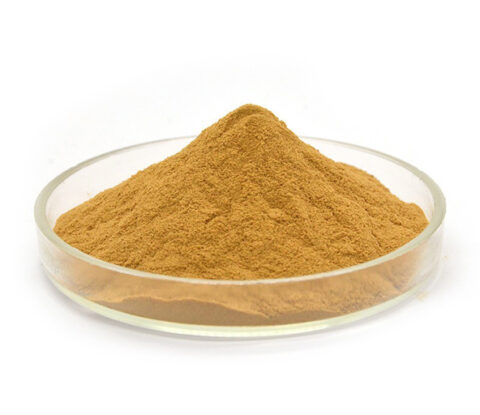
【Appearance】: Brownish yellow fine powder
【Particle size】: 95% pass 80 mesh size

Immature Bitter Orange (Zhi Shi) Extract Powder Production Flowchart
Immature Bitter Orange (Zhi Shi) raw materials – natural air drying–Coarse powder(40 mesh) -Low temperature water extraction – 1st Reflux Extraction(10 times water,2 Hrs) – 2nd Reflux Extraction8 times water,1.5 Hrs) – 3rd Reflux Extraction(6 times water,1 Hrs) – Extraction Solution-combine&Filtrate-Concentrate-Extractum-spray drying – screening – packaging – detection of physical and chemical indicators – warehousing
Specification Sheet of Immature Bitter Orange (Zhi Shi) Extract Powder
| Product name: | Zhi Shi Extract | ||
| Specification: | 10:1 TLC | ||
| Part used: | Dried young fruits of Citrus aurantium L | ||
| Solvent used: | Hot water | ||
| Process: | Raw materials crushed, extracted, concentrated and spray-dried to powder | ||
| Non GMO according to regulation (EC) 1829/2003 and 1830/2003 or United States requirements. Non allergen according to Directive 2007/68 amending Annex IIIa to Directive 2000/13/EC and US Food allergen labelling and consumer protection act 2004. | |||
| Heavy Metals: | |||
| Lead: | NMT 3ppm | Cadmium: | NMT 1ppm |
| Arsenic: | NMT 2ppm | Mercury: | NMT 1ppm |
| Residual solvents: | Comply to USP | ||
| Pesticides residues: | Conform to Regulation USP<561> | ||
| Microbiology: | |||
| Total plate count: | 10000cfu/g Max | Yeasts and molds: | 1000cfu/g Max |
| E.coli: | Not detected in (g)10 | Salmonella spp.: | Not detected in (g)25 |
| Staphylococcus aureus: | Not detected in (g)10 | Clostridium spp.: | Not Present in 0.1 g of food |
| Organoleptic quality | Method | Specifications | |
| Aspect: | Visual : ( CQ-MO-148) | Powder | |
| Color: | Visual : ( CQ-MO-148) | Brownish | |
| Flavor: | Sensory: (CQ-MO-148) | Characteristic | |
| Analytical quality | Method | Specifications | |
| Identification: | TLC | Conform | |
| Loss on drying: | USP <731> | < 10% | |
| Bulk density: | USP <616> Method I | 40 – 60 g/100mL | |
| Particle size: | Analytical sieving || USP <786> | 100% through 80meshes | |
| Packaging suitable for foodstuff. | |||
Extended Reading
Immature Bitter Orange (Zhi Shi) Function and Efficacy Recorded in TCM
Citrus aurantium is a very important traditional Chinese medicine medicine for “breaking qi and eliminating accumulation”, with strong medicinal properties and powerful effects. Unlike Xiang Fu’s “soothing the liver and regulating qi”, Zhi Shi focuses more on “breaking qi and guiding stagnation”, that is, breaking through serious blockages. Citrus aurantium has a bitter, pungent, and sour taste, with a slight chill. Return to the spleen, stomach, and large intestine meridians. The core function is to break down qi, eliminate accumulation, and disperse phlegm and phlegm.
1.Breaking Qi and Eliminating Accumulation – Treating Gastrointestinal Stagnation
Regarding the problem: severe gastrointestinal obstruction caused by food accumulation, heat accumulation, cold coagulation, etc.
Typical manifestations:
Food accumulation: bloating and pain, refusal to press, belching and sourness, and lack of appetite.
Hot constipation: abdominal fullness, bloating and pain, dry and blocked stools (even high fever and dizziness).
Damp heat accumulation: diarrhea, dysentery with sudden and severe symptoms, or poor bowel movements.
Application: It can strongly promote qi circulation and eliminate stagnation. It is often combined with rhubarb, magnolia, and other herbs to form a powerful laxative, such as the famous “Treatise on Cold Damage” Dachengqi Decoction (rhubarb, saltpeter, magnolia, and Fructus Aurantii), which is used for Yangming Fu syndrome (heat stagnation and constipation). To treat damp heat dysentery, use Huanglian, Dahuang, etc., such as Zhishi Daozhi Wan.
2. Resolving phlegm and dispersing phlegm – treating phlegm obstruction and qi stagnation
Regarding the issue: Phlegm dampness and stagnant water retention in the chest and epigastric region, resulting in blocked qi flow.
Typical manifestations:
Chest obstruction: chest tightness and heartache (such as angina pectoris in coronary heart disease), often caused by phlegm stagnation obstructing chest yang.
Subcardiac fullness: The epigastric region feels blocked, bloated, and uncomfortable, but it feels soft and painless when pressed.
Application: It can dissolve phlegm, relieve diarrhea, widen the chest, and regulate qi. To treat chest obstruction, it is often used together with Xiebai, Guizhi, and Gualou, such as Zhishi Xiebai Guizhi Tang. To treat the fullness of the lower part of the heart, it is often combined with Atractylodes macrocephala to form the “Jin Kui Yao Lue” Zhi Zhu Tang (mainly for digestion) or Zhi Zhu Wan (a pill for strengthening the spleen and eliminating the skin).
3.Organ prolapse and gastric dilation
Unique application: Utilizing its powerful properties of “contraction” and “elevation” (when qi flows, stagnation occurs, and when stagnation occurs, organs are reset), it can treat gastric prolapse, uterine prolapse, prolapse, and other conditions caused by qi sinking and qi stagnation. But it must be combined with Qi tonifying and Yang promoting medicines, such as Huangqi, Chaihu, Shengma, etc. The representative formula is Bu Zhong Yi Qi Tang and Zhi Shi Tang. Using it alone or overusing it may actually consume more gas and worsen sinking.
Modern Pharmacological Effects of Immature Bitter Orange (Zhi Shi)
The modern pharmacological research of Fructus Aurantii has revealed the scientific connotation of its traditional efficacy of “breaking qi and eliminating accumulation, resolving phlegm and dispersing phlegm”. Its main functions are focused on potent regulation of smooth muscles and its impact on the cardiovascular system. Modern research suggests that the pharmacological effects of Fructus Aurantii are the result of the synergy of multiple components:
Alkaloids: Simulin (sympathetic nervous system activity, strong cardiac pressure) and N-methyltyramine (the main component of strong cardiac pressure) are key active substances.
Flavonoids such as hesperidin and neohesperidin contribute to antioxidant, anti-inflammatory, and smooth muscle regulation.
Volatile oils such as limonene help regulate qi and have antibacterial properties.
The following are the main modern pharmacological effects of Fructus Aurantii:
1. “Bi-directional regulation” and prokinetic effect on gastrointestinal smooth muscle
This is the core mechanism of its “breaking qi and eliminating accumulation” effect.
Excitatory effect (dominant): The active ingredients contained in Fructus Aurantii immaturus, such as sinomenine, N-methyltyramine, and flavonoid glycosides, can significantly excite gastrointestinal smooth muscles, enhance their contraction rhythm, intensity, and tension, thereby accelerating gastrointestinal peristalsis.
Spasmodic effect: In some cases, it also has a relaxing effect on smooth muscles in a spasmodic state, reflecting the bidirectional nature of traditional Chinese medicine in regulating qi, which is “guiding stagnation and slowing spasms”.
Clinical significance: This explains why Fructus Aurantii can effectively treat constipation caused by food accumulation, bloating, and insufficient gastrointestinal motility (obstruction of organs and qi). It is like a ‘gastrointestinal engine’, pushing stagnation downward.
2. Excitatory effect on uterine smooth muscle
Citrus aurantium can significantly enhance the contractility and frequency of uterine smooth muscle.
Clinical significance: This is not only the basis for its traditional use for postpartum stagnation and abdominal pain (requiring compatibility), but also the key scientific reason for its absolute prohibition for pregnant women, as it may lead to miscarriage or premature birth.
3. Strong effects on the cardiovascular system (partially manifested as “breaking qi and promoting stagnation”)
Cardiotonic, vasoconstrictive, and anti shock effects: Fructus Aurantii injection and its active ingredients (sinomenine, N-methyltyramine) have significant cardiotonic, vasoconstrictive, and hypertensive effects.
Mechanism of action: It can excite alpha and beta adrenergic receptors, increase myocardial contractility and cardiac output, contract peripheral blood vessels, and improve blood circulation.
Clinical significance: This provides modern evidence for the use of Fructus Aurantii in the treatment of qi stagnation and blood stasis type chest obstruction (angina pectoris) in traditional Chinese medicine, as well as emergency applications in some shock and hypotension states (requiring a combination of traditional Chinese and Western medicine). Its’ breaking qi ‘can be understood as breaking the’ stagnation ‘state of the cycle.
4. Antioxidant and anti-inflammatory effects
Citrus aurantium is rich in flavonoids and has strong abilities to scavenge free radicals and resist lipid peroxidation.
It can inhibit the release of various inflammatory factors and mediators, and alleviate tissue inflammation damage.
Association: Helps alleviate local inflammatory reactions caused by stagnation and qi stagnation.
5. Regulation of blood lipid and anti atherosclerosis
It can reduce serum total cholesterol, triglyceride and low-density lipoprotein, and has a positive role in preventing and improving atherosclerosis.
Correlation: This confirms its application in the treatment of phlegm stagnation type chest obstruction (coronary heart disease).
6.Antibacterial effect
Its volatile oil and extract have inhibitory effects on various bacteria such as Staphylococcus aureus, Escherichia coli, etc.