
Bitter Orange(Zhi Ke, Zhi Qiao) Extract Powder 10:1, 20:1, 50:1 TLC
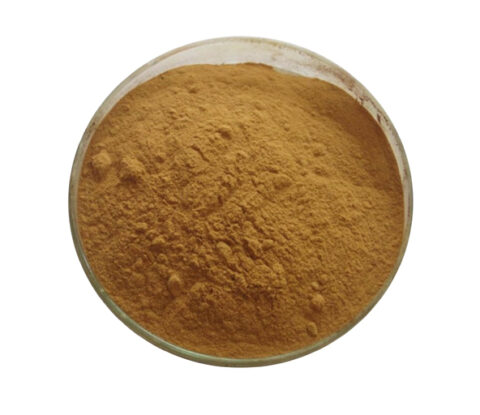


The functions of Fructus Aurantii in traditional Chinese medicine include regulating qi, promoting stagnation, and reducing bloating. Used for chest and rib qi stagnation, bloating and pain, inability to digest food, cessation of phlegm and fluid intake, and organ prolapse.

Bitter Orange(Zhi Ke, Zhi Qiao) Extract Powder 10:1, 20:1, 50:1 TLC
【Other names】: Zhi Ke, Fructus Aurantii, Bitter Orange
【Botanical source】: Citrus aurantium L
【Part used】: It is made by removing the pulp from the nearly ripe fruits of Citrus aurantium L and its cultivated varieties in the Rutaceae family.
【Specification】: 10:1, 20:1, 50:1 TLC
【Appearance】: Brownish yellow fine powder
【Particle size】: 95% pass 80 mesh size

Bitter Orange(Zhi Ke, Zhi Qiao) Extract Powder Production Flowchart
Bitter Orange(Zhi Ke, Zhi Qiao) raw materials – natural air drying–Coarse powder(40 mesh) -Low temperature water extraction – 1st Reflux Extraction(10 times water,2 Hrs) – 2nd Reflux Extraction8 times water,1.5 Hrs) – 3rd Reflux Extraction(6 times water,1 Hrs) – Extraction Solution-combine&Filtrate-Concentrate-Extractum-spray drying – screening – packaging – detection of physical and chemical indicators – warehousing
Specification Sheet of Bitter Orange(Zhi Ke, Zhi Qiao) Extract Powder
| Product name: | Zhi Qiao Extract | ||
| Specification: | 10:1 TLC | ||
| Part used: | Dried fruits of Citrus aurantium L | ||
| Solvent used: | Hot water | ||
| Process: | Raw materials crushed, extracted, concentrated and spray-dried to powder | ||
| Non GMO according to regulation (EC) 1829/2003 and 1830/2003 or United States requirements. Non allergen according to Directive 2007/68 amending Annex IIIa to Directive 2000/13/EC and US Food allergen labelling and consumer protection act 2004. | |||
| Heavy Metals: | |||
| Lead: | NMT 3ppm | Cadmium: | NMT 1ppm |
| Arsenic: | NMT 2ppm | Mercury: | NMT 1ppm |
| Residual solvents: | Comply to USP | ||
| Pesticides residues: | Conform to Regulation USP<561> | ||
| Microbiology: | |||
| Total plate count: | 10000cfu/g Max | Yeasts and molds: | 1000cfu/g Max |
| E.coli: | Not detected in (g)10 | Salmonella spp.: | Not detected in (g)25 |
| Staphylococcus aureus: | Not detected in (g)10 | Clostridium spp.: | Not Present in 0.1 g of food |
| Organoleptic quality | Method | Specifications | |
| Aspect: | Visual : ( CQ-MO-148) | Powder | |
| Color: | Visual : ( CQ-MO-148) | Brownish | |
| Flavor: | Sensory: (CQ-MO-148) | Characteristic | |
| Analytical quality | Method | Specifications | |
| Identification: | TLC | Conform | |
| Loss on drying: | USP <731> | < 10% | |
| Bulk density: | USP <616> Method I | 40 – 60 g/100mL | |
| Particle size: | Analytical sieving || USP <786> | 100% through 80meshes | |
| Packaging suitable for foodstuff. | |||
Extended Reading
Bitter Orange(Zhi Ke, Zhi Qiao) Function and Efficacy Recorded in TCM
Citrus aurantium has a bitter, pungent, and sour taste, with a slight chill. Return to the spleen, stomach, and large intestine meridians. The core skill is to regulate qi with a wide range, promote stagnation and relieve swelling. The key feature is that the medicinal properties are slow and long-lasting, and tend to promote qi circulation. Good at regulating the stagnation of qi in the chest and abdomen, especially in the “broad middle”, that is, clearing the stagnant qi in the middle and upper burner (chest, stomach, epigastric region), with a gentler and wider range of effects than citrus fruits. The level of action of Fructus Aurantii is higher and shallower than that of Fructus Aurantii, focusing more on the level of “qi” rather than the level of “accumulation”.
1.Treating chest and abdominal qi stagnation with broad and moderate Qi regulation
Regarding the issue: mild to moderate qi stagnation, with the disease located in the chest, diaphragm, epigastric region, and abdomen.
Typical manifestations:
Chest and diaphragmatic tightness: feeling blocked in the chest, difficulty breathing, often caused by emotional instability or phlegm gas obstruction.
Abdominal distension and fullness: The stomach and abdomen are bloated, but the pain is not severe, and it is relieved after sighing, belching, or losing breath.
Rib distension pain: Pain related to emotional fullness in the rib area.
Application: Due to its mild medicinal properties, it is a commonly used medicine for treating “fullness” (stuffiness and discomfort). Often used in combination with Platycodon grandiflorus, Bupleurum chinense, Muxiang, Chenpi, etc., for example, in Chaihu Shugan San, Fructus Aurantii can be used to help Chaihu soothe the liver and regulate qi.
2.Promoting stagnation and reducing bloating – treating food accumulation and phlegm obstruction
Regarding the issue: Qi stagnation caused by mild food accumulation or stagnant phlegm and dampness.
Typical manifestations: loss of appetite, indigestion, abdominal distension, and poor bowel movements (but not to the severity of constipation).
Application: Often used in conjunction with spleen tonifying and food reducing herbs, such as Atractylodes macrocephala, hawthorn, and Shenqu, to achieve the effect of “tonifying and dispelling”. The famous “Spleen and Stomach Theory” Zhizhu Pill is a combination of Fructus Aurantii and Atractylodes macrocephala. Atractylodes macrocephala has twice the amount of Fructus Aurantii and focuses on strengthening the spleen, supplemented by promoting qi circulation and eliminating stagnation. It is used to treat food deficiency and abdominal fullness caused by spleen deficiency and qi stagnation.
3.Let the air flow smoothly (auxiliary function)
It has a certain effect on reducing intestinal qi and promoting defecation, but its strength is far less than that of Fructus Aurantii. Used as an adjuvant therapy for Qi stagnation constipation or habitual constipation.
4. The wonderful use of adjuncts in tonics
Due to its ability to regulate qi without being forceful, a small amount of Fructus Aurantii is often added to a large amount of Qi tonifying and blood nourishing medicines (such as ginseng, astragalus, and Rehmannia glutinosa) to play a key role in “tonifying without stagnation”, preventing the nourishing medicines from blocking the spleen and stomach and affecting absorption.
Modern Pharmacological Effects of Bitter Orange(Zhi Ke, Zhi Qiao)
The modern pharmacological research of Fructus Aurantii is highly consistent with its traditional efficacy of regulating qi and promoting stagnation and reducing swelling. Its function is similar to that of Fructus Aurantii in many aspects, but its intensity and emphasis are different, and its overall effect is more “mild” and “extensive”. The following are the main modern pharmacological effects of Fructus Aurantii immaturus:
1. Regulating gastrointestinal motility – the scientific core of “regulating qi and broadening the middle”
Bidirectional regulation of gastrointestinal smooth muscle:
For normal or relaxed gastrointestinal conditions, Fructus Aurantii can gently stimulate smooth muscles, enhance contraction amplitude and frequency, promote gastrointestinal peristalsis and emptying.
For spasmodic gastrointestinal conditions, it also shows antispasmodic effects and can alleviate spasmodic pain in the intestines.
Promote the secretion of digestive juices: It can gently stimulate the secretion of digestive glands, which is helpful for digestion.
Clinical relevance: This perfectly explains the mechanism of its treatment for symptoms such as abdominal distension, overeating, and indigestion, known as “middle burner qi stagnation”. Its effect is milder and more suitable for chronic or mild gastrointestinal dysfunction than that of Fructus Aurantii.
2.Excitatory effect on uterine smooth muscle
Similar to Fructus Aurantii, Fructus Aurantii can also enhance uterine contractility, but its effect is relatively weak.
Clinical Tip: Pregnant women should still use caution, especially in early pregnancy.
The impact on the cardiovascular system – the extension of “qi circulation”
Boosting and cardiotonic effects: Fructus Aurantii also contains ingredients such as sinomenine, which can constrict blood vessels, increase blood pressure, and enhance myocardial contractility, but the strength of its effect is significantly weaker than that of Fructus Aurantii
Improving blood circulation: Its qi circulation effect is reflected at the microscopic level as improving local blood perfusion.
Clinical relevance: This provides partial evidence for its application in the symptoms of chest and abdominal fullness related to “qi stagnation and blood stasis”, but its potential for application in cardiovascular emergencies is not as good as that of Fructus Aurantii.
3.Other important pharmacological effects
Antioxidant and anti-inflammatory effects
Citrus aurantium is rich in flavonoids such as hesperidin and naringin, which have significant abilities to scavenge free radicals and resist lipid peroxidation.
It can inhibit the production of various inflammatory mediators and alleviate inflammatory reactions.
Association: Helps alleviate local tissue inflammation and oxidative damage caused by qi stagnation, in line with the theories of traditional Chinese medicine that “excess qi is fire” and “qi stagnation can cause blood stasis and phlegm coagulation”.
Regulation of blood lipid and anti atherosclerosis
It can reduce serum total cholesterol, triglycerides, and low-density lipoprotein levels, and has a protective effect on blood vessels.
Association: Support its compatibility application in the treatment of phlegm dampness or qi stagnation type cardiovascular and cerebrovascular diseases.
Antibacterial effect
Its volatile oil and extract have a certain inhibitory effect on various intestinal pathogenic bacteria, such as Staphylococcus aureus and Shigella.