
Black Garlic Extract Powder 10:1, 20:1, 50:1 TLC
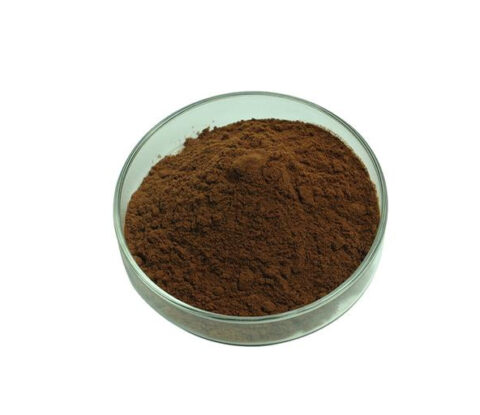
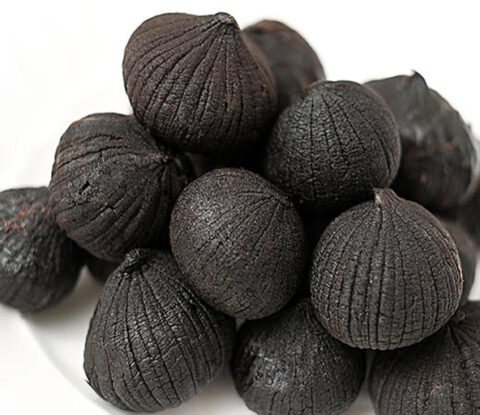


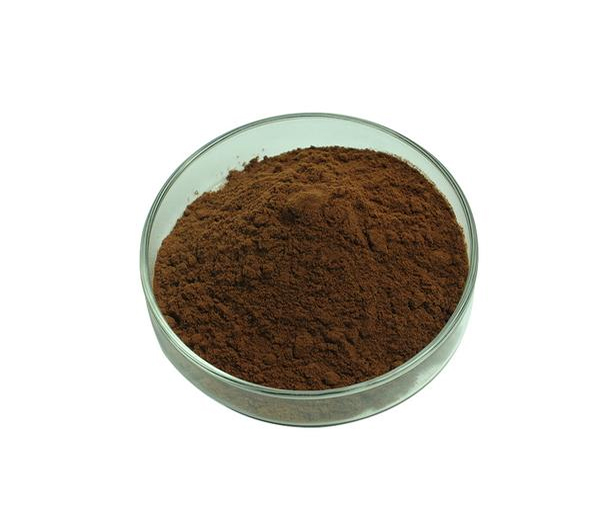

Black garlic extract is a natural product made from the underground bulbs of black garlic (fermented garlic), which is rich in active ingredients such as sulfur-containing compounds, polysaccharides, polyphenols, and has multiple potential health benefits.

Black Garlic Extract Powder 10:1, 20:1, 50:1 TLC
【Botanical source】: Allium sativum L.
【Part used】: Bulb
【Specification】: 10:1 20:1 50:1TLC
【Appearance】: Dark brown powder
【Extraction solvents】: Water
【Particle size】: 95% pass 80 mesh size
【Main ingredients】: Black garlic contains active ingredients such as polyphenols and sulfur compounds, with antioxidant capacity up to three times that of fresh garlic, and has effects such as regulating blood lipids and antibacterial properties.
Black Garlic Extract Powder Production Flowchart

Black Garlic raw materials -Coarse powder(40 mesh) -Low temperature water extraction – 1st Reflux Extraction(10 times water,2 Hrs) – 2nd Reflux Extraction8 times water,1.5 Hrs) – 3rd Reflux Extraction(6 times water,1 Hrs) – Extraction Solution-combine&Filtrate-Concentrate-Extractum-spray drying – screening – packaging – detection of physical and chemical indicators – warehousing
Specification Sheet of Black Garlic Extract Powder
| Product name: | Black Garlic Extract | ||
| Specification: | 10:1 TLC | ||
| Part used: | Bulb of Allium sativum L. | ||
| Solvent used: | Water | ||
| Process: | Raw materials crushed, extracted, concentrated and spray-dried to powder | ||
| Non GMO according to regulation (EC) 1829/2003 and 1830/2003 or United States requirements. Non allergen according to Directive 2007/68 amending Annex IIIa to Directive 2000/13/EC and US Food allergen labelling and consumer protection act 2004. | |||
| Heavy Metals: | |||
| Lead: | NMT 3ppm | Cadmium: | NMT 1ppm |
| Arsenic: | NMT 2ppm | Mercury: | NMT 1ppm |
| Residual solvents: | Comply to USP | ||
| Pesticides residues: | Conform to Regulation USP<561> | ||
| Microbiology: | |||
| Total plate count: | 10000cfu/g Max | Yeasts and molds: | 1000cfu/g Max |
| E.coli: | Not detected in (g)10 | Salmonella spp.: | Not detected in (g)25 |
| Staphylococcus aureus: | Not detected in (g)10 | Clostridium spp.: | Not Present in 0.1 g of food |
| Organoleptic quality | Method | Specifications | |
| Aspect: | Visual : ( CQ-MO-148) | Powder | |
| Color: | Visual : ( CQ-MO-148) | Dark brown | |
| Flavor: | Sensory: (CQ-MO-148) | Characteristic | |
| Analytical quality | Method | Specifications | |
| Identification: | TLC | Conform | |
| Loss on drying: | USP <731> | < 10% | |
| Bulk density: | USP <616> Method I | 40 – 60 g/100mL | |
| Particle size: | Analytical sieving || USP <786> | 100% through 80meshes | |
| Packaging suitable for foodstuff. | |||
Extended Reading
Summary of Modern Pharmacological Research on Black Garlic Extract
Black garlic is produced by fermenting fresh garlic (Allium sativum L.) under controlled high temperature and humidity for several weeks. This Maillard reaction-based process results in a product with a sweet taste, soft texture, and significantly altered phytochemistry. The primary bioactive compounds include S-allyl cysteine (SAC), S-allyl mercaptocysteine (SAMC), flavonoids, alkaloids, and organosulfur compounds, many of which are more bioavailable than in fresh garlic. Modern research highlights its broad therapeutic potential.
- Potent Antioxidant Activity
Black garlic extract (BGE) demonstrates significantly higher antioxidant capacity than fresh garlic. It effectively scavenges free radicals (DPPH, ABTS, superoxide anion) and upregulates endogenous antioxidant defense systems by increasing the activity of enzymes like superoxide dismutase (SOD), catalase (CAT), and glutathione peroxidase (GPx) while reducing lipid peroxidation marker (MDA). This is largely attributed to the increased concentration of stable, water-soluble antioxidants like SAC. - Cardioprotective and Anti-atherosclerotic Effects
BGE exerts strong cardioprotective effects through multiple mechanisms:
- Hypolipidemic:Reduces total cholesterol, triglycerides, and LDL-cholesterol while increasing HDL-cholesterol in animal models of hyperlipidemia.
- Anti-hypertensive:Shows vasodilatory effects and inhibits angiotensin-converting enzyme (ACE).
- Anti-atherosclerotic:Inhibits foam cell formation, reduces vascular inflammation, and prevents plaque formation in arteries.
- Anti-cancer and Chemopreventive Potential
Numerous in vitroand animal studies indicate that BGE and its components (especially SAC) exhibit anti-proliferative effects against various cancer cell lines (e.g., colon, gastric, liver, breast, and leukemia). Proposed mechanisms include:
- Induction of apoptosis via mitochondrial and death receptor pathways.
- Cell cycle arrest (often at G2/M phase).
- Inhibition of tumor metastasis and angiogenesis.
- Enhancement of chemosensitivity and reduction of chemotherapy side effects.
- Hepatoprotective Effects
BGE protects the liver from damage induced by alcohol, drugs (e.g., acetaminophen), or toxic chemicals. It significantly lowers serum markers of liver injury (ALT, AST, ALP), reduces hepatic inflammation and fibrosis, and mitigates oxidative stress in liver tissue. - Anti-diabetic and Anti-obesity Effects
BGE improves insulin sensitivity and glucose homeostasis in models of type 2 diabetes. It can lower fasting blood glucose, improve glucose tolerance, and protect pancreatic β-cells. Its anti-obesity effects are linked to the inhibition of adipogenesis (fat cell formation), reduction of lipid accumulation in adipose tissue, and modulation of lipid metabolism. - Neuroprotective Effects
Emerging research highlights BGE’s potential in protecting against neurodegenerative diseases. SAC, its key compound, can cross the blood-brain barrier. Studies show it can:
- Reduce neuroinflammation and oxidative stress in the brain.
- Inhibit acetylcholinesterase activity.
- Protect neurons from amyloid-β (Aβ)-induced toxicity (relevant to Alzheimer’s disease).
- Improve memory and cognitive function in animal models of aging and dementia.
- Anti-inflammatory and Immunomodulatory Activity
BGE suppresses the production of key pro-inflammatory mediators, including nitric oxide (NO), prostaglandin E2 (PGE2), and cytokines (TNF-α, IL-1β, IL-6), primarily by inhibiting the NF-κB and MAPK signaling pathways. It also modulates immune cell function, enhancing certain immune responses while dampening excessive inflammation.
Conclusion
Modern pharmacological research substantiates that the fermentation process transforms garlic into black garlic, enhancing its bioavailability and conferring a wide array of health benefits. The most compelling evidence supports its roles as a superior antioxidant, a cardiometabolic protector (hypolipidemic, anti-hypertensive), and a promising agent with anti-cancer, hepatoprotective, and neuroprotective potential. The compound S-allyl cysteine (SAC) is a major contributor to these effects. While preclinical data is robust, more large-scale, well-designed human clinical trials are needed to validate these therapeutic applications and establish definitive dosage guidelines.
References
- Kimura, S., et al. (2017). Black garlic: A critical review of its production, bioactivity, and application. Journal of Functional Foods, 36, 103-113.
- Wang, X., et al. (2018). Aged black garlic extract regulates lipid metabolism in high-fat diet-induced obese mice. Journal of Functional Foods, 47, 370-377.
- Shin, J. H., et al. (2014). Hepatoprotective effects of aged black garlic on carbon tetrachloride-induced liver injury in rats. Journal of Medicinal Food, 17(6), 641-645.
- Lu, X., Li, N., Qiao, X., et al. (2017). Effects of thermal treatment on polysaccharide degradation during black garlic processing. LWT – Food Science and Technology, 80, 486-492.
- Ryu, J. H., & Kang, D. (2017). Physicochemical properties, biological activity, health benefits, and general limitations of aged black garlic: A review. Molecules, 22(6), 919.
- Zhang, X., Li, N., Lu, X., et al. (2016). Effects of temperature on the quality of black garlic. Journal of the Science of Food and Agriculture, 96(7), 2366-2372.
- Choi, I. S., et al. (2014). Neuroprotective effects of S-allyl cysteine (SAC), a key compound in aged garlic extract, against amyloid-β-induced toxicity in a transgenic Caenorhabditis elegansmodel of Alzheimer’s disease. Journal of Functional Foods, 11, 215-225.
- Yuan, H., et al. (2018). The antioxidant and anti-inflammatory effects of black garlic (Allium sativum L.) on high-fat diet-induced obese mice. Journal of Functional Foods, 47, 211-219.
- Ha, A. W., et al. (2015). Black garlic enhances antioxidant, anti-inflammatory, and antitumor effects in diethylnitrosamine-induced hepatocellular carcinoma rats. Journal of Medicinal Food, 18(9), 951-958.
- Ahmed, T., et al. (2020). Aged garlic extract and S-allyl cysteine prevent apoptotic cell death in a cellular model of Alzheimer’s disease. Journal of Functional Foods, 64, 103667.
Note: This summary is for informational purposes. It may interact with medications and is contraindicated in certain conditions. Consult a healthcare professional before therapeutic use, particularly regarding its estrogenic activity.