
Bupleuri Radix (Chai Hu) Extract Powder 10:1, 20:1, 50:1 TLC


The functions of Chaihu in traditional Chinese medicine include dispersing and reducing fever, soothing the liver and relieving depression, and elevating yang qi. Used for cold and fever, cold and heat exchange, chest and rib pain, menstrual disorders, uterine prolapse, and prolapse.

Bupleuri Radix (Chai Hu) Extract Powder 10:1, 20:1, 50:1 TLC
【Other names】: Chai Hu, Radix Bupleuri, Red Thorowax Root, Chinese Thorowax Root
【Botanical source】: Bupleurum chinense DC. or Bupleurum scorzonerifolium Willd.
【Part used】: Dried roots of Bupleurum chinense DC or Bupleurum scorzonerifolium Willd in the Umbelliferae family. According to different traits, they are commonly referred to as “North Chaihu” and “South Chaihu”. Excavate in spring and autumn, remove stems, leaves, and sediment, and dry.
【Specification】: 10:1, 20:1, 50:1 TLC
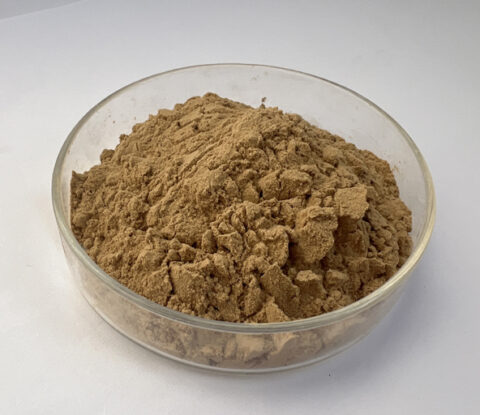
【Appearance】: Brownish yellow fine powder
【Particle size】: 95% pass 80 mesh size
Bupleuri Radix (Chai Hu) Extract Powder Production Flowchart
Bupleuri Radix (Chai Hu) raw materials – natural air drying–Coarse powder(40 mesh) -Low temperature water extraction – 1st Reflux Extraction(10 times water,2 Hrs) – 2nd Reflux Extraction8 times water,1.5 Hrs) – 3rd Reflux Extraction(6 times water,1 Hrs) – Extraction Solution-combine&Filtrate-Concentrate-Extractum-spray drying – screening – packaging – detection of physical and chemical indicators – warehousing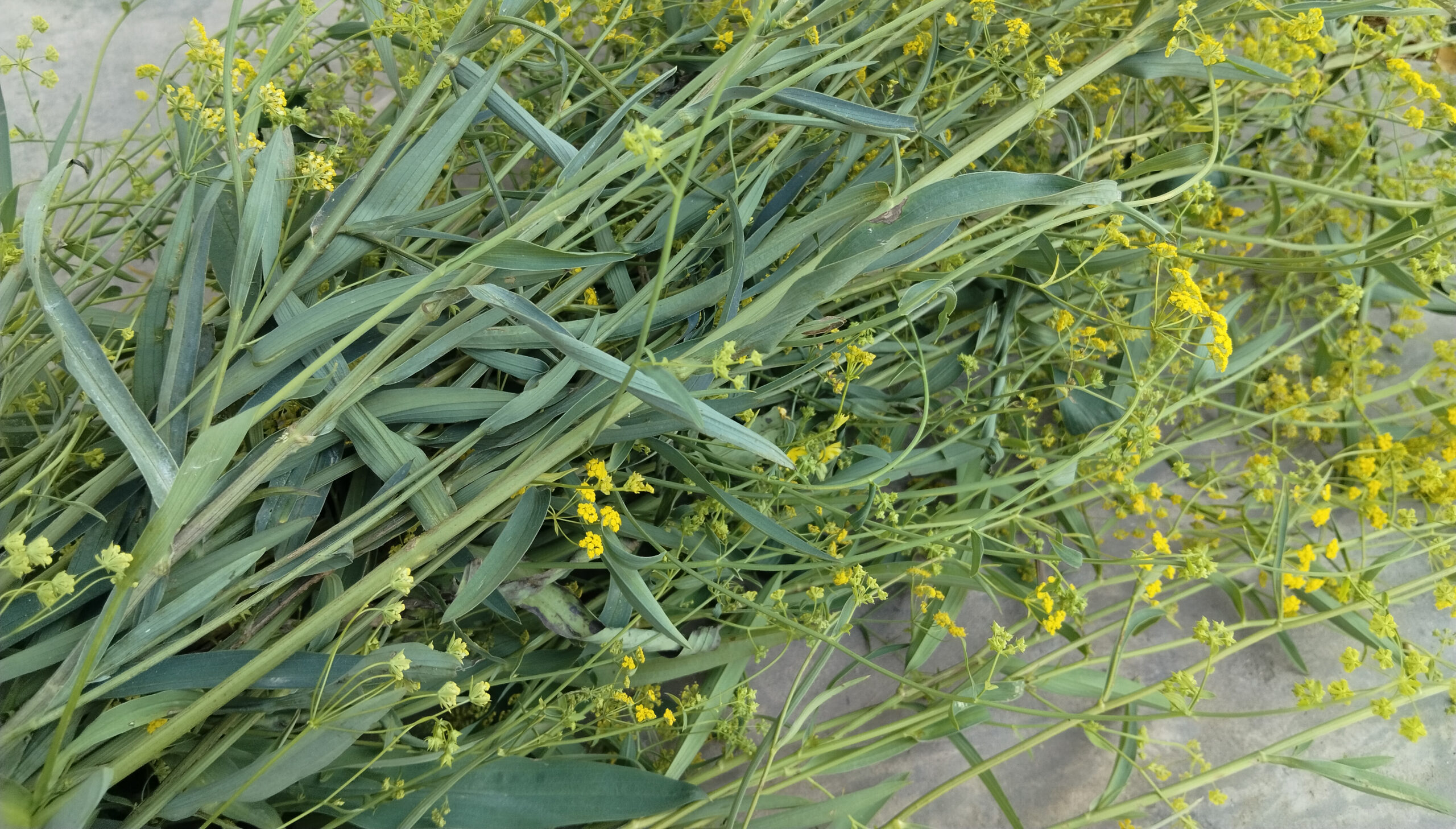
Specification Sheet of Bupleuri Radix (Chai Hu) Extract Powder
| Product name: | Chai Hu Extract | ||
| Specification: | 10:1 TLC | ||
| Part used: | Dried roots of Bupleurum chinense DC. or Bupleurum scorzonerifolium Willd. | ||
| Solvent used: | Hot water | ||
| Process: | Raw materials crushed, extracted, concentrated and spray-dried to powder | ||
| Non GMO according to regulation (EC) 1829/2003 and 1830/2003 or United States requirements. Non allergen according to Directive 2007/68 amending Annex IIIa to Directive 2000/13/EC and US Food allergen labelling and consumer protection act 2004. | |||
| Heavy Metals: | |||
| Lead: | NMT 3ppm | Cadmium: | NMT 1ppm |
| Arsenic: | NMT 2ppm | Mercury: | NMT 1ppm |
| Residual solvents: | Comply to USP | ||
| Pesticides residues: | Conform to Regulation USP<561> | ||
| Microbiology: | |||
| Total plate count: | 10000cfu/g Max | Yeasts and molds: | 1000cfu/g Max |
| E.coli: | Not detected in (g)10 | Salmonella spp.: | Not detected in (g)25 |
| Staphylococcus aureus: | Not detected in (g)10 | Clostridium spp.: | Not Present in 0.1 g of food |
| Organoleptic quality | Method | Specifications | |
| Aspect: | Visual : ( CQ-MO-148) | Powder | |
| Color: | Visual : ( CQ-MO-148) | Offwhite/light brownish | |
| Flavor: | Sensory: (CQ-MO-148) | Characteristic | |
| Analytical quality | Method | Specifications | |
| Identification: | TLC | Conform | |
| Loss on drying: | USP <731> | < 10% | |
| Bulk density: | USP <616> Method I | 40 – 60 g/100mL | |
| Particle size: | Analytical sieving || USP <786> | 100% through 80meshes | |
| Packaging suitable for foodstuff. | |||
Extended Reading
Bupleuri Radix (Chai Hu) Function and Efficacy Recorded in TCM
Chaihu is an extremely important medicinal herb in traditional Chinese medicine. It has a bitter and pungent taste, a slight coldness, and belongs to the liver, gallbladder, and lung meridians. Its function is very unique and extensive, with the core of “clearing, lifting, and relieving fever”. It is a key drug for treating liver and gallbladder qi stagnation and related febrile diseases. The following are the core functions of Chaihu in traditional Chinese medicine theory, which can be summarized into three major effects:
1.Reconciliation Shaoyang
This is the most unique and irreplaceable function of Chaihu. Traditional Chinese medicine believes that when pathogenic factors are transmitted from the surface of the body to the interior, but have not yet reached the organs, they will remain at the level of “half surface, half interior”, which is called “Shaoyang disease”.
Typical symptoms: alternating cold and heat (sometimes feeling cold and sometimes feeling hot), chest and rib pain, bitter mouth and dry throat, restlessness and nausea, loss of appetite.
Representative formula: Xiaochaihu Tang. Chaihu is the royal medicine in this formula, responsible for dispersing half exterior and half interior evil, and is the core of “reconciling Shaoyang”.
Modern counterpart: commonly used to treat specific stages of the cold, influenza, malaria, chronic hepatitis, cholecystitis, and other symptoms.
2. Soothing the liver and relieving depression
Chaihu enters the liver meridian and can regulate liver qi, relieve stagnation, and is the preferred medication for treating the syndrome of “liver qi stagnation”.
Symptoms of liver qi stagnation:
Emotions: depressed, irritable, and prone to sighing.
Chest and rib: Chest and rib, breast, and abdominal distension and pain.
Digestion: bloating and stuffiness in the epigastric region, belching, and indigestion (due to liver qi invading the spleen and stomach).
Gynecology: Irregular menstruation, dysmenorrhea.
Representative formulas: Xiaoyao San, Chaihu Shugan San. Chaihu, as the main herb in these prescriptions, plays a key role in soothing the liver and regulating qi.
Modern Correspondence: Widely used in diseases closely related to emotions and stress, such as depression, anxiety disorders, chronic gastritis, breast hyperplasia, menstrual disorders, menopausal syndrome, etc.
3. Raise Yang Qi
Chaihu has light and clear medicinal properties, and is good at lifting and sinking qi upwards and outwards.
The manifestations of qi sinking include organ prolapse such as chronic diarrhea, dysentery, prolapse of the anus, uterine prolapse, and gastric prolapse, as well as shortness of breath, fatigue, dizziness, and vertigo.
Representative formula: Bu Zhong Yi Qi Tang. In this formula, Chaihu and Shengma work together, on the basis of a large number of Qi tonifying medicines such as Huangqi and ginseng, to play a “finishing touch” lifting effect, lifting the sunken Qi machine upwards.
Modern counterpart: Used for treating patients with visceral prolapse, chronic enteritis, myasthenia gravis, and other conditions related to qi sinking.
4. Relieve exterior and reduce fever
Chaihu has a good antipyretic effect, especially suitable for external fever, and can be used in combination with both wind cold and wind heat surface syndromes.
Characteristics: Strong antipyretic effect, effective for cases where high fever does not subside.
Modern application: commonly used in the fever period of acute infectious diseases such as colds, influenza, pneumonia, etc. Many modern cold traditional Chinese patent medicines and simple preparations and injections contain bupleurum.
Modern Pharmacological Effects of Bupleuri Radix (Chai Hu)
Modern pharmacological research has revealed in depth why Bupleurum chinense can become an important medicine in traditional Chinese medicine for “relieving Shaoyang and soothing the liver and relieving depression”. Its mechanism of action is complex and diverse, with the main active ingredients including saikosaponin (a, b, c, d, etc.), volatile oil, polysaccharides, etc. The following are the main modern pharmacological effects of Chaihu:
1. Antipyretic, anti-inflammatory, and antiviral
This is the earliest confirmed effect of Chaihu in modern medicine, directly related to its efficacy in treating external fever.
Antipyretic effect:
Significant effect: Chaihu saponins and volatile oils have significant antipyretic effects on fever caused by various reasons, such as bacterial endotoxins and chemical heat sources.
Mechanism: It may be achieved by inhibiting the production and release of thermogenic factors such as prostaglandin E2 in the hypothalamus, as well as regulating the thermoregulatory center.
Anti inflammatory effect:
Chaihu saponins can inhibit the release of inflammatory mediators (such as histamine and serotonin), reduce capillary permeability, and alleviate inflammatory reactions.
This is related to inflammatory symptoms such as chest and rib pain during the treatment of “Shaoyang syndrome”.
Antiviral and antibacterial effects:
Has a certain inhibitory effect on influenza virus, hepatitis virus, Coxsackievirus, etc.
This provides a basis for its treatment of viral colds and viral hepatitis.
2. Hepatoprotective and choleretic
This is a very important pharmacological effect of Chaihu, which explains why it is the core drug for treating liver and gallbladder diseases.
Protecting the liver:
Chaihu saponins can alleviate various chemical (such as carbon tetrachloride, D-galactosamine) liver injuries, inhibit liver cell degeneration and necrosis, and promote liver cell regeneration.
Can resist liver fibrosis and prevent chronic hepatitis from developing into cirrhosis.
Gallbladder effect:
It can promote bile secretion and excretion, reduce cholesterol concentration in bile, and help prevent the formation of cholesterol gallstones. Can be used as an adjuvant therapy for cholecystitis and cholelithiasis.
3. Regulating the central nervous system and combating depression
There is direct pharmacological evidence for the regulating effect of Chaihu on emotions.
Antidepressant and sedative effects:
Chaihu saponins and volatile oils exhibit clear antidepressant activity, and their mechanisms may be related to regulating the levels of monoamine neurotransmitters such as serotonin, norepinephrine, and dopamine.
At the same time, it also has a certain central sedative effect, which can reduce spontaneous activity and synergize with the hypnotic effect of pentobarbital.
Anticonvulsant and analgesic:
Has certain anticonvulsant and analgesic effects.
4. Regulating immune function
Chaihu has a bidirectional regulatory effect on the immune system, which is consistent with its ability to treat both exogenous diseases (such as Xiaochaihu Tang) and autoimmune diseases (such as autoimmune hepatitis).
Enhancing immunity: Chaihu polysaccharides can improve the body’s non-specific and specific immunity (including humoral and cellular immunity) functions, enhance macrophage phagocytic ability and natural killer cell activity.
Inhibition of immunity: Under specific circumstances, saikosaponin can also inhibit immune hyperactivity, alleviate allergic reactions, and have anti allergic effects.
5. Other important roles
Antitumor effect:
Research has shown that Chaihu extract and Chaihu saponins have inhibitory effects on proliferation and induce apoptosis in various cancer cells, such as liver cancer, lung cancer, and gastric cancer.
Often used as an adjuvant drug, combined with chemotherapy to enhance sensitivity and reduce toxicity.
Effects on the kidneys:
Chaihu saponin D exhibits significant nephrotoxicity at high doses, which can cause damage to the glomerular filtration membrane in animals, leading to proteinuria, hematuria, and other symptoms. This provides a side confirmation for the traditional warning of “Chaihu Jie Gan Yin” in traditional Chinese medicine, and emphasizes the importance of not taking excessive and prolonged medication in clinical practice.