
Carthamus Tinctorius (Hong Hua, Safflower) Extract Powder 10:1, 20:1, 50:1 TLC


The function of safflower/Carthamus Tinctorius in traditional Chinese medicine is to promote blood circulation, unblock meridians, disperse blood stasis, and relieve pain. Used for amenorrhea, dysmenorrhea, lochia, masses, chest pain, stasis, abdominal pain, chest and rib pain, falls and injuries, swelling and pain in ulcers.

Carthamus Tinctorius (Hong Hua, Safflower) Extract Powder 10:1, 20:1, 50:1 TLC
【Other names】: Hong Hua, Flos Carthami, safflower
【Botanical source】: Carthamus tinctorius L.
【Part used】: Dried flower of the Asteraceae plant Carthamus tinctorius L. Picking flowers in summer when they turn from yellow to red, and drying them in the shade or sun.
【Specification】: 10:1, 20:1, 50:1 TLC
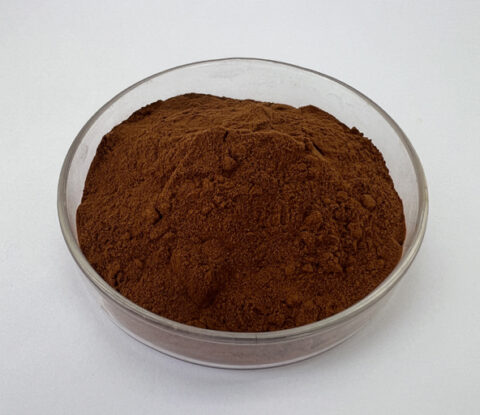
【Appearance】: Brownish yellow fine powder
【Particle size】: 95% pass 80 mesh size
Carthamus Tinctorius (Hong Hua) Extract Powder Production Flowchart
Carthamus Tinctorius (Hong Hua) raw materials – natural air drying–Coarse powder(40 mesh) -Low temperature water extraction – 1st Reflux Extraction(10 times water,2 Hrs) – 2nd Reflux Extraction8 times water,1.5 Hrs) – 3rd Reflux Extraction(6 times water,1 Hrs) – Extraction Solution-combine&Filtrate-Concentrate-Extractum-spray drying – screening – packaging – detection of physical and chemical indicators – warehousing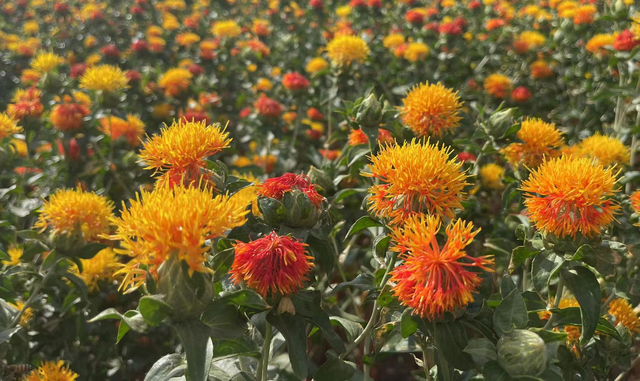
Specification Sheet of Carthamus Tinctorius (Hong Hua) Extract Powder
| Product name: | Carthamus Tinctorius (Hong Hua) Extract | ||
| Specification: | 10:1 TLC | ||
| Part used: | Dried flower of Carthamus tinctorius L. | ||
| Solvent used: | Hot water | ||
| Process: | Raw materials crushed, extracted, concentrated and spray-dried to powder | ||
| Non GMO according to regulation (EC) 1829/2003 and 1830/2003 or United States requirements. Non allergen according to Directive 2007/68 amending Annex IIIa to Directive 2000/13/EC and US Food allergen labelling and consumer protection act 2004. | |||
| Heavy Metals: | |||
| Lead: | NMT 3ppm | Cadmium: | NMT 1ppm |
| Arsenic: | NMT 2ppm | Mercury: | NMT 1ppm |
| Residual solvents: | Comply to USP | ||
| Pesticides residues: | Conform to Regulation USP<561> | ||
| Microbiology: | |||
| Total plate count: | 10000cfu/g Max | Yeasts and molds: | 1000cfu/g Max |
| E.coli: | Not detected in (g)10 | Salmonella spp.: | Not detected in (g)25 |
| Staphylococcus aureus: | Not detected in (g)10 | Clostridium spp.: | Not Present in 0.1 g of food |
| Organoleptic quality | Method | Specifications | |
| Aspect: | Visual : ( CQ-MO-148) | Powder | |
| Color: | Visual : ( CQ-MO-148) | Brownish yellow | |
| Flavor: | Sensory: (CQ-MO-148) | Characteristic | |
| Analytical quality | Method | Specifications | |
| Identification: | TLC | Conform | |
| Loss on drying: | USP <731> | < 10% | |
| Bulk density: | USP <616> Method I | 40 – 60 g/100mL | |
| Particle size: | Analytical sieving || USP <786> | 100% through 80meshes | |
| Packaging suitable for foodstuff. | |||
Extended Reading
Carthamus Tinctorius (Hong Hua) Function and Efficacy Recorded in TCM
Safflower/Red flower, also known as “grass red flower”, is one of the core members of traditional Chinese medicine for promoting blood circulation and removing blood stasis. Its nature is pungent and warm, and it belongs to the heart and liver meridians. Its core efficacy is “promoting blood circulation and meridian circulation, removing blood stasis and relieving pain”. Its strength is relatively mild compared to saffron, and it is a widely used blood splitting medicine in clinical practice.
1. Promote blood circulation and unblock meridians
This is the most classic efficacy of safflower, used to treat various menstrual disorders caused by blood circulation disorders.
Used for menstrual disorders caused by blood stasis and dysmenorrhea: For symptoms such as menstrual cessation, abdominal pain, low blood volume, dark color, and blood clots caused by cold coagulation and blood stasis or qi stagnation and blood stasis, safflower can warm and unblock the blood vessels, eliminate blood stasis, and ensure smooth menstrual flow. Often used in conjunction with blood activating herbs such as Angelica sinensis, Chuanxiong, and peach kernels, such as the famous Taohong Siwu Tang (Siwu Tang with peach kernels and red flowers).
Used for postpartum lochia and abdominal pain: postpartum uterine blood stasis cannot be discharged smoothly, leading to abdominal pain. Red flowers can help with blood stasis discharge and promote uterine recovery.
2. Relieve blood stasis and relieve pain
Red flowers can alleviate internal and external blood stasis, thus having a good analgesic effect.
Used for the accumulation of pathological conditions (such as liver and spleen enlargement, uterine fibroids, etc.) in the body. Traditional Chinese medicine believes that it is caused by prolonged illness entering the meridians and stagnation of blood stasis. Red flowers can promote blood circulation, soften hardness, and disperse nodules. They are often used in conjunction with blood breaking and anti-inflammatory drugs such as sanleng and zedoary.
Used for chest obstruction and heartache: equivalent to modern medicine’s coronary heart disease and angina pectoris. Due to obstruction of the heart meridian, safflower can promote blood circulation, unblock the pulse, and relieve pain. Often used in combination with herbs such as Guizhi, Danshen, Chuanxiong, etc. that promote yang and blood circulation.
Used for injuries caused by falls, bruises, swelling and pain: This is a common use of saffron. It can dissipate local blood stasis, reduce swelling and relieve pain. It can be taken orally or rubbed externally with safflower oil or safflower wine. Often used interchangeably with frankincense, myrrh, and blood, such as Qili powder.
Used for joint pain: For rheumatic or rheumatoid arthritis, it is manifested as joint pain, poor flexion and extension, especially in the “blood stasis” syndrome with fixed pain and dark purple color. Red flowers can promote blood circulation and unblock collaterals, and are often used together with wind and dampness dispelling drugs such as Qianghuo, Duhuo, and Qinhuai.
3. Penetrating and eliminating rashes (used for rashes caused by blood heat and stasis)
For skin rashes with dark red or purple black color caused by warm diseases or blood heat stagnation, safflower can promote the dissipation of rashes by activating blood circulation and dispersing blood stasis. Often used in conjunction with herbs such as Angelica sinensis, purple grass, and large green leaves to clear heat, cool blood, and promote blood circulation.
Modern Pharmacological Research on Carthamus Tinctorius (Hong Hua)
1.Effects on the cardiovascular system:
Expanding coronary arteries and improving myocardial blood supply: This directly confirms its effectiveness in treating chest pain and discomfort.
Lowering blood pressure and dilating blood vessels: Red flower decoction and red flower injection have a clear effect on dilating peripheral blood vessels.
2. Effects on the blood system:
Anticoagulants and antithrombotic agents: can inhibit platelet aggregation, prolong clotting time, and prevent and treat thrombotic diseases.
Improving microcirculation: can relieve spasm of vascular smooth muscle, increase the opening of capillary network, and accelerate blood flow.
3. For the function of the uterus: It has a significant stimulating effect on the uterus and can cause rhythmic contractions, which is crucial for “meridian circulation” and “postpartum blood stasis elimination”, but pregnant women should absolutely avoid using it.
4. Anti inflammatory and analgesic effects: providing scientific basis for its treatment of traumatic injuries and rheumatism.
5. Antioxidant and anti-aging: Red flowers contain antioxidant components that can eliminate free radicals.