
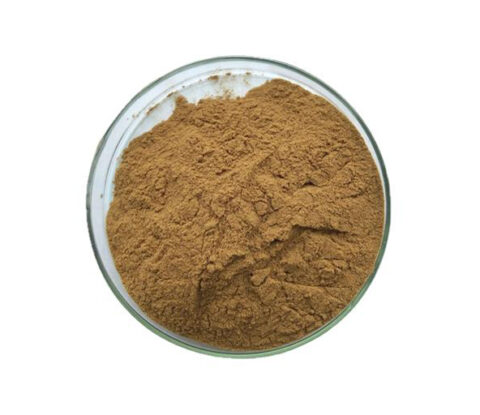
Cassia Twig (Gui Zhi) Extract Powder 10:1, 20:1, 50:1 TLC


Sweat to relieve muscle, warm and promote meridians, help yang transform qi, and calm and reduce qi. Used for wind cold cold, cold pain in the epigastric region, blood cold amenorrhea, joint pain, phlegm retention, edema, and palpitations.

Cassia Twig (Gui Zhi) Extract Powder 10:1, 20:1, 50:1 TLC
【Other names】: Gui Zhi, Ramulus Cinnamomi, Cassia Twig, Cassiabarktree branchlet
【Botanical source】: Cinnamomum cassia Presl
【Part used】: Dry tender branches of Cinnamomum cassia Presl, a plant in the Lauraceae family. Harvesting in spring and summer, removing leaves, sun drying, or slicing and sun drying.
【Specification】: 10:1, 20:1, 50:1 TLC
【Appearance】: Brownish yellow fine powder
【Particle size】: 95% pass 80 mesh size

Cassia Twig (Gui Zhi) Extract Powder Production Flowchart
Cassia Twig (Gui Zhi) raw materials – natural air drying–Coarse powder(40 mesh) -Low temperature water extraction – 1st Reflux Extraction(10 times water,2 Hrs) – 2nd Reflux Extraction8 times water,1.5 Hrs) – 3rd Reflux Extraction(6 times water,1 Hrs) – Extraction Solution-combine&Filtrate-Concentrate-Extractum-spray drying – screening – packaging – detection of physical and chemical indicators – warehousing
Specification Sheet of Cassia Twig (Gui Zhi) Extract Powder
| Product name: | Gui Zhi Extract | ||
| Specification: | 10:1 TLC | ||
| Part used: | Dry tender branches of Cinnamomum cassia Presl | ||
| Solvent used: | Hot water | ||
| Process: | Raw materials crushed, extracted, concentrated and spray-dried to powder | ||
| Non GMO according to regulation (EC) 1829/2003 and 1830/2003 or United States requirements. Non allergen according to Directive 2007/68 amending Annex IIIa to Directive 2000/13/EC and US Food allergen labelling and consumer protection act 2004. | |||
| Heavy Metals: | |||
| Lead: | NMT 3ppm | Cadmium: | NMT 1ppm |
| Arsenic: | NMT 2ppm | Mercury: | NMT 1ppm |
| Residual solvents: | Comply to USP | ||
| Pesticides residues: | Conform to Regulation USP<561> | ||
| Microbiology: | |||
| Total plate count: | 10000cfu/g Max | Yeasts and molds: | 1000cfu/g Max |
| E.coli: | Not detected in (g)10 | Salmonella spp.: | Not detected in (g)25 |
| Staphylococcus aureus: | Not detected in (g)10 | Clostridium spp.: | Not Present in 0.1 g of food |
| Organoleptic quality | Method | Specifications | |
| Aspect: | Visual : ( CQ-MO-148) | Powder | |
| Color: | Visual : ( CQ-MO-148) | Brownish | |
| Flavor: | Sensory: (CQ-MO-148) | Characteristic | |
| Analytical quality | Method | Specifications | |
| Identification: | TLC | Conform | |
| Loss on drying: | USP <731> | < 10% | |
| Bulk density: | USP <616> Method I | 40 – 60 g/100mL | |
| Particle size: | Analytical sieving || USP <786> | 100% through 80meshes | |
| Packaging suitable for foodstuff. | |||
Extended Reading
Cassia Twig (Gui Zhi) Function and Efficacy Recorded in TCM
Guizhi is one of the most essential drugs in traditional Chinese medicine clinical practice, known as the “essential medicine for resolving external qi and promoting yang”. It is not an ordinary cinnamon tree branch, but a dry and tender branch of cinnamon, a plant in the Lauraceae family. It has a fragrant aroma, mild medicinal power, and broad reach.
The core function of Guizhi lies in “promoting” and “warming”. It can reach the yang qi, warm and promote the meridians, and its effects can range from the surface to the inside, from top to bottom, with a wide range.
1. Sweat to relieve muscle tension
Characteristics: The medicinal power is milder than that of ephedra, and it is good at dispersing wind and cold, promoting yang qi to make sweat. It is more suitable for those with superficial deficiency and sweating or those with superficial solid without sweating but weak constitution.
Application: For the treatment of wind cold and cold, whether it is a non sweating exterior syndrome (often accompanied by ephedra) or a sweating exterior syndrome (often accompanied by white peony), cinnamon twig is required.
2.Warm and smooth meridians
Characteristics: It can dispel cold pathogens in the meridians and open up channels for the circulation of qi and blood.
Application: It is an essential medicine for treating various pains such as cold coagulation and blood stasis. For example:
Wind cold dampness rheumatism (cold pain in the shoulders, arms, and joints).
Chest obstruction and heartache (heart meridian obstruction, such as angina pectoris).
Dysmenorrhea and amenorrhea caused by cold coagulation stagnation in women.
Cold pain in the epigastric region due to central burner deficiency and coldness.
3.Assisting Yang to transform Qi (warming effect)
Characteristics: It can warm and assist the yang qi of the heart, spleen, and kidneys, promote the “gasification” function (i.e. the process of water metabolism and energy conversion in the human body).
Application:
Treatment of Water Dampness and Phlegm Drink: Edema, difficulty urinating, and dizziness caused by insufficient Yang Qi and stagnant water dampness (such as Linggui Zhugan Decoction).
Boosting Heart Yang: Treating palpitations, shortness of breath, and chest tightness caused by weak heart yang.
Flat thrust and descending thrust
Specific function: It can calm the Yin cold qi that rushes upwards.
Classic application: Treatment of running dolphin qi (patients consciously have qi rushing from the lower abdomen to the chest, like a pig running), which is the specialty of Guizhi.
Modern Pharmacological Effects of Cassia Twig (Gui Zhi)
The modern pharmacological research of Guizhi has been in-depth, and its traditional effects such as sweating, relieving muscle, warming meridians, and promoting yang and qi circulation have been scientifically explained, and new biological activities have been discovered. The following is a systematic summary of its modern pharmacological effects:
1. Expand blood vessels and improve microcirculation (the core mechanism of “warming and unblocking meridians”)
Discovery: Cinnamomum cassia can significantly dilate peripheral blood vessels, especially skin blood vessels, increasing surface blood flow; It can also dilate coronary arteries and improve myocardial blood supply.
Active ingredient: Cinnamaldehyde is its main volatile active ingredient.
Meaning: Science explains it:
Sweat and relieve muscle: dilate skin blood vessels, promote sweat gland secretion, and thus dissipate heat.
Warm meridians, dispel cold and relieve pain “: improve local blood circulation (such as joints and heart), alleviate pain caused by cold coagulation and blood stasis (such as wind cold dampness, chest pain).
2. Antipyretic, analgesic, anti-inflammatory
Discovery: It has a clear antipyretic effect on experimental fever models; Can increase pain threshold, inhibit the release and exudation of inflammatory factors.
Meaning: It confirms its efficacy in treating wind cold colds (fever, body pain) and inflammatory pain (such as arthritis).
3. Antibacterial and antiviral
Discovery: Cinnamomum cassia decoction and cinnamaldehyde have inhibitory effects on various pathogenic microorganisms such as Staphylococcus aureus, influenza virus, and herpes simplex virus.
Meaning: Provides pharmacological basis for its treatment of external sensory diseases (viral or bacterial colds).
4. Sedation and anticonvulsant
Discovery: Cinnamomum cassia can reduce spontaneous activity in experimental animals, counteract central stimulants, and have certain sedative and anticonvulsant effects.
Meaning: This partially explains its effects of “calming down and reducing stress” and assisting in calming the mind (such as for palpitations and promoting qi circulation).
Expanded pharmacological effects (new discoveries in modern research)
1.Comprehensive protection for the cardiovascular system
Function: In addition to dilating coronary arteries, it can also inhibit platelet aggregation, anticoagulation, and antithrombotic formation, and has certain anti myocardial ischemia and anti arrhythmic effects.
Meaning: It greatly expands its application value in the prevention and treatment of modern cardiovascular and cerebrovascular diseases, such as assisting in the treatment of coronary heart disease, angina pectoris, cerebral infarction, etc. This perfectly corresponds to the theory of “warming the heart yang and promoting blood circulation and circulation”.
2.Immunomodulation
Function: It has a bidirectional regulatory effect. On the one hand, it can promote specific and non-specific immunity; On the other hand, its active ingredients can also inhibit allergic reactions, such as the release of antihistamines.
Meaning: This provides new evidence for its treatment of allergic diseases (such as urticaria) and regulation of the body’s defense function.
3.Protecting the nervous system
Discovery: Studies have shown that cinnamon twig extract may have neuroprotective and cognitive function improving effects, as well as combating oxidative stress and neuroinflammation.
Meaning: Provides clues for exploring its application in neurodegenerative diseases such as Alzheimer’s disease.
4. Antitumor
Discovery: Cinnamaldehyde and other components have been shown to inhibit the proliferation of various tumor cells (such as lung cancer, gastric cancer, and liver cancer cells) and induce their apoptosis.
Mechanism: Involves regulating the cell cycle, inhibiting tumor angiogenesis, etc.
Meaning: It is currently one of the research hotspots, demonstrating its potential as an anti-tumor adjuvant drug.
5. The effect on the digestive system
Discovery: It can promote gastrointestinal peristalsis and alleviate gastrointestinal spasms.
Meaning: It is consistent with the traditional application of “warming the middle and dispersing cold” in treating cold pain in the epigastric region.