
Ceremonial Grade Matcha Powder
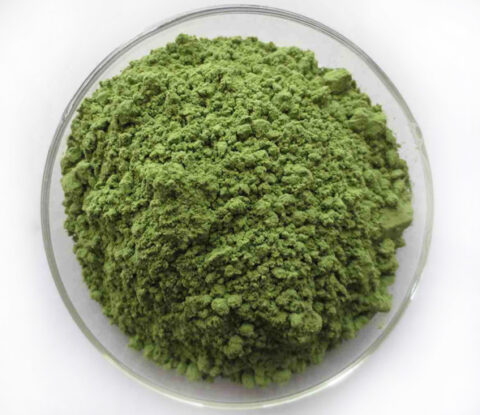
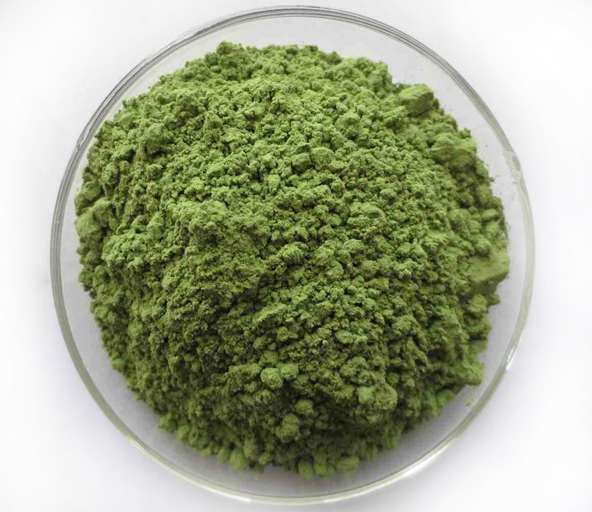
Matcha tea powder is the essence of the whole tea, rich in high concentration of catechins (especially EGCG), providing powerful antioxidant and metabolic support, helping to eliminate free radicals and delay aging. Its unique theanine and caffeine have a synergistic effect, which can promote brain alertness, concentration, and emotional stability.

Ceremonial Grade Matcha Powder
【Botanical source】: Camellia sinensis (L.) O. Ktze.
【Part used】: Steamed green tea leaves
【Specification】: Ceremonial Matcha Grade
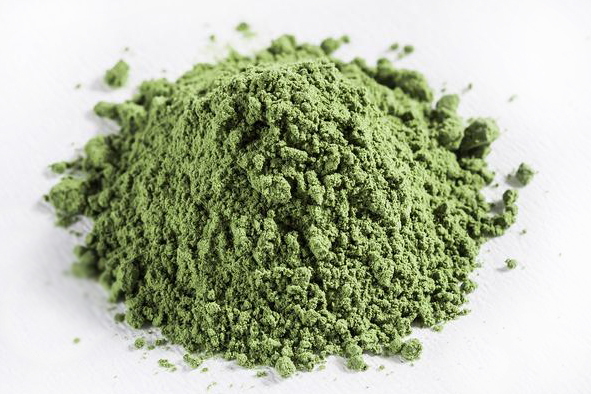
【Appearance】: Green fine powder
【Particle size】: 95% pass 500-1500 mesh size
【Main ingredients】: Matcha powder is an ultrafine powder of tea leaves that almost retains all the components of the tea leaves. The core is rich in tea polyphenols (especially catechins, especially EGCG), theanine, caffeine, as well as chlorophyll, vitamins, minerals, and dietary fiber. Nutrients are highly concentrated with no dissolution loss.
【Storage conditions】:Store at room temperature in a sealed manner, away from light, and in a ventilated, cool, and dry environment.【Shelf life】: 24 months from the production date
Ceremonial Grade Matcha Powder Production Flowchart
Withering of fresh tea leaves → cutting of tea leaves → tea fixing/fixation → cooling → initial drying → stem and leaf separation → second drying (leaves) → tencha/stong mill tea leaves→screening →packaging → detection of physical and chemical indicators →warehousing
Specification Sheet of Ceremonial Grade Matcha Powder
| Product name: | Ceremonial Grade Matcha Powder | ||
| Specification: | Ceremonial Grade | ||
| Part used: | Steamed green tea leaves of Camellia sinensis (L.) O. Ktze. | ||
| Solvent used: | Water | ||
| Process: | Raw materials crushed, extracted, concentrated and spray-dried to powder | ||
| Non GMO according to regulation (EC) 1829/2003 and 1830/2003 or United States requirements. Non allergen according to Directive 2007/68 amending Annex IIIa to Directive 2000/13/EC and US Food allergen labelling and consumer protection act 2004. | |||
| Heavy Metals: | |||
| Lead: | NMT 3ppm | Cadmium: | NMT 1ppm |
| Arsenic: | NMT 2ppm | Mercury: | NMT 1ppm |
| Residual solvents: | Comply to USP | ||
| Pesticides residues: | Conform to Regulation USP<561> | ||
| Microbiology: | |||
| Total plate count: | 10000cfu/g Max | Yeasts and molds: | 1000cfu/g Max |
| E.coli: | Not detected in (g)10 | Salmonella spp.: | Not detected in (g)25 |
| Staphylococcus aureus: | Not detected in (g)10 | Clostridium spp.: | Not Present in 0.1 g of food |
| Organoleptic quality | Method | Specifications | |
| Aspect: | Visual : ( CQ-MO-148) | Powder | |
| Color: | Visual : ( CQ-MO-148) | Green | |
| Flavor: | Sensory: (CQ-MO-148) | Characteristic | |
| Analytical quality | Method | Specifications | |
| Identification: | TLC | Conform | |
| Loss on drying: | USP <731> | < 10% | |
| Bulk density: | USP <616> Method I | 40 – 60 g/100mL | |
| Particle size: | Analytical sieving || USP <786> | 100% through 80meshes | |
| Packaging suitable for foodstuff. | |||
Extended Reading
Chemical Components and Health Benefits of Matcha Tea Powder
Matcha is a finely ground powder made from specially grown and processed shade-green tea leaves (Camellia sinensis). It is a suspension rather than an infusion, meaning its nutritional profile represents the whole leaf, concentrated.
Key Chemical Components:
- Polyphenols (Catechins): Exceptionally high in epigallocatechin gallate (EGCG), a potent antioxidant.
- Amino Acids: L-Theanine is uniquely high, promoting relaxation without drowsiness.
- Caffeine: Provides a stable, alert energy.
- Chlorophyll & Carotenoids: High due to shade-growing.
- Vitamins & Minerals: Includes Vitamin C, selenium, chromium, zinc, and magnesium.
- Dietary Fiber: Contains soluble and insoluble fiber.
Health Benefits:
- Potent Antioxidant & Metabolic Support: High EGCG content supports cellular health and may increase metabolic rate.
- Cognitive Enhancement & Mood Modulation: The synergistic combination of L-theanine and caffeine promotes calm, focused alertness.
- Cardiometabolic Health: May help support healthy cholesterol levels and blood pressure.
- Detoxification Support: High chlorophyll content is associated with aiding the body’s natural detoxification processes.
References:
- Weiss, D. J., & Anderton, C. R. (2003). Determination of catechins in matcha green tea by micellar electrokinetic chromatography. Journal of Chromatography A.
- Dietz, C., et al. (2017). An update on the health benefits of green tea. Beverages.
- Unno, K., et al. (2018). Stress-reducing effect of matcha green tea in animal experiments and clinical trials. Nutrients.
Note: This summary is for informational purposes. It may interact with medications and is contraindicated in certain conditions. Consult a healthcare professional before therapeutic use, particularly regarding its estrogenic activity.