
Chaga Mushroom Extract Powder 10:1, 20:1, 50:1 TLC
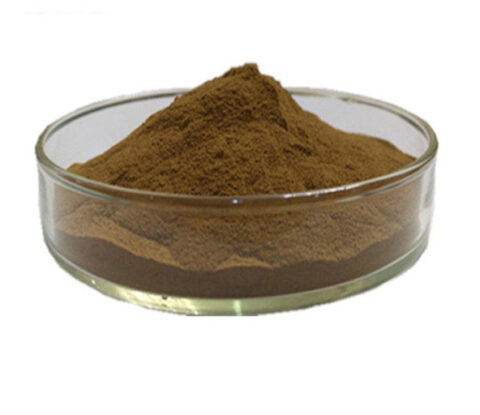
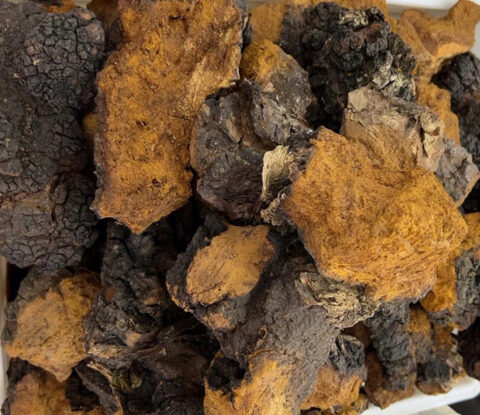


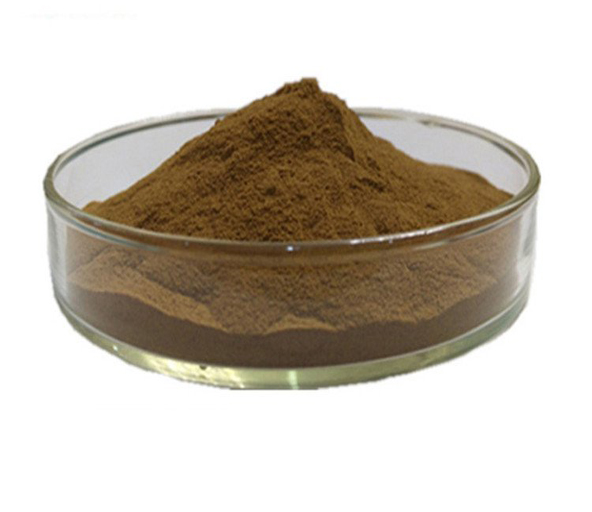
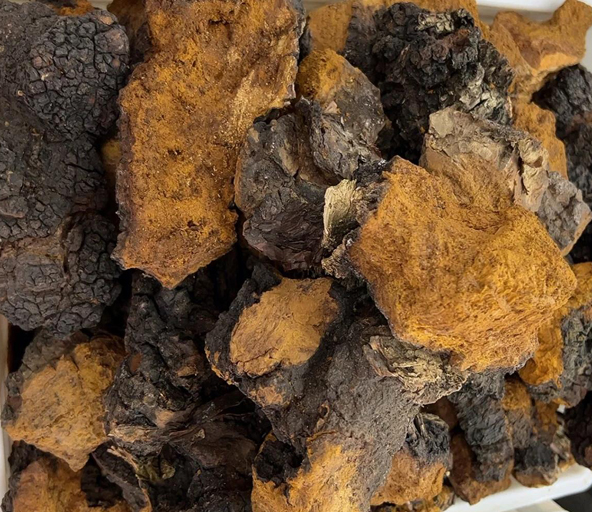
Birch mushroom extract is an active ingredient extracted from the fungus Birch mushroom, mainly containing polysaccharides, triterpenoids, polyphenols, and other substances. Research shows that it has potential effects such as antioxidant, immune regulation, auxiliary blood glucose lowering, anti-inflammatory and antibacterial.

Chaga Mushroom Extract Powder 10:1, 20:1, 50:1 TLC
【Botanical source】: Inonotus obliquus
【Part used】: Mycelium&fruiting body
【Specification】: 10:1 20:1 50:1TLC
【Appearance】: Brownish fine powder
【Extraction solvents】: Water
【Particle size】: 95% pass 80 mesh size
【Main ingredients】: Its chemical composition contains more than 215 compounds such as polysaccharides (25% -60%), arbutin, and superoxide dismutase (SOD)

Chaga Mushroom Extract Extract Powder Production Flowchart
Chaga fruitingbody raw materials -Coarse powder(40 mesh) -Low temperature water extraction – 1st Reflux Extraction(10 times water,2 Hrs) – 2nd Reflux Extraction8 times water,1.5 Hrs) – 3rd Reflux Extraction(6 times water,1 Hrs) – Extraction Solution-combine&Filtrate-Concentrate-Extractum-spray drying – screening – packaging – detection of physical and chemical indicators – warehousing
Specification Sheet of Chaga Mushroom Extract Powder
| Product name: | Chaga Mushroom Extract | ||
| Specification: | 10:1 TLC | ||
| Part used: | Fruitingbody of Inonotus obliquus | ||
| Solvent used: | Water | ||
| Process: | Raw materials crushed, extracted, concentrated and spray-dried to powder | ||
| Non GMO according to regulation (EC) 1829/2003 and 1830/2003 or United States requirements. Non allergen according to Directive 2007/68 amending Annex IIIa to Directive 2000/13/EC and US Food allergen labelling and consumer protection act 2004. | |||
| Heavy Metals: | |||
| Lead: | NMT 3ppm | Cadmium: | NMT 1ppm |
| Arsenic: | NMT 2ppm | Mercury: | NMT 1ppm |
| Residual solvents: | Comply to USP | ||
| Pesticides residues: | Conform to Regulation USP<561> | ||
| Microbiology: | |||
| Total plate count: | 10000cfu/g Max | Yeasts and molds: | 1000cfu/g Max |
| E.coli: | Not detected in (g)10 | Salmonella spp.: | Not detected in (g)25 |
| Staphylococcus aureus: | Not detected in (g)10 | Clostridium spp.: | Not Present in 0.1 g of food |
| Organoleptic quality | Method | Specifications | |
| Aspect: | Visual : ( CQ-MO-148) | Powder | |
| Color: | Visual : ( CQ-MO-148) | Brownish yellow | |
| Flavor: | Sensory: (CQ-MO-148) | Characteristic | |
| Analytical quality | Method | Specifications | |
| Identification: | TLC | Conform | |
| Loss on drying: | USP <731> | < 10% | |
| Bulk density: | USP <616> Method I | 40 – 60 g/100mL | |
| Particle size: | Analytical sieving || USP <786> | 100% through 80meshes | |
| Packaging suitable for foodstuff. | |||
Extended Reading
Modern Pharmacological Effects of Chaga Mushroom Extract
1. Key Bioactive Components
- Polysaccharides (especially β-glucans): Immunomodulating and antioxidant properties.
- Triterpenoids (e.g., inotodiol, betulinic acid derivatives): Anti-inflammatory and antitumor activities.
- Polyphenols & Melanin complex: Strong antioxidant capacity.
- Sterols and other secondary metabolites.
- Major Pharmacological Activities
- Immunomodulatory Effects
- Mechanism: β-glucans and polysaccharides activate macrophages, NK cells, and modulate cytokine production (e.g., IL-6, TNF-α, IFN-γ) via pattern recognition receptors.
- Evidence: Well-documented in animal and cell studies; enhances immune response against infections and tumors.
- Antioxidant & Anti-inflammatory Activity
- Mechanism: Scavenges free radicals (high ORAC value), upregulates endogenous antioxidants (SOD, GSH), and inhibits NF-κB and COX-2 pathways.
- Evidence: Strong in vitro and in vivo data; supports its traditional use for reducing oxidative stress and chronic inflammation.
- Anticancer Potential
- Mechanism:
- Induces apoptosis and cell cycle arrest in cancer cells (via mitochondrial pathway and caspase activation).
- Inhibits tumor angiogenesis and metastasis.
- Synergizes with chemotherapy while reducing side effects (animal data).
- Evidence: Promising results in cell lines and animal models (e.g., breast, colon, lung cancers); human clinical trials are limited.
- Antidiabetic & Metabolic Benefits
- Mechanism: Polysaccharides improve insulin sensitivity, reduce blood glucose via α-glucosidase inhibition, and protect pancreatic β-cells.
- Evidence: Demonstrated in diabetic rodent models; preliminary human data suggests improved glycemic control.
- Hepatoprotective & Gastroprotective Effects
- Mechanism: Attenuates oxidative liver damage and reduces gastric inflammation.
- Evidence: Animal studies show protection against chemical-induced liver injury and gastric ulcers.
- Neuroprotective Properties
- Mechanism: Reduces neuroinflammation and oxidative stress in the brain; may inhibit acetylcholinesterase.
- Evidence: Emerging preclinical data in neurodegenerative models (Alzheimer’s, Parkinson’s).
- Safety & Toxicology
- Generally safe as a dietary supplement or tea; traditional long-term use in Northern Europe and Siberia.
- Potential risks:
- High oxalate content may risk kidney stones with excessive consumption.
- May interact with anticoagulants (due to coumarin derivatives) and hypoglycemic drugs.
- Limited safety data in pregnancy/lactation.
- Contraindications: Autoimmune diseases (theoretical risk of overstimulation), upcoming surgery, renal impairment.
- Research Gaps & Challenges
- Bioavailability: Many bioactive compounds have low oral bioavailability; formulation optimization is needed.
- Standardization: Extracts vary widely in active compound levels; lack of standardized markers for quality control.
- Human clinical evidence: Most studies are preclinical; rigorous, large-scale human trials are lacking for health claims.
- Sustainable harvesting: Wild Chaga is slow-growing (5–10 years to mature); cultivation methods are under development.
Conclusion
Chaga mushroom exhibits multifunctional pharmacological potential, primarily driven by its unique combination of polysaccharides, triterpenoids, and antioxidants. While strongest evidence exists for immunomodulation, antioxidant, and anticancer effects in preclinical models, its translation into evidence-based human applications requires more robust clinical validation. Currently, it is widely used as a supportive adaptogen and wellness supplement, but should not replace conventional therapies. Future research should focus on human trials, bioavailability enhancement, and sustainable production.