
Coriolus Versicolor (Turkey Tail Mushroom) Extract Powder 10:1, 20:1, 50:1 TLC, Polysaccharides 30% UV
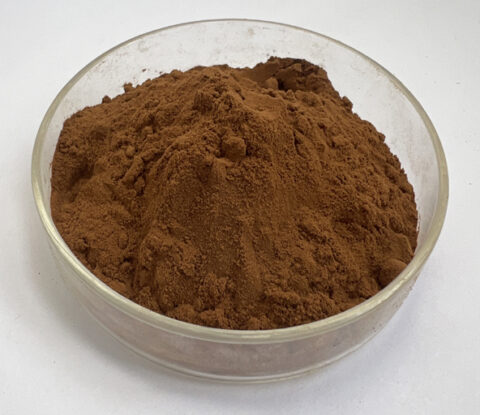


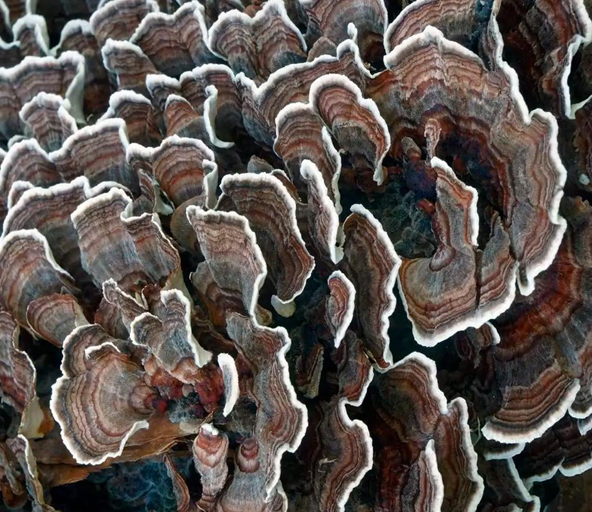
The core pharmacological effect of Yunzhi is its powerful immune regulation, and its active ingredient PSK/PSP can directly activate various immune cells. In clinical practice, it is used as an adjuvant drug for tumor treatment to improve patients' quality of life and reduce the side effects of radiotherapy and chemotherapy. In addition, it also has clear antiviral, antioxidant, anti-inflammatory effects, and can regulate intestinal microbiota.

Coriolus Versicolor (Turkey Tail Mushroom) Extract Powder 10:1, 20:1, 50:1 TLC, Polysaccharides 30% UV
【Botanical source】: Coriolus versicolor
【Part used】: Frutingbody
【Specification】: 10:1, 20:1, 50:1 TLC, Polysaccharides 30% UV
【Extraction solvents】: Water
【Appearance】: Brownish yellow fine powder
【Particle size】: 95% pass 80 mesh size
【Main ingredients】: The main pharmacological components of Ganoderma lucidum are its unique protein polysaccharide complexes, especially Ganoderma lucidum polysaccharide K (PSK/Krestin) and Ganoderma lucidum polysaccharide peptide (PSP). In addition, it also contains abundant β – glucans, various triterpenoids, and sterols. These components together form the chemical basis for its excellent immune regulation and anti-tumor activity.
【Storage conditions】:Store at room temperature in a sealed manner, away from light, and in a ventilated, cool, and dry environment.
【Shelf life】: 24 months from the production date
Coriolus Versicolor (Turkey Tail Mushroom) Extract Powder Production Flowchart
Coriolus Versicolor frutingbody raw Flammulina Velutipes materials -Coarse powder(40 mesh) -Low temperature water extraction – 1st Reflux Extraction(10 times water,2 Hrs) – 2nd Reflux Extraction8 times water,1.5 Hrs) – 3rd Reflux Extraction(6 times water,1 Hrs) – Extraction Solution-combine&Filtrate-Concentrate-Extractum-spray drying – screening – packaging – detection of physical and chemical indicators – warehousing
Specification Sheet of Coriolus Versicolor (Turkey Tail Mushroom) Extract Powder
| Product name: | Turkey Tail Mushroom Extract | ||
| Specification: | 30% polysaccharides UV | ||
| Part used: | Fruitbody of Coriolus Versicolor | ||
| Solvent used: | Water | ||
| Process: | Raw materials crushed, extracted, concentrated and spray-dried to powder | ||
| Non GMO according to regulation (EC) 1829/2003 and 1830/2003 or United States requirements. Non allergen according to Directive 2007/68 amending Annex IIIa to Directive 2000/13/EC and US Food allergen labelling and consumer protection act 2004. | |||
| Heavy Metals: | |||
| Lead: | NMT 3ppm | Cadmium: | NMT 1ppm |
| Arsenic: | NMT 2ppm | Mercury: | NMT 1ppm |
| Residual solvents: | Comply to USP | ||
| Pesticides residues: | Conform to Regulation USP<561> | ||
| Microbiology: | |||
| Total plate count: | 10000cfu/g Max | Yeasts and molds: | 1000cfu/g Max |
| E.coli: | Not detected in (g)10 | Salmonella spp.: | Not detected in (g)25 |
| Staphylococcus aureus: | Not detected in (g)10 | Clostridium spp.: | Not Present in 0.1 g of food |
| Organoleptic quality | Method | Specifications | |
| Aspect: | Visual : ( CQ-MO-148) | Powder | |
| Color: | Visual : ( CQ-MO-148) | Brownish yellow | |
| Flavor: | Sensory: (CQ-MO-148) | Characteristic | |
| Analytical quality | Method | Specifications | |
| Identification: | TLC | Conform | |
| Loss on drying: | USP <731> | < 10% | |
| Bulk density: | USP <616> Method I | 40 – 60 g/100mL | |
| Particle size: | Analytical sieving || USP <786> | 100% through 80meshes | |
| Packaging suitable for foodstuff. | |||
Extended Reading
Modern Pharmacological Research Summary: Coriolus versicolor (Turkey Tail Mushroom) Extract
- Key Bioactive Chemical Components:
The primary bioactive compounds are polysaccharopeptides (PSPs)and polysaccharide-K (PSK, or Krestin), which are protein-bound polysaccharides. The two best-studied fractions are:
- Polysaccharide-K (PSK): Isolated from the CM-101 strain in Japan. A β-glucan-protein complex.
- Polysaccharopeptide (PSP): Isolated from the COV-1 strain in China. Also a proteoglycan with a different polysaccharide structure than PSK.
- Other Components: Beta-glucans (particularly β-1,3/1,6-glucans), ergosterol, flavonoids, and various triterpenoids.
- Documented Pharmacological Benefits (Substantial Clinical & Preclinical Evidence):
- Immunomodulation & Adjunct Cancer Therapy (Best-Researched): PSK and PSP are approved as adjuvant cancer therapies in Japan and China, respectively. They enhance immune surveillance by activating dendritic cells, natural killer (NK) cells, T-cells, and macrophages. Clinical trials demonstrate improved survival and quality of life when used alongside conventional surgery, chemotherapy, and radiotherapy for cancers including gastric, colorectal, breast, and lung. They help mitigate chemo/radiotherapy-induced immunosuppression and side effects.
- Direct & Indirect Antitumor Effects: Beyond immune stimulation, extracts may inhibit tumor cell proliferation, induce apoptosis, and suppress metastasis and angiogenesis.
- Antiviral Activity: Demonstrates significant activity against human papillomavirus (HPV), influenza virus, and herpes simplex virus (HSV), primarily through immune potentiation and direct virucidal effects.
- Antibacterial & Antifungal: Shows activity against pathogens like Staphylococcus aureus and Candida albicans, partly by enhancing host defense.
- Antioxidant & Anti-inflammatory: Reduces oxidative stress and modulates key inflammatory pathways (NF-κB, COX-2), beneficial in chronic inflammatory conditions.
- Gut Microbiota Modulation: Acts as a prebiotic, promoting beneficial gut bacteria, which is crucial for immune function and overall health.
- Drug & Nutrient Interactions:
- Immunosuppressants (e.g., cyclosporine, prednisone): Significant Interaction. Its potent immunostimulatory effects can directly counteract the therapeutic goal of immunosuppressant drugs. It is contraindicated in organ transplant recipients and those with active autoimmune diseases on such therapies unless under strict specialist supervision.
- Chemotherapy/Radiotherapy: Beneficial Adjunct Interaction. Used synergistically to reduce side effects (like leukopenia) and improve outcomes. Timing relative to chemo cycles should be guided by an oncologist.
- Anticoagulant/Antiplatelet Drugs (e.g., warfarin, aspirin): Potential Interaction. Some reports suggest possible additive effects, increasing bleeding risk. Monitoring of INR and for signs of bleeding is advised.
- Antidiabetic Drugs: Potential additive hypoglycemic effect; monitor blood glucose.
- Taboos & Safety Considerations:
- Autoimmune Conditions & Immunosuppression Therapy: Use is contraindicated or requires extreme caution in individuals with autoimmune disorders (e.g., MS, lupus, rheumatoid arthritis) or those taking immunosuppressant medications.
- Surgery: Discontinue use at least 2-3 weeks prior to any scheduled surgery due to immune and potential anticoagulant effects.
- Allergy: Possible allergic reactions, though generally well-tolerated.
- Pregnancy & Lactation: Safety not established; avoid use due to strong immunological activity.
- General Side Effects: Very low toxicity. Mild side effects may include darkening of stools, nail pigmentation, digestive upset (nausea, diarrhea), and, rarely, liver enzyme elevations.
- Dosage & Formulation:
Dosage is highly dependent on the specific extract standard and purpose.
- Clinical Adjunct in Oncology (Based on PSK/PSP trials):
- PSK (Krestin): 3–6 grams per day in divided doses.
- PSP: 1–3 grams per day.
- General Immune Support (for mycelial or fruiting body extracts): 1–3 grams per day of standardized extract (e.g., standardized to >25% polysaccharides or >30% β-glucans).
- Common Forms: Powdered fruiting body, hot water extracts, dual extracts (water/alcohol), capsules, and tablets. PSK and PSP are specific, purified pharmaceutical-grade products.
- Guidance: For cancer support or any serious condition, use must be guided by a qualified healthcare professional. Self-administration without proper diagnosis and integration with conventional care is not advised.
References
- Fisher, M., & Yang, L. X. (2002). Anticancer effects and mechanisms of polysaccharide-K (PSK): implications of cancer immunotherapy. Anticancer Research, 22(3), 1737-1754.
- Kidd, P. M. (2000). The use of mushroom glucans and proteoglycans in cancer treatment. Alternative Medicine Review, 5(1), 4-27.
- Ooi, V. E., & Liu, F. (2000). Immunomodulation and anti-cancer activity of polysaccharide-protein complexes. Current Medicinal Chemistry, 7(7), 715-729.
- Standish, L. J., et al. (2008). Trametes versicolor mushroom immune therapy in breast cancer. Journal of the Society for Integrative Oncology, 6(3), 122-128.
- Torkelson, C. J., et al. (2012). Phase I clinical trial of Trametes versicolor in women with breast cancer. ISRN Oncology, 2012, 251632.
- Tsukagoshi, S., Hashimoto, Y., Fujii, G., Kobayashi, H., Nomoto, K., & Orita, K. (1984). Krestin (PSK). Cancer Treatment Reviews, 11(2), 131-155.
- Wasser, S. P. (2002). Medicinal mushrooms as a source of antitumor and immunomodulating polysaccharides. Applied Microbiology and Biotechnology, 60(3), 258-274.
- Wong, C. K., et al. (2004). Immunomodulatory activities of Yunzhi and Danshen in post-treatment breast cancer patients. The American Journal of Chinese Medicine, 32(3), 361-375.
- Zhang, Y., et al. (2017). Chemical features of Trametes versicolor polysaccharide and its effect on human intestinal microbiota. International Journal of Biological Macromolecules, 105(Pt 1), 724-731.
- Zhou, S., & Gao, Y. (2020). The immunomodulatory effects of Coriolus versicolor polysaccharides in cancer therapy. Integrative Cancer Therapies, 19, 1534735420940417.
Disclaimer: This information consolidates current preclinical and limited clinical research. Pleurotus eryngii extract is a dietary supplement, not a medicine. Its effects can vary based on strain, cultivation, and extraction methods. Consultation with a healthcare provider is recommended before therapeutic use, especially for individuals with health conditions or those taking medications.