
Gardeniae Fructus (Zhi Zi) Extract Powder 10:1, 20:1, 50:1 TLC


The functions of Gardenia jasminoides in traditional Chinese medicine include clearing fire and eliminating annoyance, clearing heat and dampness, cooling blood and detoxifying; External application for reducing swelling and relieving pain. Used for restlessness caused by fever, jaundice caused by damp heat, astringency and pain caused by gonorrhea, vomiting and bleeding due to blood heat, redness and swelling in the eyes, and ulcers caused by fire toxin; External treatment for torsion, contusion, and pain.

Gardeniae Fructus (Zhi Zi) Extract Powder 10:1, 20:1, 50:1 TLC
【Other names】: Zhi Zi ,Shan Zhi, Fructus Gardeniae, Cape Jasmine Fruit
【Botanical source】: Gardenia jasminoides Ellis
【Part used】: Dry and ripe fruit of Gardenia jasminoides Ellis, a plant in the Rubiaceae family. Harvest from September to November when the fruit is ripe and turns red yellow. Remove the stem and impurities, steam to high air or slightly heat in boiling water, remove and dry.
【Specification】: 10:1, 20:1, 50:1 TLC
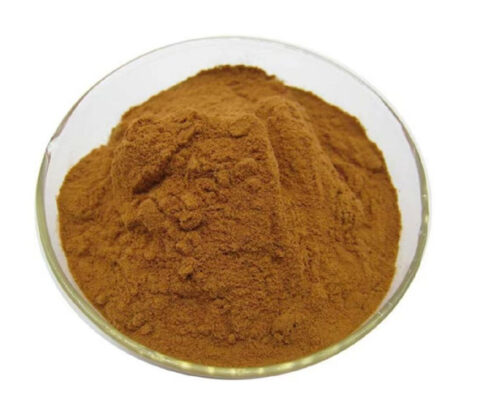
【Appearance】: Brownish yellow fine powder
【Particle size】: 95% pass 80 mesh size
Gardeniae Fructus (Zhi Zi) Extract Powder Production Flowchart
Gardeniae Fructus (Zhi Zi) raw materials – natural air drying–Coarse powder(40 mesh) -Low temperature water extraction – 1st Reflux Extraction(10 times water,2 Hrs) – 2nd Reflux Extraction8 times water,1.5 Hrs) – 3rd Reflux Extraction(6 times water,1 Hrs) – Extraction Solution-combine&Filtrate-Concentrate-Extractum-spray drying – screening – packaging – detection of physical and chemical indicators – warehousing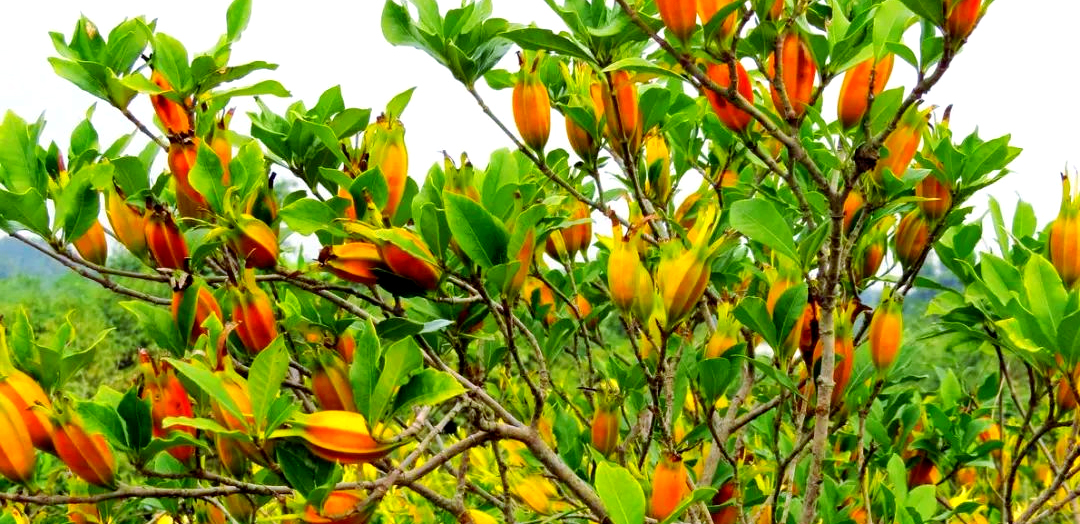
Specification Sheet of Gardeniae Fructus (Zhi Zi) Extract Powder
| Product name: | Zhu Zi Extract | ||
| Specification: | 10:1 TLC | ||
| Part used: | Dried roots of Gardenia jasminoides Ellis | ||
| Solvent used: | Hot water | ||
| Process: | Raw materials crushed, extracted, concentrated and spray-dried to powder | ||
| Non GMO according to regulation (EC) 1829/2003 and 1830/2003 or United States requirements. Non allergen according to Directive 2007/68 amending Annex IIIa to Directive 2000/13/EC and US Food allergen labelling and consumer protection act 2004. | |||
| Heavy Metals: | |||
| Lead: | NMT 3ppm | Cadmium: | NMT 1ppm |
| Arsenic: | NMT 2ppm | Mercury: | NMT 1ppm |
| Residual solvents: | Comply to USP | ||
| Pesticides residues: | Conform to Regulation USP<561> | ||
| Microbiology: | |||
| Total plate count: | 10000cfu/g Max | Yeasts and molds: | 1000cfu/g Max |
| E.coli: | Not detected in (g)10 | Salmonella spp.: | Not detected in (g)25 |
| Staphylococcus aureus: | Not detected in (g)10 | Clostridium spp.: | Not Present in 0.1 g of food |
| Organoleptic quality | Method | Specifications | |
| Aspect: | Visual : ( CQ-MO-148) | Powder | |
| Color: | Visual : ( CQ-MO-148) | Offwhite/light brownish | |
| Flavor: | Sensory: (CQ-MO-148) | Characteristic | |
| Analytical quality | Method | Specifications | |
| Identification: | TLC | Conform | |
| Loss on drying: | USP <731> | < 10% | |
| Bulk density: | USP <616> Method I | 40 – 60 g/100mL | |
| Particle size: | Analytical sieving || USP <786> | 100% through 80meshes | |
| Packaging suitable for foodstuff. | |||
Extended Reading
Gardeniae Fructus (Zhi Zi) Function and Efficacy Recorded in TCM
Gardenia jasminoides is a very important heat clearing medicine in traditional Chinese medicine. It has a bitter and cold nature, and is suitable for the heart, lungs, and three burner meridians. Its core function can be summarized as “clearing and eliminating fire evil, promoting the circulation of the three burners”, especially adept at clearing various types of “fire” and “heat”, and guiding them to be excreted through urine. The following are the specific roles of gardenia in traditional Chinese medicine theory:
1. Clearing fire and eliminating annoyance
This is one of the most important functions of gardenia. It is cold in nature and can directly break through fire. It is particularly good at clearing the stagnation and heat between the heart, chest, and diaphragm, thereby relieving restlessness and anxiety.
Indications for fever and restlessness: Used in the early stages of febrile diseases (acute febrile diseases), where pathogenic heat accumulates in the chest, causing high fever, restlessness, restlessness, and even delirium. The famous “Gardenia and Fermented Black Bean Soup” is specifically designed for this purpose, consisting only of two herbs: Gardenia and Fermented Black Bean, which can dispel the stagnation and heat in the chest and relieve annoyance.
Treatment for internal heat and restlessness: not caused by external factors, but by emotional and emotional injuries, qi stagnation and fire induced restlessness, anxiety, insomnia, bitter mouth, etc.
2. Clear heat and eliminate dampness
Gardenia can promote the circulation of the Sanjiao waterway, allowing the elimination of dampness and heat from the body through urine. This is a very unique “heat inducing downward” effect of Gardenia.
Indicating for damp heat jaundice: Used for jaundice caused by damp heat in the liver and gallbladder (yellow body, yellow eyes, yellow urine), it is an essential medicine for treating acute jaundice hepatitis, cholecystitis and other diseases. In the famous prescription “Yin Chen Hao Tang”, gardenia is used together with Yin Chen and rhubarb to clear heat and dampness, and relieve jaundice.
Indications for damp heat and gonorrhea syndrome: Used for short, red, burning, and painful urine caused by damp heat in the lower burner bladder (such as urinary tract infections). Gardenia was used in the book ‘Eight Zheng San’.
3. Cooling blood and detoxifying
Gardenia enters the bloodstream and can eliminate heat toxins from the blood.
Indications for Blood Heat Bleeding: Used for various bleeding syndromes caused by blood heat rash, such as vomiting blood, nosebleeds (nosebleeds), coughing up blood, urinating blood, etc. Often used together with cooling and hemostatic drugs such as Shengdi and Baimaogen.
Indications for heat toxin sores: Used for redness, swelling, and pain in the eyes, throat, and sores caused by excessive fire toxin. Can clear heat and detoxify, can be taken orally or externally.
4. External application for reducing swelling and relieving pain
Gardenia powder applied externally has excellent effects on promoting blood circulation, removing blood stasis, reducing swelling, and relieving pain.
Indications for traumatic injuries: Used for local redness, swelling, bruising, and pain caused by sprains, contusions, etc. Commonly used in folk medicine, gardenia powder is mixed with egg white, yellow wine, or flour to form a paste. When applied externally to the affected area, it can quickly reduce swelling and blood stasis.
Modern Pharmacological Effects of Gardeniae Fructus (Zhi Zi)
As an important heat clearing medicine, the modern pharmacological research of Gardenia jasminoides is very rich, revealing the scientific mechanism behind its traditional effects of “purging fire and eliminating annoyance, clearing heat and dampness, cooling blood and detoxifying”. Its main active ingredients include geniposide (geniposide), crocin, gardenia yellow pigment, etc. The following are the main modern pharmacological effects of Gardenia jasminoides:
1.Hepatoprotective and choleretic effects
This is one of the most classic and clear pharmacological effects of gardenia.
Gallbladder: Gardenia jasminoides and its extracts can significantly promote bile secretion and excretion, among which genipin, the hydrolyzed product of geniposide, is the main active ingredient in promoting bile flow.
Liver protection: It has a significant protective effect on acute liver injury caused by chemical substances such as carbon tetrachloride, can reduce liver cell degeneration and necrosis, and lower serum transaminase levels.
Application: This provides a core pharmacological basis for the treatment of jaundice hepatitis, cholecystitis, and other conditions caused by liver and gallbladder dampness and heat with Gardenia jasminoides.
2. Anti inflammatory, analgesic, and antipyretic effects
Anti inflammatory: Geniposide and its metabolite genipin can inhibit the production of various inflammatory mediators and have inhibitory effects on acute, chronic, and immune inflammatory models.
Analgesia: Its extract has a good analgesic effect, and the mechanism of action may be related to central inhibition.
Antipyretic: It has a clear antipyretic effect on fever models caused by yeast and other substances.
Application: This explains why gardenia can treat fever, restlessness, sores, swelling, and various inflammatory pains.
3. Effects on the central nervous system
Neuroprotection: Gardenia extract has a protective effect on models of cerebral ischemia-reperfusion injury, Alzheimer’s disease, Parkinson’s disease, etc., and can improve learning and memory abilities. Its mechanism is related to antioxidant, anti apoptotic, and anti-inflammatory effects.
Sedation: It can synergize with the hypnotic effect of pentobarbital sodium, prolong sleep time, and have a certain sedative effect.
Application: This provides direct evidence for the treatment of mental and neurological symptoms such as restlessness, insomnia, and restlessness caused by “heat disturbance of the mind” with Gardenia jasminoides.
4. Antioxidant and anti-tumor effects
Antioxidant: The iridoid and crocin components in Gardenia jasminoides have strong ability to scavenge free radicals and alleviate oxidative stress damage.
Anti tumor: Research shows that geniposide and saffron can inhibit the proliferation and induce apoptosis of a variety of cancer cells (such as colon cancer, liver cancer, breast cancer). It is often used as an adjuvant therapy drug, and when combined with chemotherapy, it can enhance sensitivity and reduce toxicity.
5. Effects on the cardiovascular system
Lowering blood pressure: Its water decoction and alcohol extract have a long-lasting antihypertensive effect on experimental animals.
Protection of blood vessels: it can expand blood vessels and fight atherosclerosis.
6. Resistance to pathogenic microorganisms
Gardenia has varying degrees of inhibitory effects on various bacteria (such as Staphylococcus aureus, Neisseria meningitidis), fungi, and leptospira.