
Jujubae Fructus (Da Zao) Extract Powder 10:1, 20:1, 50:1 TLC


The role of jujube in traditional Chinese medicine includes tonifying the middle and nourishing qi, nourishing blood and calming the mind. Used for spleen deficiency, insufficient food intake, fatigue, and loose stools.

Jujubae Fructus (Da Zao) Extract Powder 10:1, 20:1, 50:1 TLC
【Other names】: Da Zao, Fructus Jujubae, Hong Zao ,Red Date, Chinese Date
【Botanical source】: Ziziphus jujuba Mill.
【Part used】: Jujubes are oval or spherical in shape, measuring 2-3.5cm in length and 1.5-2.5cm in diameter. The surface is dark red with a slight luster and irregular wrinkles. The base is concave with short fruit stalks. The outer skin is thin, the middle skin is brownish yellow or light brown, fleshy, soft, rich in sugar and oily. The fruit core is spindle shaped, with sharp ends and a hard texture. It has a slight fragrance and a sweet taste.
【Specification】: 10:1, 20:1, 50:1 TLC
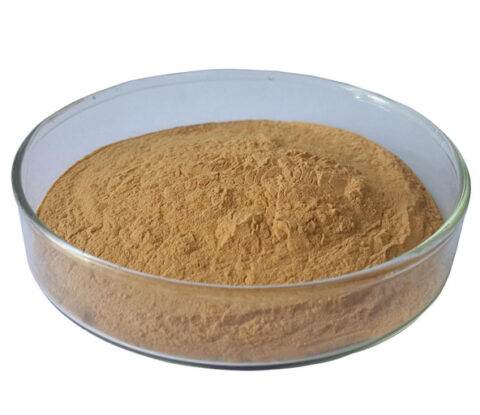
【Appearance】: Brownish yellow fine powder
【Particle size】: 95% pass 80 mesh size
Jujubae Fructus (Da Zao) Extract Powder Production Flowchart
Jujubae Fructus (Da Zao) raw materials – natural air drying–Coarse powder(40 mesh) -Low temperature water extraction – 1st Reflux Extraction(10 times water,2 Hrs) – 2nd Reflux Extraction8 times water,1.5 Hrs) – 3rd Reflux Extraction(6 times water,1 Hrs) – Extraction Solution-combine&Filtrate-Concentrate-Extractum-spray drying – screening – packaging – detection of physical and chemical indicators – warehousing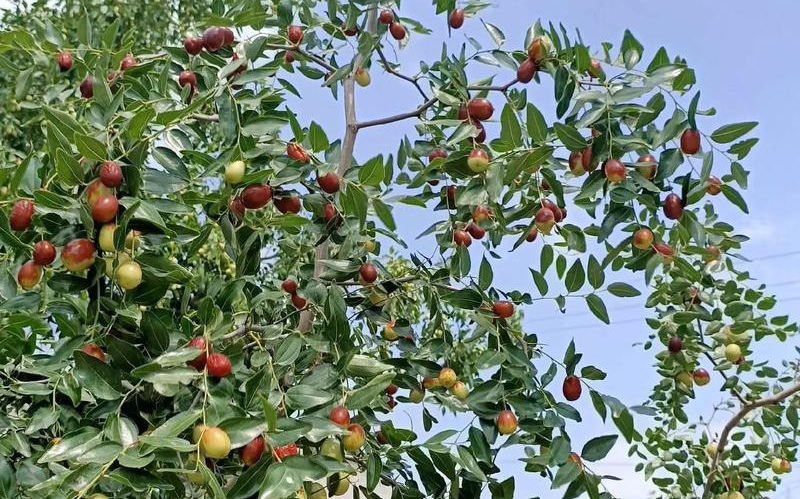
Specification Sheet of Jujubae Fructus (Da Zao) Extract Powder
| Product name: | Da Zao Extract | ||
| Specification: | 10:1 TLC | ||
| Part used: | Dried fruits of Ziziphus jujuba Mill. | ||
| Solvent used: | Hot water | ||
| Process: | Raw materials crushed, extracted, concentrated and spray-dried to powder | ||
| Non GMO according to regulation (EC) 1829/2003 and 1830/2003 or United States requirements. Non allergen according to Directive 2007/68 amending Annex IIIa to Directive 2000/13/EC and US Food allergen labelling and consumer protection act 2004. | |||
| Heavy Metals: | |||
| Lead: | NMT 3ppm | Cadmium: | NMT 1ppm |
| Arsenic: | NMT 2ppm | Mercury: | NMT 1ppm |
| Residual solvents: | Comply to USP | ||
| Pesticides residues: | Conform to Regulation USP<561> | ||
| Microbiology: | |||
| Total plate count: | 10000cfu/g Max | Yeasts and molds: | 1000cfu/g Max |
| E.coli: | Not detected in (g)10 | Salmonella spp.: | Not detected in (g)25 |
| Staphylococcus aureus: | Not detected in (g)10 | Clostridium spp.: | Not Present in 0.1 g of food |
| Organoleptic quality | Method | Specifications | |
| Aspect: | Visual : ( CQ-MO-148) | Powder | |
| Color: | Visual : ( CQ-MO-148) | Brownish | |
| Flavor: | Sensory: (CQ-MO-148) | Characteristic | |
| Analytical quality | Method | Specifications | |
| Identification: | TLC | Conform | |
| Loss on drying: | USP <731> | < 10% | |
| Bulk density: | USP <616> Method I | 40 – 60 g/100mL | |
| Particle size: | Analytical sieving || USP <786> | 100% through 80meshes | |
| Packaging suitable for foodstuff. | |||
Extended Reading
Jujubae Fructus (Da Zao) Function and Efficacy Recorded in TCM
Jujube (usually referring to red dates) holds a high position in traditional Chinese medicine and is an indispensable medicinal and edible product of the same origin. It is not only a common nourishing ingredient in daily life, but also a commonly used “adjunctive medicine” in traditional Chinese medicine prescriptions. According to traditional Chinese medicine classics, the core functions of jujube can be summarized into four aspects:
Nourish the middle and qi (mainly tonifying the spleen and stomach)
Meaning: Enhance spleen and stomach function, supplement energy (qi) in the human body. The spleen and stomach are the foundation of postnatal development and the source of qi and blood biochemistry. Jujube nourishes the whole body fundamentally by strengthening the spleen and stomach.
Application: Used to treat symptoms such as loss of appetite, loose stools, fatigue, and pale complexion caused by spleen and stomach weakness. Very suitable for people with post illness physical weakness, malnutrition, or general physical weakness.
2. Nourish blood and calm the mind (mainly nourishing heart and blood)
Meaning: Nourish blood and stabilize the mind.
Application: This is a very prominent effect of jujube.
Nourishing blood: Used for patients with pale complexion, dizziness, palpitations (palpitations, heartbeat) caused by blood deficiency.
Relieve uneasiness of mind and body tranquilization: Used for insomnia, excessive dreaming, restlessness, and emotional anxiety caused by insufficient heart and blood, and loss of mental nourishment. The famous Gan Mai Da Zao Tang (licorice, wheat, jujube) is a classic prescription specifically designed to treat “women’s restlessness” (similar to modern hysteria and menopausal syndrome), characterized by feelings of joy, sadness, crying, and unpredictable emotions.
3. Relieve drug effects
Meaning: Adding jujube to formulas with strong or toxic properties can alleviate their toxic side effects and protect the body’s vital energy (especially the spleen and stomach) from being damaged by strong drugs.
Classic example: In the Ten Jujube Soup of Junxia Zhushui, ten large jujubes are used to alleviate the toxicity of the three powerful medicines, Gansui, Euphorbia, and Yuanhua, ensuring that they do not harm the root while drinking the water.
Harmonize medicinal properties
Meaning: Coordinate the biases of various drugs in the prescription, making the entire prescription work synergistically and more harmoniously.
Application: Jujube has a sweet and smooth taste, and plays the role of a “peacemaker” in many prescriptions.
It can alleviate the sweating intensity of medicines such as ephedra and cassia twigs, and prevent excessive sweating.
It can balance the bitter and cold nature of medicines such as Huanglian and Huangqin, and prevent their damage to the spleen and stomach yang qi.
2. The nature, taste and channel tropism
Taste: Sweet, warm.
Gan/sweet: It can nourish, harmonize, and slow down, reflecting its characteristics of nourishing, harmonizing, and slowing down.Wen/warm: It has a warming and tonifying effect, suitable for those with a deficiency cold constitution, but excessive intake can easily promote dampness and heat.
Gui Jing/ Channel tropism: Gui Spleen, Stomach, Heart Meridian.
This directly corresponds to its core functions of “tonifying the middle and nourishing qi” (spleen and stomach) and “nourishing blood and calming the mind” (heart).
Modern Pharmacological Effects of Jujubae Fructus (Da Zao)
The modern pharmacological research on jujube is very rich, and many research results confirm its traditional Chinese medicine efficacy. The following are the main functions of jujube based on modern pharmacological research:
1.The regulatory effect on the immune system (confirming the concept of “replenishing qi”)
Enhancing immune function: Jujube polysaccharides are one of the most important active ingredients in jujube. Research has shown that jujube polysaccharides can:
Significantly promote the phagocytic function of macrophages and enhance their ability to clear pathogens and foreign substances.
Promote the proliferation and differentiation of lymphocytes (such as T cells and B cells).
Raise the levels of immunoglobulins (such as IgG and IgM) in the serum to enhance humoral immunity.
Increase the activity of natural killer cells (NK cells).
Simply put, this is like enhancing the combat effectiveness of the human defense force (macrophages, NK cells), expanding the size of special forces (lymphocytes), and upgrading the weapon system (immunoglobulin), thereby comprehensively improving the body’s immunity. This is consistent with the concept of using jujube in traditional Chinese medicine to “tonify qi and strengthen the surface” and prevent external pathogens.
2. The effect on the blood system (confirming “nourishing blood”)
Promote hematopoiesis: Jujube is rich in cyclic adenosine monophosphate (cAMP), iron, and vitamin C, all of which are crucial for hematopoiesis.
CAMP: can regulate the physiological activity of hematopoietic stem cells and promote hematopoiesis.
Iron: It is a direct raw material for synthesizing hemoglobin.
Vitamin C: It can promote the reduction of trivalent iron in food to more easily absorbed divalent iron, greatly improving the absorption rate of iron.
Popular explanation: Jujube provides the body with key “raw materials” (iron) and efficient “production tools” (vitamin C and cAMP) for producing blood, thereby achieving the effects of “nourishing blood” and anti anemia.
3. Antioxidant and anti-aging effects
Free radical scavenging: Jujube is rich in polysaccharides, flavonoids, vitamin C, and CAMP, all of which are powerful natural antioxidants.
Protecting cells: These antioxidant components can eliminate excessive free radicals in the body, reduce oxidative stress damage to cell membranes, proteins, and DNA, thereby delaying cell aging and preventing chronic diseases related to oxidative stress.
Simply put, jujubes are like applying a layer of “rust proof paint” to the body, slowing down the aging process of various parts of the body due to oxidation and rusting.
4. The protective effect on the nervous system (confirming the concept of ‘calming the nerves’)
Calming and calming: Studies have shown that saponins, flavonoids, and cAMP in jujube have sedative, hypnotic, and anti anxiety effects.
Protecting neurons: Jujube extract has a protective effect on nerve cells and may help improve memory and cognitive function.
Popular explanation: This provides a modern scientific basis for the use of jujube in traditional Chinese medicine to treat “restlessness, insomnia, and restlessness”. It is not a direct sleeping pill, but achieves a calming effect by nourishing and regulating the nervous system.
5.The protective effect on the digestive system (confirming the principle of “tonifying the middle and nourishing qi”)
Protecting the gastrointestinal mucosa: Jujube polysaccharides can form a protective film on the surface of the gastric mucosa, reducing the damage of irritating substances such as gastric acid and alcohol to the gastric wall.
Anti ulcer: Studies have shown that jujube extract has clear therapeutic and preventive effects on experimental gastric ulcers.
Popular explanation: This explains why jujube can “strengthen the spleen and stomach”. It not only provides nutrition, but also protects our digestive organs like a “gastric mucosal repair agent”.
6. Antitumor effect
Inhibition of cancer cells: Multiple in vitro and animal experiments have shown that jujube polysaccharides and triterpenoids can:
It directly inhibits the proliferation of various cancer cells (such as liver cancer, gastric cancer, breast cancer cells)
Inducing apoptosis of cancer cells (programmed cell death).
Prevent the formation of new blood vessels in tumors and cut off their nutritional supply.
Adjuvant radiotherapy and chemotherapy: The immune enhancement and hematopoietic function improvement effects of jujube can alleviate the suppression of bone marrow and immune system damage caused by radiotherapy and chemotherapy, playing an auxiliary role of “reducing toxicity and increasing efficiency”.
Note: This is mainly based on experimental research and cannot be directly equated with anti-cancer drugs, but it is a very promising auxiliary health food.
7. Other functions
Hepatoprotective effect: It has a protective effect against chemical liver injury and can reduce serum transaminase levels.
Anti fatigue: can prolong weight-bearing swimming time, reduce post exercise blood lactate and urea nitrogen levels, and accelerate physical recovery.
Cardiovascular protection: It has a slight effect on lowering blood pressure, blood lipids, and antiplatelet aggregation.