
Kelp Extract Powder 10:1, 20:1, 50:1 TLC


The modern pharmacological effects of Kelp mainly stem from its polysaccharide components. Brown algae polysaccharide sulfate (fucoidan) has significant anti-tumor, immune regulatory, and anticoagulant activities. Alginate, as dietary fiber, can assist in regulating blood pressure, blood sugar, and intestinal health. Rich organic iodine can correct iodine deficiency, but excessive intake can affect thyroid function. It also has antioxidant, anti-inflammatory, and heavy metal excretion promoting effects.

Kelp Extract Powder 10:1, 20:1, 50:1 TLC
【Other names】:Kunbu, Khumbu, Sea-Tangle, Sea Apron, Devil’s Apron
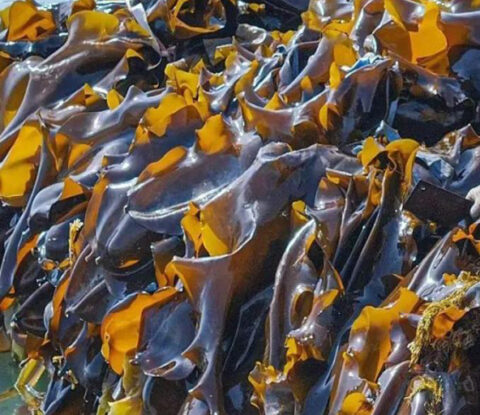
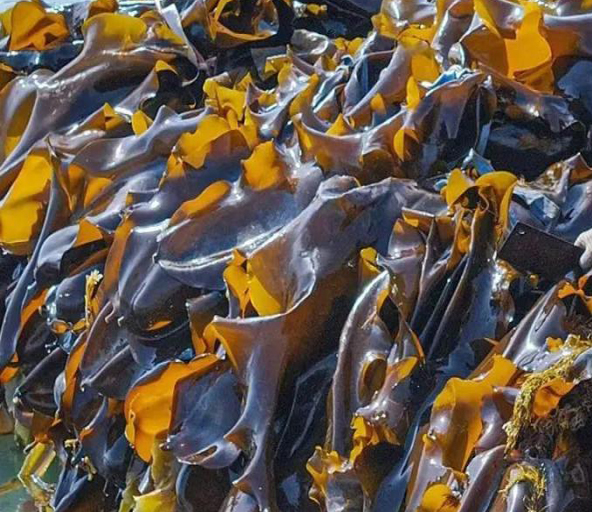
【Botanical source】: Dried leaf like bodies of Laminaria japonica Aresch or Ecklonia kurome Okam plants in the family Myceliaceae
【Part used】: Leaf
【Specification】: 10:1, 20:1, 50:1 TLC
【Extraction solvents】: Water
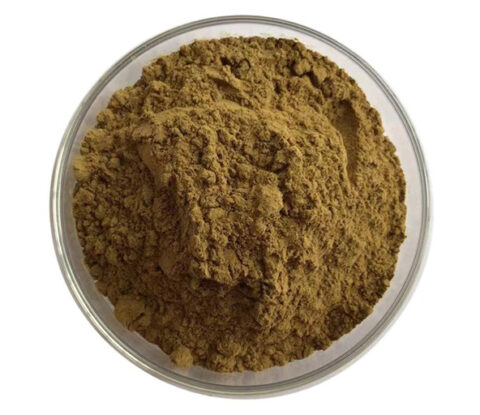
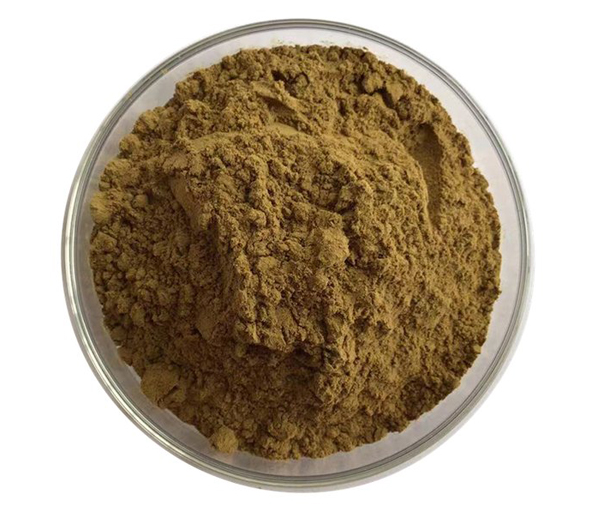
【Appearance】: Brownish fine powder
【Particle size】: 95% pass 80 mesh size
【Main ingredients】: Kelp is a large seaweed rich in polysaccharides, with its main active ingredients being fucoidan sulfate and alginate. The former has anticoagulant, anti-tumor, and immune regulatory effects; The latter is dietary fiber, which can assist in lowering blood pressure and regulating the intestines. It also contains abundant iodine, mannitol, brown algae polyphenols, and various minerals.
【Storage conditions】:Store at room temperature in a sealed manner, away from light, and in a ventilated, cool, and dry environment.
【Shelf life】: 24 months from the production date
Kelp Extract Powder Production Flowchart
Kelp raw materials -Coarse powder(40 mesh) -Low temperature water extraction – 1st Reflux Extraction(10 times water,2 Hrs) – 2nd Reflux Extraction8 times water,1.5 Hrs) – 3rd Reflux Extraction(6 times water,1 Hrs) – Extraction Solution-combine&Filtrate-Concentrate-Extractum-spray drying – screening – packaging – detection of physical and chemical indicators – warehousing
Specification Sheet of Kelp Extract Powder
| Product name: | Kelp extract | ||
| Specification: | 10:1 TLC | ||
| Part used: | Dried leaf like bodies of Laminaria japonica Aresch | ||
| Solvent used: | Water | ||
| Process: | Raw materials crushed, extracted, concentrated and spray-dried to powder | ||
| Non GMO according to regulation (EC) 1829/2003 and 1830/2003 or United States requirements. Non allergen according to Directive 2007/68 amending Annex IIIa to Directive 2000/13/EC and US Food allergen labelling and consumer protection act 2004. | |||
| Heavy Metals: | |||
| Lead: | NMT 3ppm | Cadmium: | NMT 1ppm |
| Arsenic: | NMT 2ppm | Mercury: | NMT 1ppm |
| Residual solvents: | Comply to USP | ||
| Pesticides residues: | Conform to Regulation USP<561> | ||
| Microbiology: | |||
| Total plate count: | 10000cfu/g Max | Yeasts and molds: | 1000cfu/g Max |
| E.coli: | Not detected in (g)10 | Salmonella spp.: | Not detected in (g)25 |
| Staphylococcus aureus: | Not detected in (g)10 | Clostridium spp.: | Not Present in 0.1 g of food |
| Organoleptic quality | Method | Specifications | |
| Aspect: | Visual : ( CQ-MO-148) | Powder | |
| Color: | Visual : ( CQ-MO-148) | Brownish yellow | |
| Flavor: | Sensory: (CQ-MO-148) | Characteristic | |
| Analytical quality | Method | Specifications | |
| Identification: | TLC | Conform | |
| Loss on drying: | USP <731> | < 10% | |
| Bulk density: | USP <616> Method I | 40 – 60 g/100mL | |
| Particle size: | Analytical sieving || USP <786> | 100% through 80meshes | |
| Packaging suitable for foodstuff. | |||
Extended Reading
Modern Research Summary on Kelp (Laminaria spp.) Extract
Kelp, a type of brown seaweed, is a rich source of unique bioactive compounds with diverse physiological effects, making it a focus for functional food and pharmaceutical research.
- Chemical Components:
- Polysaccharides: The primary bioactive components, including:
- Alginate: A soluble dietary fiber forming viscous gels, crucial for its digestivesatiety and heavy metal chelation properties.
- Fucoidan: A sulfated polysaccharide with complex, heterogeneous structure, responsible for most of its noted biological activities (anti-cancer, immunomodulatory, antithrombotic).
- Laminarin: A β-glucan storage polysaccharide with prebiotic and potential cholesterol-lowering effects.
- Minerals & Iodine: Exceptionally high, bioavailable iodine content (variable, risk of excess), along with potassium, magnesium, calcium, and iron.
- Pigments & Phenolics: Fucoxanthin (a carotenoid with anti-obesity potential), and phlorotannins (polyphenols with antioxidant activity).
- Other: Proteins, peptides, vitamins (esp. B, K), and trace elements.
- Health Benefits (Pharmacological Activities):
- Metabolic Health: Fucoxanthin promotes thermogenesis and fatty acid oxidation via UCP1 upregulation in white adipose tissue. Alginate induces satiety and modulates glucose absorption.
- Anticancer & Immunomodulation: Fucoidan is extensively studied for inducing apoptosis, inhibiting angiogenesis, and modulating immune cell activity (e.g., enhancing NK cell cytotoxicity) against various cancer lines. It often acts synergistically with chemotherapy.
- Cardiovascular & Anticoagulant: Fucoidan exhibits heparin-like antithrombotic activity. Alginate and laminarin may help manage blood pressure and cholesterol.
- Gastrointestinal Health: Alginate acts as a prebiotic and forms a protective raft for gastroesophageal reflux disease (GERD) management. Its heavy metal binding capacity is noted.
- Antioxidant & Anti-inflammatory: Phlorotannins and fucoidan scavenge free radicals and inhibit pro-inflammatory cytokines (e.g., TNF-α, IL-6).
- Interactions & Warnings:
- Drug Interactions: May potentiate anticoagulant/antiplatelet drugs (e.g., warfarin, aspirin) due to fucoidan. High potassium can interfere with potassium-sparing diuretics and ACE inhibitors. May affect absorption of thyroid medications (levothyroxine) and other oral drugs via alginate’s gel-forming property.
- Contraindications/Warnings: Hyperthyroidism or thyroid autoimmunity (due to high iodine). Severe renal impairment (risk of hyperkalemia). Pregnancy/Lactation should use caution due to variable iodine content and potential heavy metal contamination.
- Key Risks: Iodine-induced thyroid dysfunction (both hypo- and hyperthyroidism) from chronic high intake. Potential for arsenic and heavy metal accumulation depending on harvest location.
- Applications:
- Nutraceuticals/Functional Foods: Sold as capsules/powders for thyroid support, weight management, and mineral supplementation. Used as a natural thickener (alginate) and umami flavoring.
- Pharmaceuticals/Cosmeceuticals: Fucoidan is a key ingredient in cancer adjuvant therapy research, wound healing formulations, and anti-aging skincare products for its moisturizing and antioxidant properties.
- Agriculture/Industry: Used as a biofertilizer and soil conditioner, and alginate is a key material in biomedical engineering (wound dressings, drug delivery).
References:
- Lomartire, S., et al. (2021). Marine Drugs. “An Overview on the Potential Biomedical Applications of Fucoidan.”
- Zava, T.T., & Zava, D.T. (2011). Thyroid Research. “Assessment of Japanese iodine intake based on seaweed consumption.”
- Zorofchian Moghadamtousi, S., et al. (2014). BioMed Research International. “Anticancer and Antitumor Potential of Fucoidan: Mechanism of Action.”
- Maeda, H., et al. (2005). Biochemical and Biophysical Research Communications. “Fucoxanthin from edible seaweed, induces apoptosis and exerts anti-obesity effect.”
- European Food Safety Authority (EFSA). (2021). “Tolerable upper intake level for dietary iodine.” EFSA Journal.
Note: This summary is for informational purposes. It may interact with medications and is contraindicated in certain conditions. Consult a healthcare professional before therapeutic use, particularly regarding its estrogenic activity.