
Moutan Bark (Mu Dan Pi) Extract Powder 10:1, 20:1, 50:1 TLC


The functions of tree peony bark in traditional Chinese medicine include clearing heat and cooling blood, promoting blood circulation and removing blood stasis. Used for warming the blood in the body, treating toxic spots, vomiting blood and bleeding, staying hot at night and cool early, without sweating or bone steaming, menstrual cramps, falls and pains, and treating abscesses and sores.

Moutan Bark (Mu Dan Pi) Extract Powder 10:1, 20:1, 50:1 TLC
【Other names】: Mu Dan Pi, Cortex Moutan, Dan Pi, Tree Peony Bark
【Botanical source】: Paeonia suffruticosa Andr
【Part used】: Dry root bark of Paeonia suffrutiosa Andr, a plant in the Ranunculaceae family. Excavate the roots in autumn, remove fine roots and sediment, peel off the root bark, and dry in the sun; Or scrape off the rough skin, remove the wood core, and dry in the sun.
【Specification】: 10:1, 20:1, 50:1 TLC
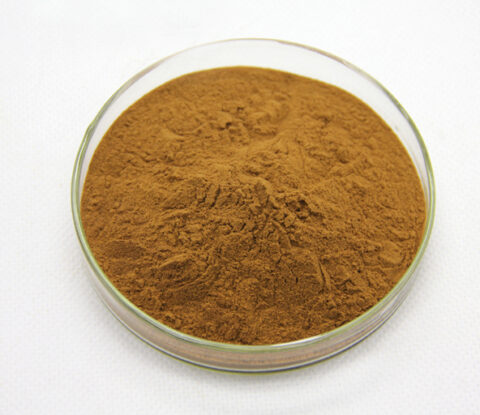
【Appearance】: Brownish yellow fine powder
【Particle size】: 95% pass 80 mesh size

Moutan Bark (Mu Dan Pi) Extract Powder Production Flowchart
Moutan Bark (Mu Dan Pi) raw materials – natural air drying–Coarse powder(40 mesh) -Low temperature water extraction – 1st Reflux Extraction(10 times water,2 Hrs) – 2nd Reflux Extraction8 times water,1.5 Hrs) – 3rd Reflux Extraction(6 times water,1 Hrs) – Extraction Solution-combine&Filtrate-Concentrate-Extractum-spray drying – screening – packaging – detection of physical and chemical indicators – warehousing
Specification Sheet of Moutan Bark (Mu Dan Pi) Extract Powder
| Product name: | Mu Dan Pi Extract | ||
| Specification: | 10:1 TLC | ||
| Part used: | Dried fruits of Citrus aurantium L | ||
| Solvent used: | Hot water | ||
| Process: | Raw materials crushed, extracted, concentrated and spray-dried to powder | ||
| Non GMO according to regulation (EC) 1829/2003 and 1830/2003 or United States requirements. Non allergen according to Directive 2007/68 amending Annex IIIa to Directive 2000/13/EC and US Food allergen labelling and consumer protection act 2004. | |||
| Heavy Metals: | |||
| Lead: | NMT 3ppm | Cadmium: | NMT 1ppm |
| Arsenic: | NMT 2ppm | Mercury: | NMT 1ppm |
| Residual solvents: | Comply to USP | ||
| Pesticides residues: | Conform to Regulation USP<561> | ||
| Microbiology: | |||
| Total plate count: | 10000cfu/g Max | Yeasts and molds: | 1000cfu/g Max |
| E.coli: | Not detected in (g)10 | Salmonella spp.: | Not detected in (g)25 |
| Staphylococcus aureus: | Not detected in (g)10 | Clostridium spp.: | Not Present in 0.1 g of food |
| Organoleptic quality | Method | Specifications | |
| Aspect: | Visual : ( CQ-MO-148) | Powder | |
| Color: | Visual : ( CQ-MO-148) | Brownish | |
| Flavor: | Sensory: (CQ-MO-148) | Characteristic | |
| Analytical quality | Method | Specifications | |
| Identification: | TLC | Conform | |
| Loss on drying: | USP <731> | < 10% | |
| Bulk density: | USP <616> Method I | 40 – 60 g/100mL | |
| Particle size: | Analytical sieving || USP <786> | 100% through 80meshes | |
| Packaging suitable for foodstuff. | |||
Extended Reading
Moutan Bark (Mu Dan Pi) Function and Efficacy Recorded in TCM
Moutan Bark (Mu Dan Pi), as a traditional Chinese medicine, holds an important and unique position in the theory of traditional Chinese medicine. It originates from the dried root bark of the peony plant in the Ranunculaceae family. Its nature is slightly cold, with a bitter and pungent taste, and it belongs to the heart, liver, and kidney meridians. Its core function can be summarized as “clearing heat and cooling blood, promoting blood circulation and dispersing stasis”, and its specific effects and applications are mainly reflected in the following aspects:
Core efficacy and application
1.Clear heat and cool blood
Clear camp separation, blood separation, and solid heat: This is the most acclaimed effect of peony bark. It is used to treat the late stage of hyperthermia (such as high fever caused by various infectious diseases), when the heat evil goes deep into the blood, resulting in persistent high fever, body rash (subcutaneous bleeding spots), deep red tongue color, even crimson, irritability, delirium, etc. Often used in combination with raw Rehmannia glutinosa, Paeonia lactiflora, etc., such as the classic formula Xijiao Rehmannia Decoction (modern commonly used buffalo horn instead of rhino horn).
Clearing deficient heat: It is used for internal heat syndrome of yin deficiency, such as low fever in the afternoon or at night, hand foot heart heat, bone steaming hot, night sweating (sweating at night), etc. in the presence of tuberculosis, chronic wasting diseases, etc. Often used interchangeably with Zhimu, Biejia, and Shengdi, such as Qinghao Biejia Tang.
2. Promote blood circulation and dispel blood stasis
Help menstruation and eliminate symptoms: Its pungent flavor can promote blood circulation, clear meridians, and dispel blood stasis and lumps. for:
Gynecological blood stasis syndrome: such as menstrual disorders, dysmenorrhea, amenorrhea, postpartum blood stasis and abdominal pain caused by blood stasis. Often used interchangeably with Angelica sinensis, Chuanxiong, and Paeonia lactiflora, such as Guizhi Fuling Pills.
Injuries caused by falls: can help reduce swelling and relieve pain.
Abdominal pain caused by intestinal abscess: Traditional Chinese medicine believes that intestinal abscess (similar to acute appendicitis) is often initially caused by damp heat and blood stasis obstructing the intestines. Peony bark can cool the blood, promote blood circulation, and disperse blood stasis, making it an essential medicine for treating intestinal abscess. It is often used in combination with rhubarb, peach kernels, and winter melon kernels, such as Dahuang Mudan Decoction.
3. Clear away heat and toxic material
Its cool nature helps to clear liver fire and blood heat toxins. It can be used for headaches, blurred vision, rib pain caused by liver depression and excessive fire, as well as heat toxicity ulcers.
Modern Pharmacological Effects of Moutan Bark (Mu Dan Pi)
The modern pharmacological research on peony bark is extensive and in-depth, and its traditional efficacy has been supported and explained by a large amount of scientific data. The main active ingredients include:
Paeonol: widely recognized as the main active ingredient, it is the material basis for many pharmacological effects, especially anti-inflammatory, cardiovascular protection, and neuroprotection.
Paeoniflorin: Although higher in peony, it is also present in peony bark and has anti-inflammatory, immune regulating, and hepatoprotective effects.
Volatile oils, polysaccharides, sterols, and other components also contribute to its comprehensive pharmacological activity.
The following are its main modern pharmacological effects:
Core pharmacological effects (highly corresponding to traditional efficacy)
1.Anti-inflammatory effect
Key ingredient: Paeonol is its main active ingredient and has extremely strong anti-inflammatory activity.
Mechanism of action: It can inhibit the generation and release of various inflammatory mediators, such as prostaglandins, leukotrienes, tumor necrosis factor – α, interleukins, etc; Inhibit the activity of cyclooxygenase and lipoxygenase; Inhibit inflammatory signaling pathways such as nuclear factor kappa B.
Meaning: This directly explains its traditional efficacy of “clearing heat, cooling blood, and eliminating swelling”, which can be used to treat various inflammatory diseases.
2.Effects on the cardiovascular system
Expand blood vessels and improve circulation: Paeonol can dilate coronary arteries and peripheral blood vessels, increase blood flow, and improve microcirculation.
Anti atherosclerosis: it can inhibit platelet aggregation and prevent thrombosis; Reduce blood viscosity; Antioxidant and protective of vascular endothelial cells.
Hypotension: It has a certain effect on lowering blood pressure.
Meaning: These effects provide precise modern scientific basis for its efficacy in promoting blood circulation and dispersing blood stasis, explaining its application basis in the treatment of cardiovascular and cerebrovascular diseases, peripheral vascular diseases, and blood stasis syndrome.
3. Antibacterial and antiviral effects
Antibacterial spectrum: It has inhibitory effects on various bacteria such as Staphylococcus aureus, Streptococcus pyogenes, Escherichia coli, Shigella, and Salmonella typhi.
Antiviral: It has a certain inhibitory effect on influenza virus, herpes virus, etc.
Significance: It supports its efficacy in the treatment of infectious diseases (such as “carbuncle”) and heat clearing and detoxification.
4. Antipyretic, analgesic, and sedative effects
Antipyretic: It has a antipyretic effect on fever caused by various pyrogens.
Analgesia: can increase pain threshold and relieve pain.
Sedation: has a certain central inhibitory effect.
Meaning: This is consistent with the traditional application of “clearing heat” and relieving pain (such as dysmenorrhea and traumatic injury pain).
Other important pharmacological effects
1.Immune regulatory effect
It has a “bidirectional regulation” effect: it can suppress excessive immune responses (such as anti-inflammatory and anti allergic), and enhance low immune function (such as improving macrophage phagocytic ability).
Meaning: This helps to explain its potential value in treating autoimmune diseases such as rheumatoid arthritis and regulating the body’s state.
2. Hepatoprotective effect
It can reduce liver cell damage, lower serum transaminase levels, and counteract chemical liver damage (such as caused by carbon tetrachloride).
Meaning: It provides a basis for its application in traditional Chinese medicine’s “clearing liver fire” and modern liver disease adjuvant therapy.
3. Antitumor activity
Studies have shown that paeonol and extracts of cortex moutan have inhibitory effects on a variety of tumor cells (such as liver cancer, lung cancer, breast cancer, colon cancer cells), can induce apoptosis of tumor cells, and inhibit their proliferation and metastasis.
Mechanism: Involves regulating cell cycle, inhibiting tumor angiogenesis, enhancing immune function, etc.
Meaning: This is a new field of modern research, providing candidate drugs and ideas for traditional Chinese medicine anti-tumor treatment, and has potential connections with its traditional saying of “dispelling symptoms and masses”.
4. Neuroprotective effect
Paeonol can pass through the blood-brain barrier and has antioxidant, anti-inflammatory, and anti apoptotic effects, showing protective effects on neurological damage and degenerative disease models such as cerebral ischemia-reperfusion injury, Alzheimer’s disease, Parkinson’s disease, etc.
Meaning: Expanded its application prospects in cardiovascular and neurodegenerative diseases.
5. Antioxidant effect
It can effectively eliminate free radicals, inhibit lipid peroxidation, and protect cells from oxidative stress damage.
Significance: This is one of the common bases of its many pharmacological effects (such as anti atherosclerosis, anti-aging, neuroprotection, anti-tumor).