
Parsnip Extract Powder 10:1, 20:1, 50:1 TLC
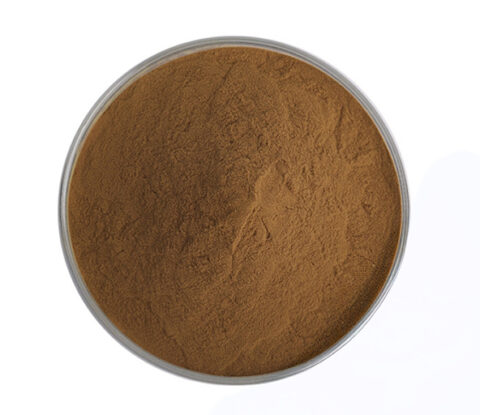
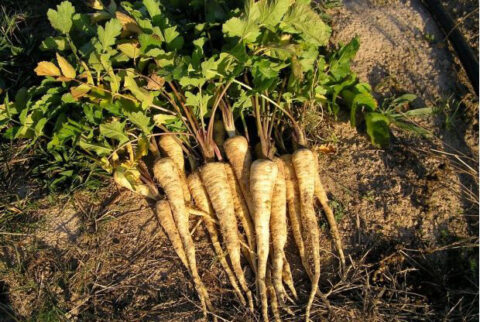


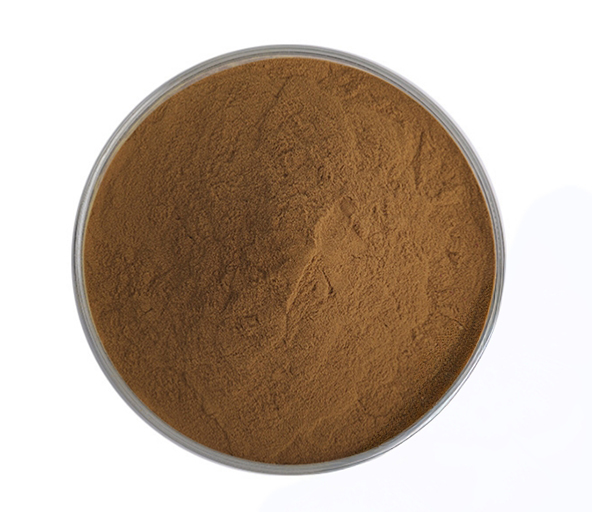

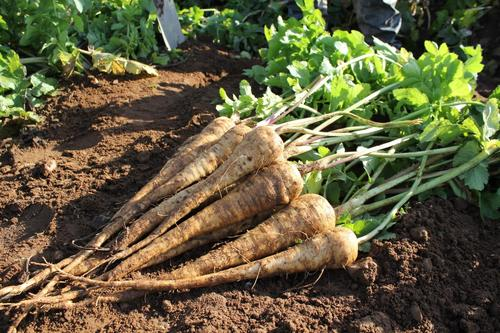
The main functions of Parsnip (Pastinaca sativa) Extract include promoting digestion, regulating blood sugar, enhancing immunity, etc. Its effects are derived from components such as dietary fiber, vitamin C, potassium, and antioxidants.

Parsnip Extract Powder 10:1, 20:1, 50:1 TLC
【Botanical source】: Pastinaca sativa L.
【Part used】: Stem&Root
【Specification】: 10:1 20:1 50:1TLC
【Appearance】: Brownish fine powder
【Extraction solvents】: Water
【Particle size】: 95% pass 80 mesh size
【Main ingredients】: Parsnip roots are rich in soluble and insoluble dietary fiber, with a vitamin C content of 17 milligrams (28% of the daily recommended amount), and contain polyacetylene antioxidants (such as Fusarium oxysporum), which have anti-inflammatory, antifungal, and anticancer properties.
Parsnip Extract Powder Production Flowchart
Parsnip raw materials -Coarse powder(40 mesh) -Low temperature water extraction – 1st Reflux Extraction(10 times water,2 Hrs) – 2nd Reflux Extraction8 times water,1.5 Hrs) – 3rd Reflux Extraction(6 times water,1 Hrs) – Extraction Solution-combine&Filtrate-Concentrate-Extractum-spray drying – screening – packaging – detection of physical and chemical indicators – warehousing
Specification Sheet of Parsnip Extract Powder
| Product name: | Parsnip Extract | ||
| Specification: | 10:1 TLC | ||
| Part used: | Stem&Root of Pastinaca sativa L. | ||
| Solvent used: | Water | ||
| Process: | Raw materials crushed, extracted, concentrated and spray-dried to powder | ||
| Non GMO according to regulation (EC) 1829/2003 and 1830/2003 or United States requirements. Non allergen according to Directive 2007/68 amending Annex IIIa to Directive 2000/13/EC and US Food allergen labelling and consumer protection act 2004. | |||
| Heavy Metals: | |||
| Lead: | NMT 3ppm | Cadmium: | NMT 1ppm |
| Arsenic: | NMT 2ppm | Mercury: | NMT 1ppm |
| Residual solvents: | Comply to USP | ||
| Pesticides residues: | Conform to Regulation USP<561> | ||
| Microbiology: | |||
| Total plate count: | 10000cfu/g Max | Yeasts and molds: | 1000cfu/g Max |
| E.coli: | Not detected in (g)10 | Salmonella spp.: | Not detected in (g)25 |
| Staphylococcus aureus: | Not detected in (g)10 | Clostridium spp.: | Not Present in 0.1 g of food |
| Organoleptic quality | Method | Specifications | |
| Aspect: | Visual : ( CQ-MO-148) | Powder | |
| Color: | Visual : ( CQ-MO-148) | Brownish yellow | |
| Flavor: | Sensory: (CQ-MO-148) | Characteristic | |
| Analytical quality | Method | Specifications | |
| Identification: | TLC | Conform | |
| Loss on drying: | USP <731> | < 10% | |
| Bulk density: | USP <616> Method I | 40 – 60 g/100mL | |
| Particle size: | Analytical sieving || USP <786> | 100% through 80meshes | |
| Packaging suitable for foodstuff. | |||
Extended Reading
Summary of Modern Pharmacological Research on Parsnip (Pastinaca sativa) Extract
Modern research on parsnip (Pastinaca sativa) extract has moved beyond its traditional culinary and folk medicine uses, focusing on its phytochemistry and potential bioactive properties. The primary interest lies in its unique furanocoumarins and polyacetylenes, which are both responsible for its pharmacological effects and its phototoxicity.
Key Phytochemicals & Associated Research Areas:
- Furanocoumarins (Psoralens):Parsnip is particularly rich in linear furanocoumarins like xanthotoxin (8-methoxypsoralen), bergapten (5-methoxypsoralen), and imperatorin.
- Photochemotherapy & Dermatology:This is the most established area. Extracts or isolated psoralens, upon UVA activation (PUVA therapy), inhibit DNA replication and cell proliferation. They are used to treat psoriasis, vitiligo, and cutaneous T-cell lymphoma. Research focuses on optimizing delivery and understanding signaling pathways in skin cells.
- Antimicrobial & Antifungal Activity:In vitro studies show furanocoumarins have activity against various bacteria and fungi. Their mechanism often involves UVA-mediated DNA crosslinking, but some dark-phase activity is also reported.
- Cytotoxicity & Anticancer Potential:Research explores furanocoumarins’ ability to induce apoptosis and cell cycle arrest in various cancer cell lines (e.g., breast, liver, lung) through both photo-activated and non-photoactivated mechanisms, potentially involving oxidative stress and interaction with key proteins like NF-κB.
- Polyacetylenes (Falcarinol-type):Compounds like falcarinol, falcarindiol, and panaxydiol are highly bioactive.
- Cytotoxic & Antiproliferative Activity:These compounds exhibit strong in vitro cytotoxicity against a range of human cancer cells. Their mechanism is linked to their high reactivity, causing alkylation of proteins and inducing apoptosis via mitochondrial pathways.
- Anti-Inflammatory Activity:Falcarinol-type polyacetylenes have demonstrated significant anti-inflammatory effects in cell-based assays (e.g., inhibiting NO production in macrophages), suggesting potential for modulating chronic inflammatory conditions.
- Antimicrobial Activity:They contribute to the plant’s defense and show in vitro activity against bacteria and fungi.
- Antioxidant Activity:Parsnip extract contains flavonoids (e.g., quercetin, kaempferol derivatives) and other phenolics, contributing to free radical scavenging activity in vitro. Research correlates this activity with potential hepatoprotective, neuroprotective, and general anti-aging effects, though robust in vivo data is needed.
- Metabolic & Enzyme-Modulating Effects:
- Cholinesterase Inhibition:Some studies report in vitro inhibitory activity against acetylcholinesterase (AChE) and butyrylcholinesterase (BChE), hinting at a potential avenue for neurodegenerative disease research.
- Hepatoprotective Effects:Animal studies suggest extracts may protect against chemical-induced liver damage, attributed to antioxidant and anti-inflammatory actions.
Important Safety Research (Phototoxicity): A major focus is understanding and mitigating the phototoxic dermatitis caused by furanocoumarins upon skin contact and UV exposure. Research details the mechanism (formation of DNA monoadducts and crosslinks) and aims to develop cultivation methods or processing techniques to reduce psoralen content in edible varieties.
Conclusion: Modern pharmacological research on parsnip extract reveals a complex profile dominated by furanocoumarins and polyacetylenes. While its furanocoumarins underpin its established role in phototherapy for skin disorders, both classes of compounds show promising in vitro anticancer, antimicrobial, and anti-inflammatory properties. Future research is needed to elucidate precise molecular targets, conduct rigorous in vivo and clinical studies for non-dermatological applications, and further address safety concerns related to its inherent phototoxicity and polyacetylene-mediated cytotoxicity at higher doses.
References
- Christensen, L. P., & Brandt, K. (2006). Bioactive polyacetylenes in food plants of the Apiaceae family: Occurrence, bioactivity and analysis. Journal of Pharmaceutical and Biomedical Analysis, *41*(3), 683–693.
- Ekiert, H., Pajor, J., Klin, P., Rzepiela, A., Ślesak, H., & Szopa, A. (2020). Significance of Artemisia vulgaris (Common Mugwort) in the History of Medicine and Its Possible Contemporary Applications Substantiated by Phytochemical and Pharmacological Studies. Molecules, *25*(19), 4415. (Includes comparative discussion on furanocoumarin-bearing plants).
- Jäger, A. K., & Gauguin, B. (2009). Natural products as enzyme inhibitors. In S. Petersen & S. Avonto (Eds.), Natural Products(pp. 129-148). Springer.
- Kays, S. J., & Nottingham, S. F. (2008). Biology and Chemistry of Vegetable Physiology. CRC Press. (Chapter on Apiaceae vegetables).
- Kreutzmann, S., Christensen, L. P., & Edelenbos, M. (2008). Investigation of bitterness in carrots (Daucus carota) based on quantitative chemical and sensory analyses. LWT – Food Science and Technology, *41*(2), 193-205. (Relevant for polyacetylene research in related Apiaceae).
- Luthria, D. L., Mukhopadhyay, S., & Krizek, D. T. (2006). Content of total phenolics and phenolic acids in tomato (Lycopersicon esculentum) fruits as influenced by cultivar and solar UV radiation. Journal of Food Composition and Analysis, *19*(6-7), 771–777. (Methodological reference for phenolic analysis in vegetables).
- Manderfeld, M. M., Schafer, H. W., Davidson, P. M., & Zottola, E. A. (1997). Isolation and identification of antimicrobial furanocoumarins from parsley. Journal of Food Protection, *60*(1), 72–77.
- Zidorn, C., Jöhrer, K., Ganzera, M., Schubert, B., Sigmund, E. M., Mader, J., … & Stuppner, H. (2005). Polyacetylenes from the Apiaceae vegetables carrot, celery, fennel, parsley, and parsnip and their cytotoxic activities. Journal of Agricultural and Food Chemistry, *53*(7), 2518–2523.
Note: This summary is for informational purposes. It may interact with medications and is contraindicated in certain conditions. Consult a healthcare professional before therapeutic use, particularly regarding its estrogenic activity.