
Psoralea Corylifolia(Bu Gu Zhi) Extract Powder 10:1, 20:1, 50:1 TLC


The role of Fructus Psorale in traditional Chinese medicine is to warm the kidneys and promote yang, absorb qi and relieve asthma, warm the spleen and stop diarrhea; External use for dispelling wind and removing spots. Used for kidney yang deficiency, erectile dysfunction, nocturnal emission, frequent enuresis and urination, cold and painful waist and knees, wheezing caused by kidney deficiency, and diarrhea caused by five changes; Topical treatment for vitiligo and alopecia areata.

Psoralea Corylifolia(Bu Gu Zhi) Extract Powder 10:1, 20:1, 50:1 TLC
【Other names】: Bu Gu Zhi,Fructus Psoraleae, Malaytea Scurfpea Fruit ,Po Gu Zhi
【Botanical source】: Psoralea corylifolia L.
【Part used】: The herb is the dried and ripe fruit of the legume plant Psoralea corylifolia L. When the autumn fruits are ripe, harvest them in sequence, dry them in the sun, rub them out, and remove impurities.
【Specification】: 10:1, 20:1, 50:1 TLC
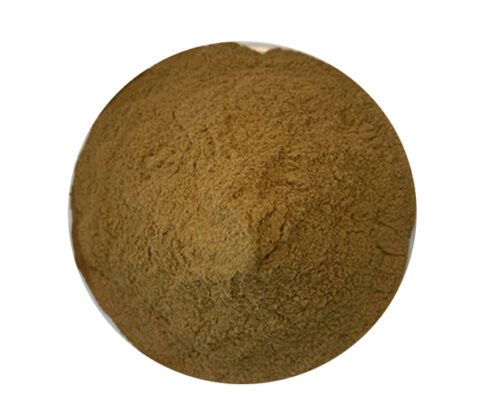
【Appearance】: Brownish fine powder
【Particle size】: 95% pass 80 mesh size
Psoralea Corylifolia(Bu Gu Zhi) Extract Powder Production Flowchart
Psoralea Corylifolia(Bu Gu Zhi) raw materials – natural air drying–Coarse powder(40 mesh) -Low temperature water extraction – 1st Reflux Extraction(10 times water,2 Hrs) – 2nd Reflux Extraction8 times water,1.5 Hrs) – 3rd Reflux Extraction(6 times water,1 Hrs) – Extraction Solution-combine&Filtrate-Concentrate-Extractum-spray drying – screening – packaging – detection of physical and chemical indicators – warehousing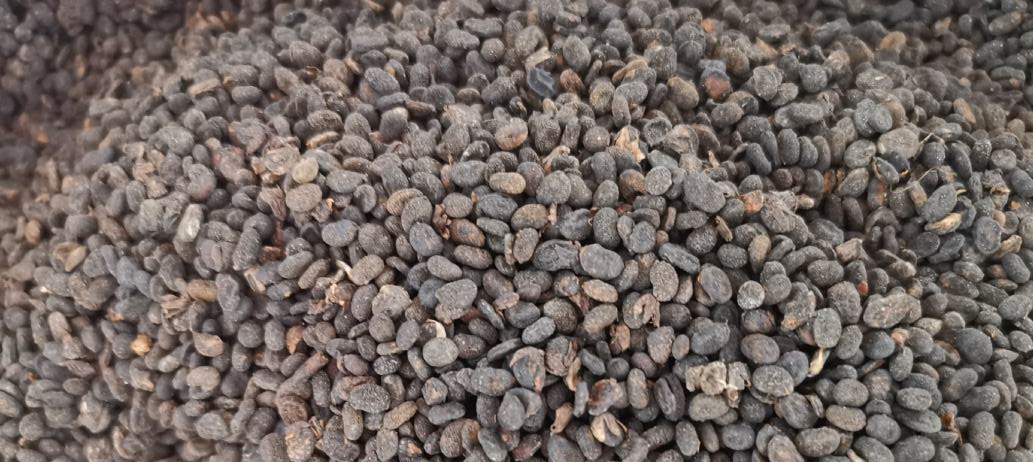
Specification Sheet of Psoralea Corylifolia(Bu Gu Zhi) Extract Powder
| Product name: | Bu Gu Zhi Extract | ||
| Specification: | 10:1 TLC | ||
| Part used: | Psoralea corylifolia L. | ||
| Solvent used: | Hot water | ||
| Process: | Raw materials crushed, extracted, concentrated and spray-dried to powder | ||
| Non GMO according to regulation (EC) 1829/2003 and 1830/2003 or United States requirements. Non allergen according to Directive 2007/68 amending Annex IIIa to Directive 2000/13/EC and US Food allergen labelling and consumer protection act 2004. | |||
| Heavy Metals: | |||
| Lead: | NMT 3ppm | Cadmium: | NMT 1ppm |
| Arsenic: | NMT 2ppm | Mercury: | NMT 1ppm |
| Residual solvents: | Comply to USP | ||
| Pesticides residues: | Conform to Regulation USP<561> | ||
| Microbiology: | |||
| Total plate count: | 10000cfu/g Max | Yeasts and molds: | 1000cfu/g Max |
| E.coli: | Not detected in (g)10 | Salmonella spp.: | Not detected in (g)25 |
| Staphylococcus aureus: | Not detected in (g)10 | Clostridium spp.: | Not Present in 0.1 g of food |
| Organoleptic quality | Method | Specifications | |
| Aspect: | Visual : ( CQ-MO-148) | Powder | |
| Color: | Visual : ( CQ-MO-148) | Brownish yellow | |
| Flavor: | Sensory: (CQ-MO-148) | Characteristic | |
| Analytical quality | Method | Specifications | |
| Identification: | TLC | Conform | |
| Loss on drying: | USP <731> | < 10% | |
| Bulk density: | USP <616> Method I | 40 – 60 g/100mL | |
| Particle size: | Analytical sieving || USP <786> | 100% through 80meshes | |
| Packaging suitable for foodstuff. | |||
Extended Reading
Psoralea Corylifolia(Bu Gu Zhi) Function and Efficacy Recorded in TCM
Psoralea is a powerful and unique warming and nourishing medicine in traditional Chinese medicine. Its name directly points out its core role – to supplement the nutrition of bones (“bone”), and to consolidate the essence of the human body (“fat” means refined substances). Medicinal properties: pungent, bitter, warm. Returning to the Kidney and Spleen Meridians. Core benefits: warming the kidneys and promoting yang, consolidating essence and reducing urine, regulating qi and relieving asthma, warming the spleen and stopping diarrhea. Simply put, psoralen is a warm medicine that acts on the kidneys and spleen, mainly treating various problems caused by kidney yang deficiency and spleen kidney yang deficiency.
1.Warming the kidneys and promoting yang
This is the fundamental function of Fructus Psorale. Kidney yang is the “fire of the gate of life” in the human body and the fundamental source of yang energy. Kidney yang deficiency can lead to:
Lower back and knee cold pain: The lower back and calves feel sore, weak, cold, and painful, which worsens when exposed to cold.
Sexual dysfunction: Male impotence and premature ejaculation, female infertility due to cold uterus (difficult to conceive due to cold uterus).
Application: Often used in conjunction with kidney tonifying and yang enhancing medicines such as Dodder’s Seed, Eucommia ulmoides, and Epimedium.
2. Consolidate essence and shrink urine
On the basis of “warming the kidneys and promoting yang”, psoralen can enhance the “absorption” function of the kidneys and prevent excessive leakage of fine substances (such as semen and urine).
Ejaculation and slippery semen: Kidney deficiency without solidification leads to unstable ejaculation.
Enuresis and frequent urination: especially increased nocturia, kidney yang deficiency cannot restrain the bladder.
Application: It is often used together with medicines such as mulberry octopus, golden cherry, and intelligence nut to solidify essence and reduce urine.
3. Breathe and relieve asthma
Traditional Chinese medicine believes that although breathing is regulated by the lungs, the depth needs to be maintained by the kidneys, that is, “the kidneys control the absorption of qi”. If the kidney yang is deficient, the kidney will not absorb qi, which can lead to:
Hypopnea: wheezing and shortness of breath, excessive breathing and insufficient inhalation, aggravated after physical activity, with a long course of illness. Commonly seen in the stable phase of chronic bronchitis, bronchial asthma, emphysema and other diseases.
Application: This is a very distinctive efficacy of Fructus Psorale, often used in conjunction with drugs such as Schisandra chinensis, Gekko gecko, and walnut kernels that nourish the lungs and promote qi.
4. Warm the spleen and stop diarrhea
Psoralen has a warm nature and enters the spleen meridian, which can warm the spleen and stomach and treat diarrhea caused by spleen kidney yang deficiency.
Wugengxie (also known as renal diarrhea): This is the most representative indication of psoralea. At dawn every day (on the fifth day of the lunar calendar), if there is cold pain and bowel sounds in the abdomen, there will be diarrhea, and after diarrhea, there will be peace. Its root cause lies in the deficiency of kidney yang, which cannot warm the spleen yang.
Application: The treatment of Wugeng diarrhea is a hallmark use of Fructus Psorale. Often used together with nutmeg, wuzhuyu, and schisandra to form the classic formula “Sishen Wan”.
Research on the Modern Pharmacological Effects of Psoralea Corylifolia
The pharmacological activity of Fructus Psorale is mainly attributed to the following types of components: coumarins, such as Psoralen and Isopsoralen, which are the main components of its photosensitivity. Flavonoids: such as dihydroflavones of Fructus Psorale, Psoralen A, B, etc. Monoterpenoid phenols, such as psoralen, have various biological activities. Other: It also contains polysaccharides, sterols, etc.
1. Function on the skeletal system – confirming the name of “bone repair”
Promoting bone formation: Psoralea can significantly promote the proliferation, differentiation, and mineralization of osteoblasts, enhance the activity of alkaline phosphatase (ALP), and accelerate the synthesis of bone matrix.
Inhibition of bone resorption: It can inhibit the generation and activity of osteoclasts, thereby reducing bone loss.
Prevention and treatment of osteoporosis: Through the dual mechanism of “promoting generation and inhibiting absorption”, the extract of Fructus Psorale has a significant effect on preventing and treating postmenopausal osteoporosis and glucocorticoid induced osteoporosis, which is highly consistent with the use of it in traditional Chinese medicine to treat lumbar and knee soreness and weakness.
2. Estrogen like effects
The flavonoids and coumarins in Fructus Psorale have phytoestrogenic activity and can bind to estrogen receptors in the body, exerting weak estrogen like effects.
Application potential: This is of great significance for alleviating menopausal syndrome in women (such as hot flashes, insomnia, emotional fluctuations) and preventing postmenopausal osteoporosis.
3. Photogenic effect
Psoralen and isopsoralen are potent photosensitizers. After absorbing long wave ultraviolet light (UVA), it can bind to DNA in skin cells, inhibit excessive cell proliferation, and stimulate the activity of melanocytes.
Clinical application: This feature is used to treat:
Vitiligo: Promotes melanin production in vitiligo areas.
Psoriasis: PUVA therapy (psoralen+UVA) is one of the effective methods for treating this disease.
4. Antitumor effect
Studies have shown that psoralen, psoralen and other components have inhibitory effects on proliferation, induction of apoptosis and differentiation of various cancer cell lines (such as breast cancer, lung cancer, gastric cancer, leukemia) in vitro and animal experiments.
Mechanism of action: may involve cell cycle arrest, activation of apoptotic signaling pathways, inhibition of tumor angiogenesis, etc. Attention: This is still in the research stage and has not yet become a mature clinical anti-cancer drug.
5. Antibacterial and anti-inflammatory effects
Antibacterial: Extracts of Fructus Psorale have inhibitory effects on various Gram positive and Gram negative bacteria, such as Staphylococcus aureus and Escherichia coli, and particularly exhibit antibacterial activity against methicillin-resistant Staphylococcus aureus (MRSA).
Anti inflammatory: Psoralen can inhibit the production of various inflammatory factors (such as TNF – α, IL-6), thereby exerting anti-inflammatory effects, providing a basis for its treatment of inflammatory diseases.
6. Effects on the cardiovascular system
Expanding coronary arteries: Extracts of Fructus Psorale can dilate coronary arteries, increase coronary blood flow, improve myocardial microcirculation, and have a protective effect against myocardial ischemia.
Cardiotonic and anti heart failure: It has a mild cardiotonic effect, can enhance myocardial contractility, and has potential therapeutic value for chronic heart failure.
7. Other functions
Antioxidant: Clears free radicals and reduces oxidative stress damage.
Antidepressant: Some studies have found that it has potential antidepressant activity, which may be related to its impact on monoamine neurotransmitters.
Protecting nerves: showing neuroprotective potential for neurodegenerative disease models such as Alzheimer’s disease and Parkinson’s disease.