
Red Yeast Rice Extract Powder 10:1, 20:1, 50:1 TLC,Lovastatin 1%, 2%, 5% HPLC
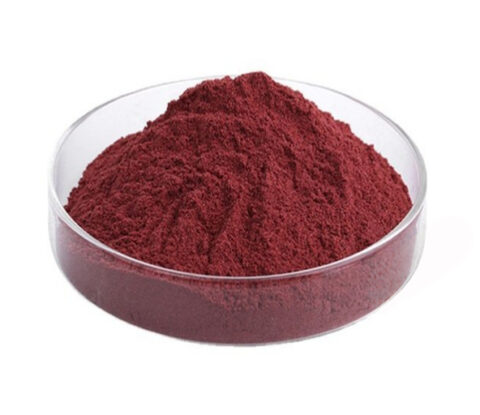
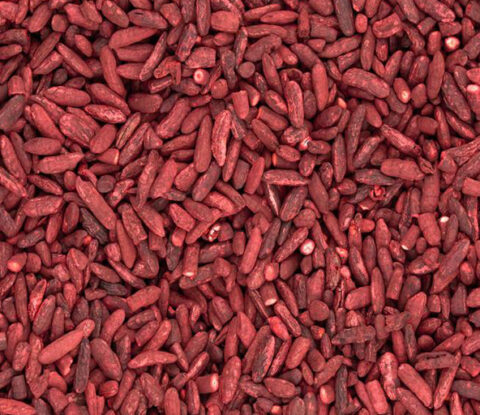


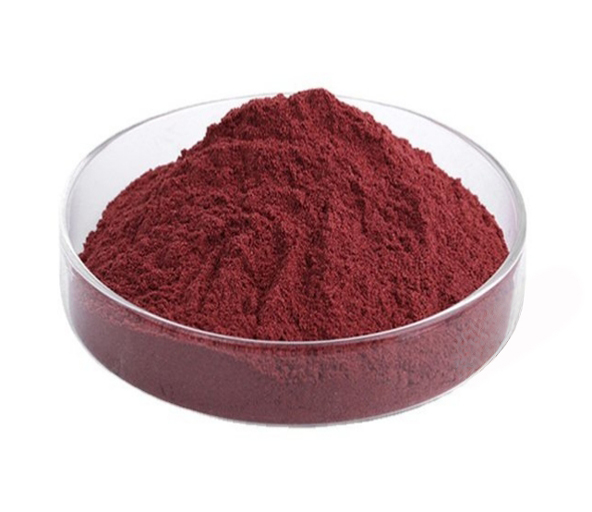
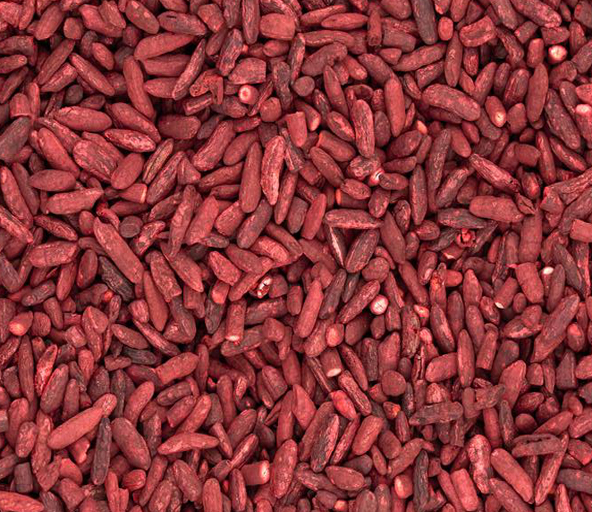
The core pharmacological effect of red yeast rice comes from its natural fermentation product monacolin K (lovastatin), which can competitively inhibit liver HMG CoA reductase, effectively reduce total cholesterol and low-density lipoprotein cholesterol (LDL-C), regulate blood lipids, and assist in the prevention of cardiovascular disease. In addition, its components such as Monascus pigments and unsaturated fatty acids also exhibit certain antioxidant and anti-inflammatory activities.

Red Yeast Rice Extract Powder 10:1, 20:1, 50:1 TLC,Lovastatin 1%, 2%, 5% HPLC
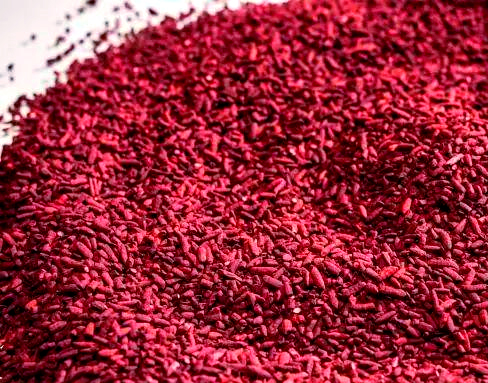
【Botanical source】: Monascus purpureus Went is inoculated onto Oryza sativa and cultivated into red yeast rice
【Part used】: Rice
【Specification】: 10:1, 20:1, 50:1 TLC,Lovastatin 1%, 2%, 5% HPLC
【Extraction solvents】: Water
【Appearance】: Brownish fine powder
【Particle size】: 95% pass 80 mesh size
【Main ingredients】: Red yeast rice is a functional food made from rice as raw material, fermented by purple Monascus and other bacterial strains. Its main active ingredient is monacolin like substances (especially monacolin K, also known as lovastatin), which have the effect of regulating blood lipids. In addition, it also contains Monascus pigments, sterols, unsaturated fatty acids, and various enzymes, making it a natural fermentation product.
【Storage conditions】:Store at room temperature in a sealed manner, away from light, and in a ventilated, cool, and dry environment.
【Shelf life】: 24 months from the production date
Red Yeast Rice Extract Powder Production Flowchart
Red Yeast Rice raw materials -Coarse powder(40 mesh) -Low temperature water extraction – 1st Reflux Extraction(10 times water,2 Hrs) – 2nd Reflux Extraction8 times water,1.5 Hrs) – 3rd Reflux Extraction(6 times water,1 Hrs) – Extraction Solution-combine&Filtrate-Concentrate-Extractum-spray drying – screening – packaging – detection of physical and chemical indicators – warehousing
Specification Sheet of Red Yeast Rice Extract Powder
| Product name: | Red Yeast Rice extract | ||
| Specification: | 10:1 TLC | ||
| Part used: | Rice that cultivated after Monascus purpureus Went being inoculated onto Oryza sativa | ||
| Solvent used: | Water | ||
| Process: | Raw materials crushed, extracted, concentrated and spray-dried to powder | ||
| Non GMO according to regulation (EC) 1829/2003 and 1830/2003 or United States requirements. Non allergen according to Directive 2007/68 amending Annex IIIa to Directive 2000/13/EC and US Food allergen labelling and consumer protection act 2004. | |||
| Heavy Metals: | |||
| Lead: | NMT 3ppm | Cadmium: | NMT 1ppm |
| Arsenic: | NMT 2ppm | Mercury: | NMT 1ppm |
| Residual solvents: | Comply to USP | ||
| Pesticides residues: | Conform to Regulation USP<561> | ||
| Microbiology: | |||
| Total plate count: | 10000cfu/g Max | Yeasts and molds: | 1000cfu/g Max |
| E.coli: | Not detected in (g)10 | Salmonella spp.: | Not detected in (g)25 |
| Staphylococcus aureus: | Not detected in (g)10 | Clostridium spp.: | Not Present in 0.1 g of food |
| Organoleptic quality | Method | Specifications | |
| Aspect: | Visual : ( CQ-MO-148) | Powder | |
| Color: | Visual : ( CQ-MO-148) | Red | |
| Flavor: | Sensory: (CQ-MO-148) | Characteristic | |
| Analytical quality | Method | Specifications | |
| Identification: | TLC | Conform | |
| Loss on drying: | USP <731> | < 10% | |
| Bulk density: | USP <616> Method I | 40 – 60 g/100mL | |
| Particle size: | Analytical sieving || USP <786> | 100% through 80meshes | |
| Packaging suitable for foodstuff. | |||
Extended Reading
Modern Research Summary on Red Yeast Rice (Monascus purpureus) Extract
Red yeast rice (RYR) is a traditional fermentation product using rice and the yeast Monascus purpureus. Modern research focuses on its chemical complexity and cardiovascular benefits.
- Chemical Components:
The extract is a complex mixture of bioactive compounds:
- Monacolins: A family of polyketides that inhibit cholesterol synthesis. Monacolin K is chemically identical to the prescription drug lovastatin. Amounts vary significantly between products.
- Other Lipid-Modifiers: Monounsaturated fatty acids (MUFAs), sterols (e.g., β-sitosterol), and isoflavones.
- Pigments: Monascin and ankaflavin (yellow), rubropunctatin and monascorubrin (orange/red), which have anti-inflammatory properties.
- Potential Contaminant: Citrinin, a nephrotoxic mycotoxin produced by some Monascus strains, is a major safety concern requiring strict quality control.
- Health Benefits (Pharmacological Activities):
- Cholesterol-Lowering: The primary, evidence-supported benefit. Monacolin K competitively inhibits HMG-CoA reductase, the rate-limiting enzyme in hepatic cholesterol synthesis, effectively lowering LDL-C and total cholesterol. Clinical meta-analyses confirm its efficacy.
- Anti-inflammatory & Antioxidant: Pigments like monascin and ankaflavin inhibit NF-κB and upregulate Nrf2 pathways, reducing oxidative stress and inflammation, contributing to vascular protection.
- Endothelial Function: May improve endothelial function and reduce arterial stiffness, partly independent of lipid-lowering.
- Potential Metabolic Benefits: Some studies suggest modest benefits on blood glucose and triglyceride levels.
- Interactions & Warnings:
- Drug Interactions: Absolute contraindication with prescription statins (additive risk of side effects). Potentiates effects of other lipid-lowering agents, CYP3A4 inhibitors (e.g., grapefruit juice, azole antifungals, cyclosporine), and anticoagulants (e.g., warfarin).
- Pregnancy & Lactation: Contraindicated due to potential effects on fetal development and lack of safety data (similar to statins).
- Contraindications: Active liver disease, unexplained persistent elevations in serum transaminases, severe renal impairment, and history of myopathy.
- Adverse Effects: Dose-dependent statin-like side effects: myalgia, myopathy (rarely rhabdomyolysis), gastrointestinal upset, and elevated liver enzymes. Citrinin contamination poses a potential renal toxicity risk.
- Applications:
- Nutraceutical/Dietary Supplement: Marketed globally for “maintaining healthy cholesterol levels” as a natural alternative to statins, available in capsules and powders.
- Functional Food & Coloring Agent: Traditionally and commercially used as a natural colorant (red pigment) and fermenting agent in East Asian cuisine (e.g., Peking duck, red tofu, rice wine).
References:
- Li, Y., et al. (2022). Frontiers in Pharmacology. “Red Yeast Rice: A Systematic Review of the Traditional Uses, Chemistry, Pharmacology, and Quality Control.”
- Fogacci, F., et al. (2019). British Journal of Pharmacology. “Effect of Red Yeast Rice Supplementation on Blood Pressure and Lipid Profile: An Umbrella Review of Systematic Reviews and Meta-Analyses.”
- Verhoeven, V., et al. (2015). BMC Complementary and Alternative Medicine. “The Effect of Red Yeast Rice (Monascus purpureus) on Blood Lipids: A Systematic Review.”
- European Food Safety Authority (EFSA). (2018). “Safety assessment of monacolins in red yeast rice.” EFSA Journal.
- U.S. Food and Drug Administration (FDA). (2007, 2020). “Warning Letters and Statements on Red Yeast Rice Products containing lovastatin.” FDA.gov.
Note: This summary is for informational purposes. It may interact with medications and is contraindicated in certain conditions. Consult a healthcare professional before therapeutic use, particularly regarding its estrogenic activity.