
Salvia Miltiorrhiza (Dan Shen) Extract Powder 10:1, 20:1, 50:1 TLC




The functions of Danshen in traditional Chinese medicine include promoting blood circulation and removing blood stasis, regulating meridians and relieving pain, clearing the heart and eliminating annoyance, cooling blood and eliminating carbuncles. Used for chest pain, abdominal pain, accumulation of symptoms, thermal pain, restlessness, menstrual disorders, dysmenorrhea, and swelling and pain in ulcers.

Salvia Miltiorrhiza (Dan Shen) Extract Powder 10:1, 20:1, 50:1 TLC
【Other names】: Dan Shen, Radix Salviae Miltiorrhizae, Danshen Root, Salviae Miltiorrhizae Radix Et Rhizoma
【Botanical source】: Salvia miltiorrhiza Bge.
【Part used】: Dry roots and rhizomes of Salvia miltiorrhizia Bge, a plant in the family Lamiaceae. Excavate in spring and autumn, remove sediment and dry.
【Specification】: 10:1, 20:1, 50:1 TLC
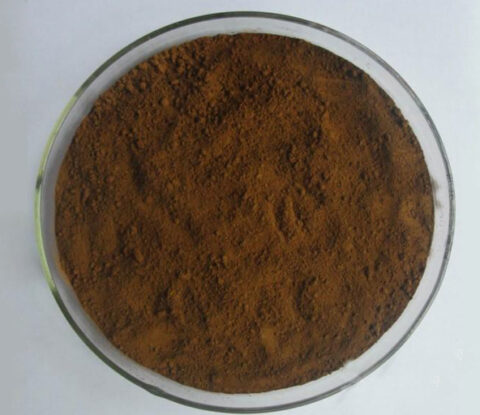
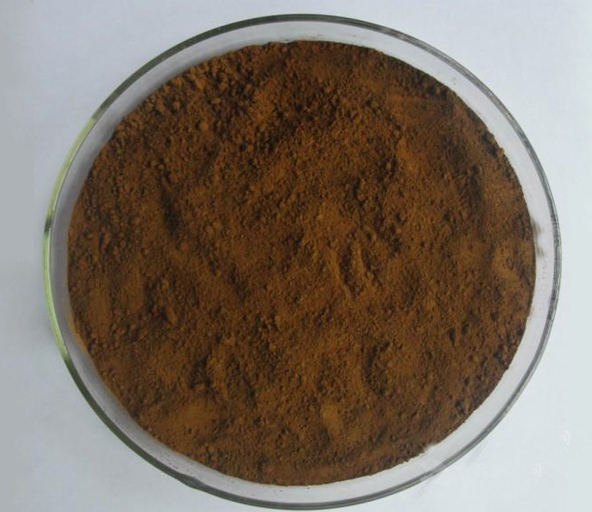
【Appearance】: Brownish yellow fine powder
【Particle size】: 95% pass 80 mesh size
Salvia Miltiorrhiza (Dan Shen) Extract Powder Production Flowchart
Salvia Miltiorrhiza (Dan Shen) raw materials – natural air drying–Coarse powder(40 mesh) -Low temperature water extraction – 1st Reflux Extraction(10 times water,2 Hrs) – 2nd Reflux Extraction8 times water,1.5 Hrs) – 3rd Reflux Extraction(6 times water,1 Hrs) – Extraction Solution-combine&Filtrate-Concentrate-Extractum-spray drying – screening – packaging – detection of physical and chemical indicators – warehousing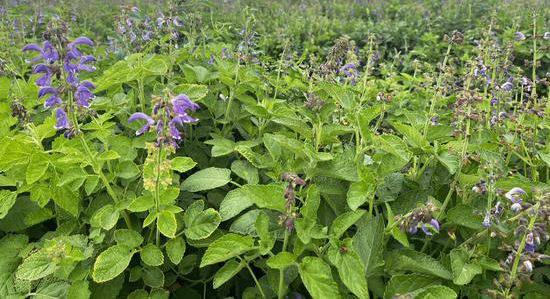
Specification Sheet of Salvia Miltiorrhiza (Dan Shen) Extract Powder
| Product name: | Dan Shen extract | ||
| Specification: | 10:1 TLC | ||
| Part used: | Dried roots of Salvia miltiorrhiza Bge. | ||
| Solvent used: | Hot water | ||
| Process: | Raw materials crushed, extracted, concentrated and spray-dried to powder | ||
| Non GMO according to regulation (EC) 1829/2003 and 1830/2003 or United States requirements. Non allergen according to Directive 2007/68 amending Annex IIIa to Directive 2000/13/EC and US Food allergen labelling and consumer protection act 2004. | |||
| Heavy Metals: | |||
| Lead: | NMT 3ppm | Cadmium: | NMT 1ppm |
| Arsenic: | NMT 2ppm | Mercury: | NMT 1ppm |
| Residual solvents: | Comply to USP | ||
| Pesticides residues: | Conform to Regulation USP<561> | ||
| Microbiology: | |||
| Total plate count: | 10000cfu/g Max | Yeasts and molds: | 1000cfu/g Max |
| E.coli: | Not detected in (g)10 | Salmonella spp.: | Not detected in (g)25 |
| Staphylococcus aureus: | Not detected in (g)10 | Clostridium spp.: | Not Present in 0.1 g of food |
| Organoleptic quality | Method | Specifications | |
| Aspect: | Visual : ( CQ-MO-148) | Powder | |
| Color: | Visual : ( CQ-MO-148) | Offwhite/light brownish | |
| Flavor: | Sensory: (CQ-MO-148) | Characteristic | |
| Analytical quality | Method | Specifications | |
| Identification: | TLC | Conform | |
| Loss on drying: | USP <731> | < 10% | |
| Bulk density: | USP <616> Method I | 40 – 60 g/100mL | |
| Particle size: | Analytical sieving || USP <786> | 100% through 80meshes | |
| Packaging suitable for foodstuff. | |||
Extended Reading
Salvia Miltiorrhiza (Dan Shen) Function and Efficacy Recorded in TCM
Danshen is one of the most commonly used and important blood activating and stasis removing medicines in traditional Chinese medicine. It has a bitter taste, a slight coldness, and is suitable for the heart and liver meridians. Due to its high medicinal value and significant efficacy, there is a saying in folk culture that “one drink of Danshen has the same function as Siwu Tang”, which means that using Danshen alone can have blood activating and stasis removing effects comparable to the classic blood tonifying formula “Siwu Tang”. But this does not mean that Danshen can completely replace Siwu Tang for blood supplementation, but emphasizes its profound ability to promote blood circulation and regulate blood.
The core role of Danshen in traditional Chinese medicine theory is mainly reflected in the following aspects:
1. Promote blood circulation and remove blood stasis
This is the most fundamental and core function of Danshen. It is good at dredging blood vessels, removing blood stasis, and widely used in various “blood stasis” syndromes.
Pain syndrome: Used for various types of pain caused by poor blood flow or blood stasis obstruction, characterized by fixed pain and stabbing pain (like a needle prick).
Chest obstruction and heartache: equivalent to coronary heart disease and angina pectoris in modern medicine. Danshen can dilate coronary arteries and increase blood flow, making it a core drug for treating cardiovascular and cerebrovascular diseases.
Abdominal pain: pain in the ribs and abdomen caused by chronic gastritis, hepatitis, etc.
Dysmenorrhea, amenorrhea, postpartum abdominal pain: Used for gynecological menstrual disorders caused by blood stasis, blood clots in menstrual blood, abdominal pain, and refusal to press.
Symptomatic accumulation: Refers to the mass formed by the stagnation of qi and blood in the body over time, such as hepatosplenomegaly, certain tumors, etc. Danshen can be used as an adjuvant therapy.
Trauma related diseases: Used for injuries caused by falls, bruises, swelling, and pain.
2. Pain relief through menstruation
It is closely related to promoting blood circulation and removing blood stasis, and is particularly good at treating pain caused by blood circulation disorders, especially chest and abdominal pain.
3. Clearing the mind and eliminating annoyance
Danshen has a slightly cold nature and enters the heart meridian. It can clear and eliminate heart fire, and stabilize the mind and spirit.
Heat entering blood circulation: used in the late stage of hyperthermia (serious infectious diseases.
Palpitations and Insomnia: Used for palpitations, insomnia, multiple dreams, and irritability caused by excessive heart fire or insufficient heart yin. It is commonly used in modern times to treat neurasthenia.
4. Cooling blood and eliminating carbuncles
The cold nature of Danshen gives it the effect of cooling blood and detoxifying, and it can be used to treat heat toxicity ulcers.
Ulcer swelling and pain: such as abscesses and sores on the surface of the skin, can be used in combination with other heat clearing and detoxifying drugs at the beginning.
Internal abscess: such as intestinal abscess (similar to acute appendicitis).
Modern Pharmacological Effects of Salvia Miltiorrhiza (Dan Shen)
Traditional Chinese medicine mainly understands Danshen from a macro perspective of “promoting blood circulation, removing blood stasis, and relieving pain through meridian circulation”, while modern pharmacology reveals its scientific mechanism of action from a micro perspective. Research has shown that the medicinal value of Danshen mainly comes from its water-soluble components (such as salvianolic acids) and lipid soluble components (such as tanshinones).
The following are the main pharmacological effects of Danshen confirmed by modern scientific research:
1.The role of the cardiovascular and cerebrovascular system
1).Myocardial protection and anti atherosclerosis
Improving myocardial ischemia: Danshen can dilate coronary arteries, increase coronary blood flow, improve myocardial microcirculation, and thereby alleviate myocardial ischemia and hypoxia injury. This is the core mechanism of its treatment for coronary heart disease and angina pectoris.
Anti atherosclerosis: it can inhibit the inflammatory reaction of the inner wall of the blood vessel, reduce the deposition of lipids in the blood vessel wall, and delay the formation of atherosclerotic plaque.
2).Improving microcirculation and anti thrombotic effects
Improving microcirculation: It can relieve vascular spasm, reduce blood viscosity, accelerate red blood cell flow rate, and effectively improve microcirculation disorders throughout the body.
Antiplatelet aggregation: The active ingredients in Danshen can inhibit platelet activation and aggregation, preventing the formation of blood clots. This is similar to the effect of aspirin, but the pathway of action may be different.
Promote fibrinolysis: can activate the fibrinolytic system and dissolve small blood clots that have already formed.
3). Protect vascular endothelium
Damage to endothelial cells is the initial stage of cardiovascular disease. Danshen can counteract the damage of various harmful factors to the endothelium, promote the repair and functional recovery of endothelial cells, which is the basis of its “protection of blood vessels”.
2. Anti fibrotic effect
This is a very important and unique pharmacological effect of Danshen.
Anti liver fibrosis/cirrhosis: can inhibit the activation of hepatic stellate cells, reduce the generation of collagen fibers, thereby delaying or even reversing the process of liver fibrosis.
Anti pulmonary fibrosis: It has a certain therapeutic effect on interstitial pulmonary fibrosis and can reduce lung inflammation and fibrosis.
Anti renal fibrosis: It has a protective effect on renal tissue fibrosis caused by chronic kidney disease.
3. Antioxidant and anti-inflammatory effects
Strong antioxidant activity: Salvianolic acid compounds (especially Salvianolic acid B) have very strong antioxidant activity, which can effectively eliminate free radicals in the body, reduce oxidative stress damage, and protect functional structures such as cell membranes and mitochondria.
Widespread anti-inflammatory effect: By inhibiting inflammatory signaling pathways such as NF – κ B and reducing the production of various inflammatory factors, it exerts a wide range of anti-inflammatory effects, which have protective significance for cardiovascular, cerebrovascular, nervous system, liver, etc.
4. Protective effect on the nervous system
Protecting the blood-brain barrier: reducing the damage to the blood-brain barrier after cerebral ischemia-reperfusion injury.
Anti cerebral ischemic injury: By improving brain microcirculation, antioxidation, anti apoptosis and other multiple pathways, it protects nerve cells, reduces the area of cerebral infarction, and is used as an adjuvant therapy for cerebral infarction.
Promoting neural regeneration: Some studies have shown that it may help promote the differentiation of neural stem cells and the growth of neural processes.
Calming and Soothing: Its lipophilic component, salvianolic acid, has a certain central sedative effect, providing a basis for the traditional “clearing the heart and eliminating annoyance” effect.
5. Antitumor effect
Studies have shown that tanshinones can inhibit the proliferation, induce apoptosis, inhibit invasion and metastasis of a variety of cancer cells (such as liver cancer, lung cancer, gastric cancer, breast cancer, etc.).
It is often used as an adjuvant drug, combined with chemotherapy and radiotherapy, to enhance sensitivity and reduce toxicity (alleviate side effects).
6. Other functions
Antibacterial and antiviral: Tanshinones have inhibitory effects on Gram positive bacteria such as Staphylococcus aureus and Propionibacterium acnes, and are therefore also used to treat acne. It also has a certain inhibitory effect on certain viruses.
Promote tissue repair and healing: can promote fracture healing and skin wound repair.
Estrogen like effects: Some tanshinones have mild estrogen like activity and can be used to treat certain diseases associated with estrogen levels.