
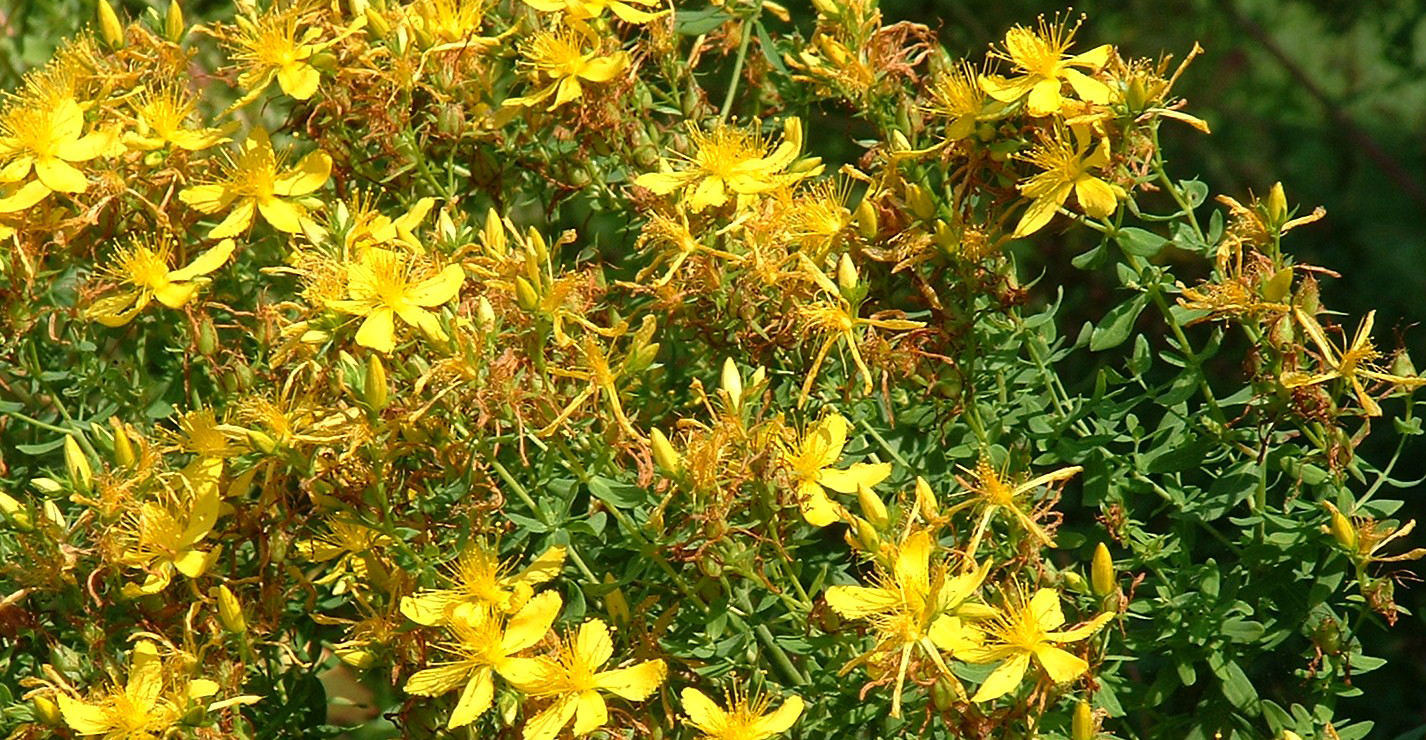
St John’s wort (Hypericum Perforatum) Extract Powder 10:1 20:1 TLC, Hypericin 0.3% -0.5% UV




St John's wort extract can inhibit the absorption of substances such as norepinephrine and dopamine, promote the increase of neurotransmitter concentration, regulate emotions, eliminate depression, improve sleep, and can be used in the relief and treatment of depression, neurasthenia, menopausal symptoms, and other fields.

St John’s wort (Hypericum Perforatum) Extract Powder 10:1 20:1 TLC, Hypericin 0.3% -0.5% UV
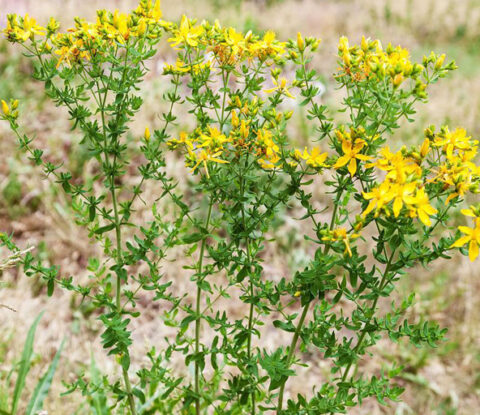
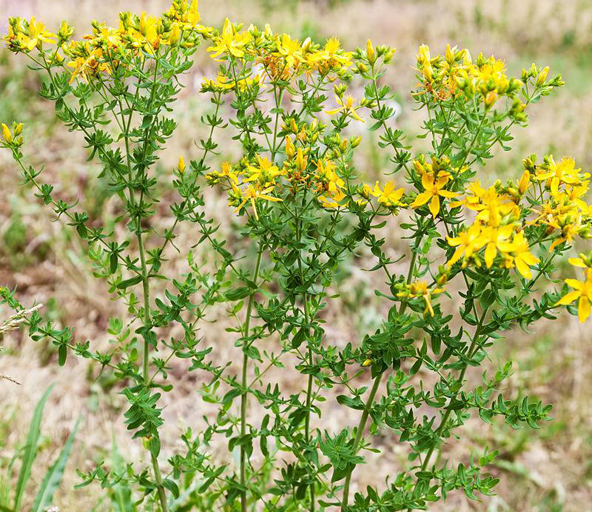
【Botanical source】: Hypericum perforatum L.
【Part used】: The above ground part of the vine yellow family plant Forsythia suspensa.
【Specification】: 10:1 20:1 TLC, Hypericin 0.3% -0.5% UV
【Chemical formula】: C30H16O8
【Molecular weight】: 504.45
【CAS number】: 548-04-9
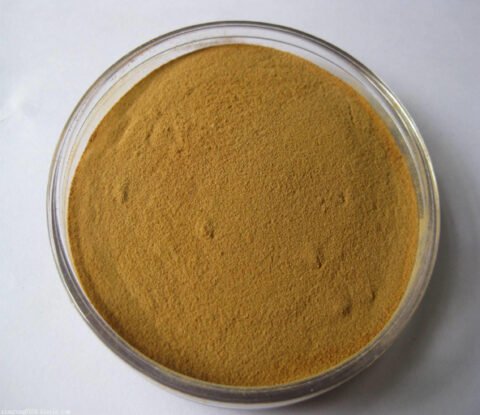
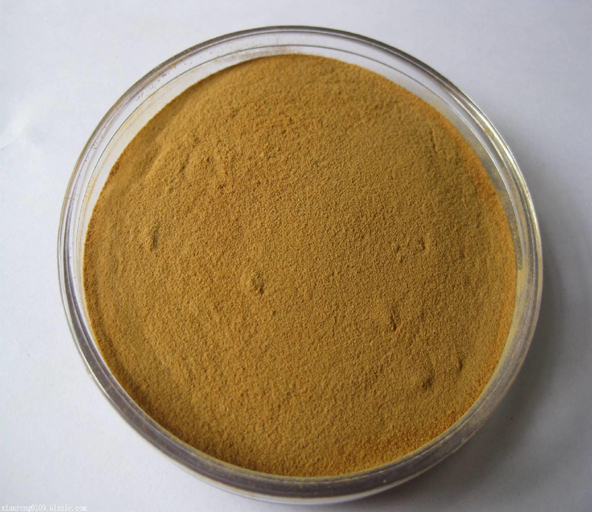
【Appearance】: Brownish yellow fine powder
【Extraction solvents】: Ethanol and water
【Particle size】: 95% pass 80 mesh size
【Main ingredients】: Hypericin is an extract of Forsythia suspensa, which was first isolated from the plant Forsythia suspensa in 1957. It belongs to the class of anthraquinone compounds and is the most biologically active substance in Forsythia suspensa. Its chemical formula is C30H16O8. The appearance is a grayish yellow to brownish flowing powder with a slightly bitter taste, almost insoluble in water, and can emit a special fragrance. It has inhibitory and sedative effects on the central nervous system and can enhance immunity when added to health products. It is also used as an antidepressant in Europe (especially Germany).
【Storage conditions】:Store at room temperature in a sealed manner, away from light, and in a ventilated, cool, and dry environment.
【Shelf life】: 24 months from the production date
St John’s wort (Hypericum Perforatum) Extract Powder Production Flowchart
St John’s wort raw materials -Coarse powder(40 mesh) -Low temperature water extraction – 1st Reflux Extraction(10 times water,2 Hrs) – 2nd Reflux Extraction8 times water,1.5 Hrs) – 3rd Reflux Extraction(6 times water,1 Hrs) – Extraction Solution-combine&Filtrate-Concentrate-Extractum-spray drying – screening – packaging – detection of physical and chemical indicators – warehousing
Specification Sheet of St John’s wort (Hypericum Perforatum) Extract Powder
| Product name: | St John’s wort Extract | ||
| Specification: | 10:1 TLC | ||
| Part used: | Dried whole plant of Hypericum perforatum L | ||
| Solvent used: | Water | ||
| Process: | Raw materials crushed, extracted, concentrated and spray-dried to powder | ||
| Non GMO according to regulation (EC) 1829/2003 and 1830/2003 or United States requirements. Non allergen according to Directive 2007/68 amending Annex IIIa to Directive 2000/13/EC and US Food allergen labelling and consumer protection act 2004. | |||
| Heavy Metals: | |||
| Lead: | NMT 3ppm | Cadmium: | NMT 1ppm |
| Arsenic: | NMT 2ppm | Mercury: | NMT 1ppm |
| Residual solvents: | Comply to USP | ||
| Pesticides residues: | Conform to Regulation USP<561> | ||
| Microbiology: | |||
| Total plate count: | 10000cfu/g Max | Yeasts and molds: | 1000cfu/g Max |
| E.coli: | Not detected in (g)10 | Salmonella spp.: | Not detected in (g)25 |
| Staphylococcus aureus: | Not detected in (g)10 | Clostridium spp.: | Not Present in 0.1 g of food |
| Organoleptic quality | Method | Specifications | |
| Aspect: | Visual : ( CQ-MO-148) | Powder | |
| Color: | Visual : ( CQ-MO-148) | Brownish | |
| Flavor: | Sensory: (CQ-MO-148) | Characteristic | |
| Analytical quality | Method | Specifications | |
| Identification: | TLC | Conform | |
| Loss on drying: | USP <731> | < 10% | |
| Bulk density: | USP <616> Method I | 40 – 60 g/100mL | |
| Particle size: | Analytical sieving || USP <786> | 100% through 80meshes | |
| Packaging suitable for foodstuff. | |||
Extended Reading
Modern Pharmacological Research on St John’s wort (Hypericum Perforatum)
Active Constituents
The primary bioactive compounds are naphthodianthrones (hypericin, pseudohypericin) and phloroglucinols (hyperforin, adhyperforin), along with various flavonoids.
Key Pharmacological Activities & Mechanisms
- Antidepressant Effects
- Clinical Efficacy: Widely recognized as an effective first-line treatment for mild to moderate major depressive disorder (MDD), with efficacy comparable to standard synthetic antidepressants (e.g., SSRIs) but often with a more favorable side-effect profile.
- Mechanism: Unlike conventional drugs, it has a multimodal mechanism. It inhibits the synaptic reuptake of several neurotransmitters simultaneously—including serotonin, norepinephrine, and dopamine—primarily through the action of hyperforin. It also modulates HPA axis activity and upregulates serotonin and norepinephrine receptors.
- Antiviral Activity
- Primary Agent: Hypericin is the key component.
- Spectrum: Demonstrates in vitro activity against enveloped viruses, including certain strains of herpes simplex virus (HSV), hepatitis C virus (HCV), influenza virus, and HIV.
- Mechanism: Acts through photodynamic activation (light-dependent) and also inhibits viral assembly, fusion, and release.
- Antibacterial and Wound Healing
- Hyperforin shows significant activity against Gram-positive bacteria, including methicillin-resistant Staphylococcus aureus (MRSA).
- The extract promotes wound healing due to its anti-inflammatory, antimicrobial, and tissue-regenerative properties.
- Anti-inflammatory and Neuroprotective Effects
- Inhibits key pro-inflammatory pathways (e.g., NF-κB, COX-2, iNOS).
- Exhibits antioxidant properties, protecting neurons from oxidative stress. These actions contribute to its antidepressant effect and suggest potential in neurodegenerative conditions (under research).
- Anticancer Potential (Preclinical Focus)
- In vitro and animal studies indicate that hypericin and hyperforin can induce apoptosis (programmed cell death), inhibit cell proliferation, and prevent angiogenesis in various cancer cell lines (e.g., breast, prostate, leukemia).
Critical Safety Concern: Drug Interactions
- Potent Induction of Cytochrome P450 Enzymes: Hyperforin potently induces the CYP3A4 enzyme system, accelerating the metabolism of numerous drugs.
- Induction of P-glycoprotein: Increases drug efflux from cells.
- Examples of Affected Drugs: Oral contraceptives (reduced efficacy), anticoagulants (e.g., warfarin), immunosuppressants (e.g., cyclosporine), some HIV medications, anticonvulsants, and many chemotherapeutic agents. Concurrent use can lead to treatment failure.
Conclusion
St. John’s Wort extract is a well-established phytomedicine for mild-to-moderate depression with a complex, multimodal pharmacology. Its significant antiviral, antibacterial, and anti-inflammatory properties are supported by growing evidence. However, its potent drug interaction potential is its most critical limitation, necessitating careful patient screening and medical supervision before use. Future research is exploring its refined applications in oncology and neuroprotection while aiming to develop derivatives with fewer interactions.