
Toosendan Fructus (Chuan Lian Zi) Extract Powder 10:1, 20:1, 50:1 TLC


The functions of Chuanzhenzi in traditional Chinese medicine include soothing the liver, relieving heat, promoting qi circulation, relieving pain, and killing insects. Used for liver depression and heat dissipation, chest and abdominal distension and pain, hernia pain, and abdominal pain caused by insect accumulation.

Toosendan Fructus (Chuan Lian Zi) Extract Powder 10:1, 20:1, 50:1 TLC
【Other names】: Chuan Lian Zi, Fructus Toosendan, Toosendan Fruit, Szechwan Chinaberry Fruit , Jin Ling Zi
【Botanical source】: Melia toosendan Sieb.et Zucc.
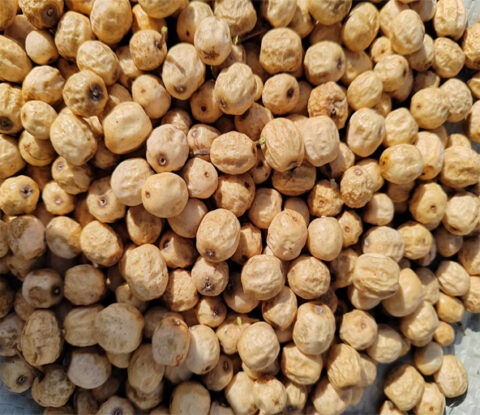
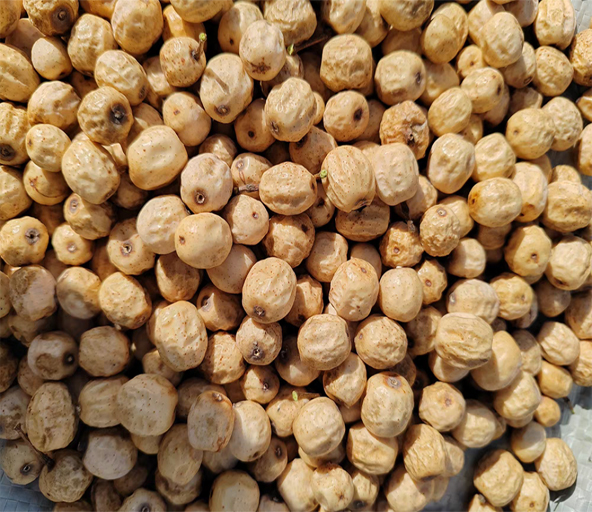
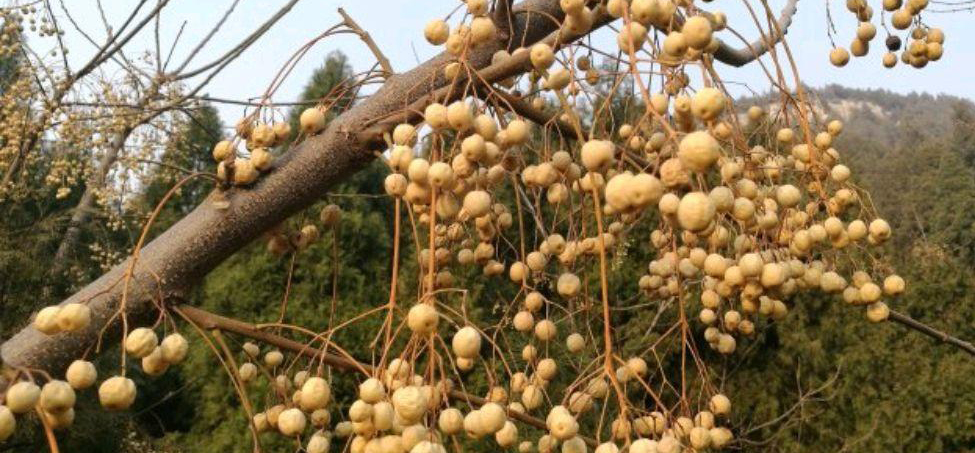
【Part used】: Dry and ripe fruit of Melia toosendan Sieb. et Zucc, a plant in the Meliaceae family. Harvest fruits in winter when they are ripe, remove impurities, and dry them.
【Specification】: 10:1, 20:1, 50:1 TLC
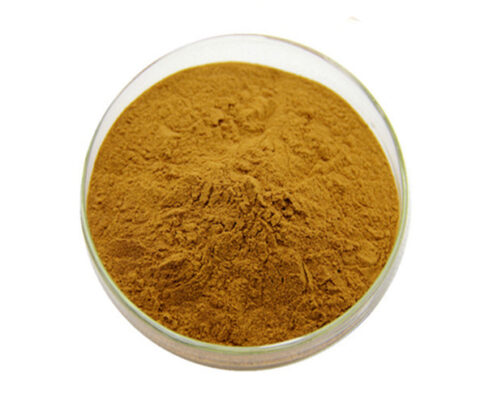
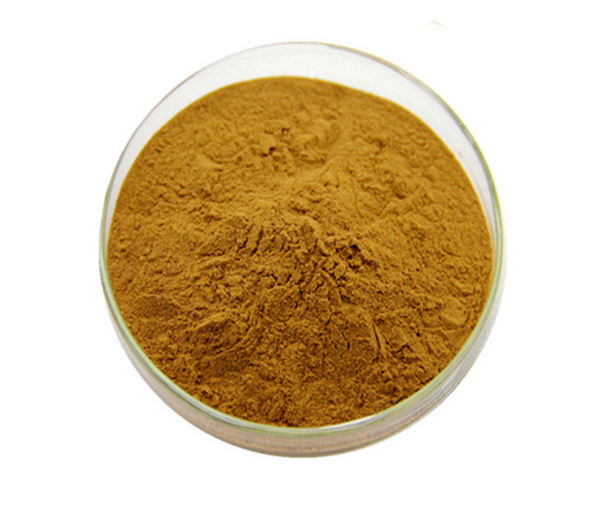
【Appearance】: Brownish yellow fine powder
【Particle size】: 95% pass 80 mesh size
Toosendan Fructus (Chuan Lian Zi) Extract Powder Production Flowchart
Toosendan Fructus (Chuan Lian Zi) raw materials – natural air drying–Coarse powder(40 mesh) -Low temperature water extraction – 1st Reflux Extraction(10 times water,2 Hrs) – 2nd Reflux Extraction8 times water,1.5 Hrs) – 3rd Reflux Extraction(6 times water,1 Hrs) – Extraction Solution-combine&Filtrate-Concentrate-Extractum-spray drying – screening – packaging – detection of physical and chemical indicators – warehousing
Specification Sheet of Toosendan Fructus (Chuan Lian Zi) Extract Powder
| Product name: | Toosendan Fructus Extract | ||
| Specification: | 10:1 TLC | ||
| Part used: | Dry fruit of Melia toosendan Sieb. et Zucc | ||
| Solvent used: | Hot water | ||
| Process: | Raw materials crushed, extracted, concentrated and spray-dried to powder | ||
| Non GMO according to regulation (EC) 1829/2003 and 1830/2003 or United States requirements. Non allergen according to Directive 2007/68 amending Annex IIIa to Directive 2000/13/EC and US Food allergen labelling and consumer protection act 2004. | |||
| Heavy Metals: | |||
| Lead: | NMT 3ppm | Cadmium: | NMT 1ppm |
| Arsenic: | NMT 2ppm | Mercury: | NMT 1ppm |
| Residual solvents: | Comply to USP | ||
| Pesticides residues: | Conform to Regulation USP<561> | ||
| Microbiology: | |||
| Total plate count: | 10000cfu/g Max | Yeasts and molds: | 1000cfu/g Max |
| E.coli: | Not detected in (g)10 | Salmonella spp.: | Not detected in (g)25 |
| Staphylococcus aureus: | Not detected in (g)10 | Clostridium spp.: | Not Present in 0.1 g of food |
| Organoleptic quality | Method | Specifications | |
| Aspect: | Visual : ( CQ-MO-148) | Powder | |
| Color: | Visual : ( CQ-MO-148) | Brownish | |
| Flavor: | Sensory: (CQ-MO-148) | Characteristic | |
| Analytical quality | Method | Specifications | |
| Identification: | TLC | Conform | |
| Loss on drying: | USP <731> | < 10% | |
| Bulk density: | USP <616> Method I | 40 – 60 g/100mL | |
| Particle size: | Analytical sieving || USP <786> | 100% through 80meshes | |
| Packaging suitable for foodstuff. | |||
Extended Reading
Toosendan Fructus (Chuan Lian Zi) Function and Efficacy Recorded in TCM
Chuanzhenzi, also known as Jinlingzi, is a very important and distinctive medicine in traditional Chinese medicine. The “Jinlingzi Powder” composed of it and Corydalis yanhusuo is a famous analgesic formula. The core function of Chinese toon seeds is to soothe the liver, eliminate heat, promote qi circulation, and relieve pain, but they are toxic, so caution should be exercised when using them.
Core efficacy and mechanism of action
Chuanzhenzi is cold in nature, bitter in taste, and mainly belongs to the liver, small intestine, and bladder meridians. Its core lies in clearing the stagnation heat of the liver meridian, thereby solving a series of problems caused by liver heat and qi stagnation.
1. Soothing the liver, purging fire, promoting qi circulation, and relieving pain
This is the most essential function of Chinese toon seeds.
Principle of action: The liver is responsible for regulating and releasing qi throughout the body. If the liver qi is stagnant, over time it will become stagnant and turn into fire, producing liver fire. This fire pathogen can cause pain along the liver meridian, such as in the chest, abdomen, and lower abdomen. This type of pain is usually accompanied by bloating, burning, and hot symptoms such as irritability, irritability, and bitter mouth.
Indications:
Liver depression turning into fire, qi stagnation and pain: such as rib distension pain, burning pain in the epigastric region, hernia pain (such as lower abdomen and testicular swelling pain), etc. Its pain relief feature is aimed at pain with thermal symptoms.
Classic compatibility: Chuanzhenzi+Yanhusuo=Jinlingzi Powder. This is the basic formula for treating liver depression, heat dissipation, and various pains. Among them, Chuanzhenzi clears liver fire and promotes qi stagnation, while Yanhusuo promotes blood circulation and qi circulation to enhance pain relief. The combination of the two drugs has the effect of soothing the liver, relieving heat, promoting qi circulation, and relieving pain.
2. Insecticide
Principle of action: The bitter and cold characteristics of the Chinese toon seed, as well as its active ingredients (such as toon), have a paralyzing and toxic effect on intestinal parasites.
Indications: Used for treating intestinal parasitic diseases such as roundworms and pinworms. Due to its cold nature, it is particularly suitable for those with insect accumulation and heat symptoms.
Classic application: Can be used together with insect repellents such as betel nut and Chinese medicine. It is also commonly used in ancient prescriptions for external use, decoction fumigation, and treatment of vaginal trichomoniasis.
3. Treating ringworm
Principle of action: Take its bitter, cold, dry and humid properties, and insecticidal properties.
Indications: External application can treat skin scabies such as tinea capitis and scabies. Usually, it is recommended to apply it after grinding or boil soup for external washing.
Modern Pharmacological Effects of Toosendan Fructus (Chuan Lian Zi)
Modern pharmacological research not only confirms the scientific validity of the traditional efficacy of Fructus Meliae, such as insecticidal and analgesic effects, but more importantly, reveals the substance basis and mechanism of its toxicity, providing crucial evidence for safe clinical use. The main active (and toxic) components of Melia azedarach are triterpenoids, such as naringenin, as well as various bitter compounds.
The following are the main modern pharmacological effects of Chinese toon seeds:
1. Insect repellent effect
This is a modern confirmation of its traditional insecticidal effect.
Active ingredient: Melitin is the main anthelmintic ingredient.
Mechanism: Chuanbansu has a paralyzing effect on the head ganglia of parasites such as pig roundworms and pinworms, causing the worms to lose their ability to attach to the intestinal wall and be excreted with feces. This effect is slow and long-lasting.
2. Analgesic and anti-inflammatory effects
This corresponds to its effectiveness in relieving pain through qi circulation.
Mechanism: The extract of Melia sinensis can significantly inhibit the body’s pain response in experimental animals (such as acetic acid writhing method), and alleviate inflammation and swelling (such as xylene induced ear swelling). The analgesic mechanism may be related to the inhibition of prostaglandin synthesis and the inhibition of the central nervous system.
Contact: This scientifically explains the effectiveness of using Chuanzhenzi to treat rib pain, stomach pain, and hernia pain caused by liver depression and qi stagnation.
3. Antitumor effect
Research findings: A number of in vitro and animal experiments show that the extract of toosendanin and toosendanin have inhibitory effects on a variety of cancer cells, including liver cancer, stomach cancer, breast cancer, cervical cancer, etc.
Potential mechanism: It may exert its effect through various pathways such as inducing cancer cell apoptosis, inhibiting cancer cell proliferation, blocking cell cycle, and inhibiting tumor angiogenesis.
Current situation: Currently, this effect is still in the preclinical research stage, and there is still a long way to go before clinical application. However, its potential provides direction for the development of anti-tumor new drugs.
4. Antibacterial and antiviral effects
Antibacterial: The decoction of Fructus Meliae has a certain inhibitory effect on Staphylococcus aureus, various epidermal fungi, etc. This provides a basis for its topical treatment of scabies.
Antiviral: Studies have shown that it has inhibitory effects on influenza viruses and other viruses.
5. Impact on the digestive system
Gallbladder: can promote bile secretion.
Negative effects (toxicity manifestation): This is also a modern explanation for its “bitter cold injury to the stomach” and liver toxicity. Excessive use can irritate the gastrointestinal tract, causing nausea, vomiting, and diarrhea; More importantly, it can cause serious damage to liver cells.