
Dwarf Lilyturf Tuber (Mai Men Dong) Extract Powder 10:1, 20:1, 50:1 TLC
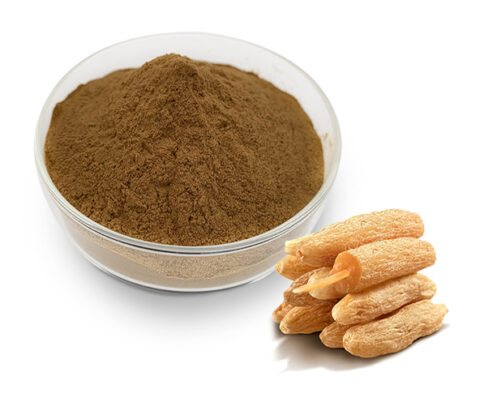


Ophiopogon japonicus has the effects of nourishing yin and moistening the lungs, nourishing the stomach and generating fluids, and clearing the heart and eliminating annoyance. Commonly used for lung dryness and dry cough, lung abscess, yin deficiency induced cough, fluid damage and thirst, quenching thirst, restlessness and insomnia, sore throat, intestinal dryness and constipation, blood heat and vomiting.

Dwarf Lilyturf Tuber (Mai Men Dong) Extract Powder 10:1, 20:1, 50:1 TLC
【Other names】: Mai Dong, Radix Ophiopogonis, Dwarf Lilyturf Tuber, Mai Men Dong
【Botanical source】: Ophiopogon japonicus(L.f.)KerGawl
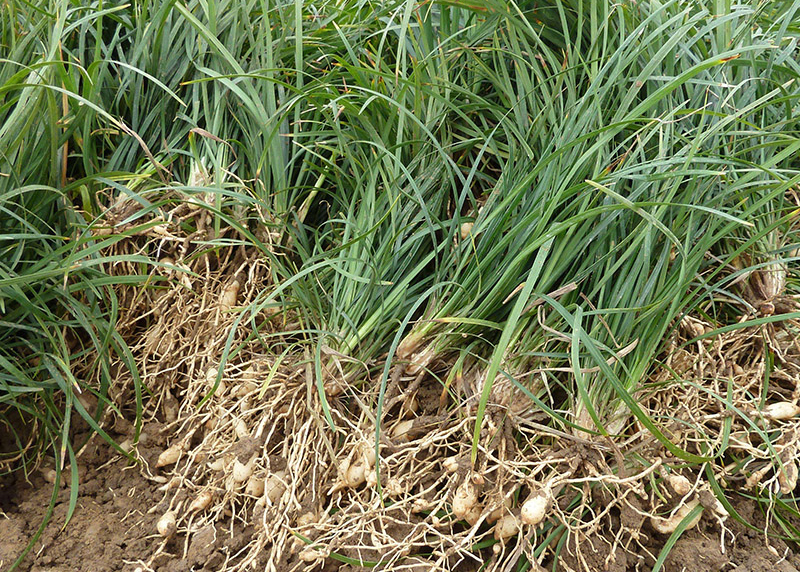
【Part used】: Dried root tuber of Ophiopogon japonicus (L.f.) KerGawl, a plant in the lily family.
【Specification】: 10:1, 20:1, 50:1 TLC
【Appearance】: Brownish yellow fine powder
【Particle size】: 95% pass 80 mesh size
Dwarf Lilyturf Tuber (Mai Men Dong) Extract Powder Production Flowchart
Dwarf Lilyturf Tuber (Mai Men Dong) raw materials – natural air drying–Coarse powder(40 mesh) -Low temperature water extraction – 1st Reflux Extraction(10 times water,2 Hrs) – 2nd Reflux Extraction8 times water,1.5 Hrs) – 3rd Reflux Extraction(6 times water,1 Hrs) – Extraction Solution-combine&Filtrate-Concentrate-Extractum-spray drying – screening – packaging – detection of physical and chemical indicators – warehousing
Specification Sheet of Dwarf Lilyturf Tuber (Mai Men Dong) Extract Powder
| Product name: | Mai Men Dong Extract | ||
| Specification: | 10:1 TLC | ||
| Part used: | Dried root tuber of Ophiopogon japonicus (L.f.) KerGawl | ||
| Solvent used: | Hot water | ||
| Process: | Raw materials crushed, extracted, concentrated and spray-dried to powder | ||
| Non GMO according to regulation (EC) 1829/2003 and 1830/2003 or United States requirements. Non allergen according to Directive 2007/68 amending Annex IIIa to Directive 2000/13/EC and US Food allergen labelling and consumer protection act 2004. | |||
| Heavy Metals: | |||
| Lead: | NMT 3ppm | Cadmium: | NMT 1ppm |
| Arsenic: | NMT 2ppm | Mercury: | NMT 1ppm |
| Residual solvents: | Comply to USP | ||
| Pesticides residues: | Conform to Regulation USP<561> | ||
| Microbiology: | |||
| Total plate count: | 10000cfu/g Max | Yeasts and molds: | 1000cfu/g Max |
| E.coli: | Not detected in (g)10 | Salmonella spp.: | Not detected in (g)25 |
| Staphylococcus aureus: | Not detected in (g)10 | Clostridium spp.: | Not Present in 0.1 g of food |
| Organoleptic quality | Method | Specifications | |
| Aspect: | Visual : ( CQ-MO-148) | Powder | |
| Color: | Visual : ( CQ-MO-148) | Brownish | |
| Flavor: | Sensory: (CQ-MO-148) | Characteristic | |
| Analytical quality | Method | Specifications | |
| Identification: | TLC | Conform | |
| Loss on drying: | USP <731> | < 10% | |
| Bulk density: | USP <616> Method I | 40 – 60 g/100mL | |
| Particle size: | Analytical sieving || USP <786> | 100% through 80meshes | |
| Packaging suitable for foodstuff. | |||
Extended Reading
Dwarf Lilyturf Tuber (Mai Men Dong) Function and Efficacy Recorded in TCM
Ophiopogon japonicus (usually abbreviated as Ophiopogon japonicus) is a very important nourishing yin and drying medicine in traditional Chinese medicine, especially good at nourishing the yin of the lungs, stomach, and heart. Its properties are sweet, moist, and slightly cold, with a clear and gentle effect, and it is known as the “superior product of sweet medicine for nourishing yin”.
1. Nourishing Yin and Moisturizing Lungs
Function: Nourish lung yin, eliminate lung heat, and lubricate lung dryness.
Application:
Yin deficiency and lung dryness syndrome: manifested as dry cough with less phlegm, difficulty in phlegm viscosity, or blood in phlegm, dry throat and nose, and hoarseness of voice. Often used interchangeably with sand ginseng, heavenly pollen, and mulberry leaves (such as in “Decoction of Glehnia and Ophiopogon”).
Long term cough caused by tuberculosis: often accompanied by ingredients such as aspartic acid and raw earth, to enhance the ability to nourish yin and moisten the lungs.
2. Nourish the stomach and generate fluids
Function: Nourish stomach yin, clear and reduce stomach fire, and promote the generation of body fluids.
Application:
Stomach Yin Deficiency Syndrome: manifested as dull pain in the epigastric region, hunger and lack of appetite, dry and thirsty mouth, dry vomiting and hiccups, dry stools, and red tongue with little coating. Often used together with sweet and cold products such as ginseng, jade bamboo, and raw earth (such as “Yiwei Tang”).
Diabetes (diabetes): It is used for the type of yin deficiency and internal heat. It is often used with trichosanthin, anemarrhena, coptis, etc.
3. Clearing the mind and eliminating troubles
Function: Nourish the heart yin, clear the deficiency heat of the heart meridian, and stabilize the mind and spirit.
Application:
Heart yin deficiency, deficiency fire disturbing the spirit: manifested as restlessness, insomnia, palpitations, easily startled, mouth and tongue sores, and night sweats during sleep. Often used interchangeably with raw earth, sour jujube kernels, and cypress kernels (such as in “Tian Wang Bu Xin Tang”).
4. Moisturize the intestines and promote bowel movements
Function: Nourish the yin of the lungs and stomach, indirectly moisturize the large intestine, and allow feces to pass.
Application:
Intestinal dryness and constipation: Especially suitable for constipation caused by Yin deficiency and fluid deficiency, often combined with Xuanshen and Shengdi, known as the famous “Zengye Tang”, which uses the method of “increasing water and rowing boats” to relieve constipation.
Modern Pharmacological Effects of Dwarf Lilyturf Tuber (Mai Men Dong)
The modern pharmacological research of Ophiopogon japonicus is very in-depth, and its extensive biological activities provide modern scientific basis for its traditional effects such as nourishing yin and moistening dryness, clearing the heart and eliminating annoyance, and promoting stomach and body fluids. The main active ingredients include Ophiopogon polysaccharides, steroidal saponins, flavonoids, amino acids, etc.
1.Protective effect on cardiovascular system
This is the most prominent and clear field in the pharmacological research of Ophiopogon japonicus.
Anti myocardial ischemia and improvement of cardiac function: Ophiopogon japonicus extract can dilate coronary arteries, increase coronary blood flow, combat myocardial ischemia, and improve electrocardiogram abnormalities. This provides a core pharmacological basis for the treatment of coronary heart disease and angina pectoris with Shengmai San.
Antiarrhythmic: It has significant preventive and therapeutic effects on various experimental arrhythmia models (such as aconitine and barium chloride induction), and can stabilize the electrical activity of myocardial cells.
Improving microcirculation and anti thrombosis: It can enhance capillary tension, improve microcirculation, and have a certain anti platelet aggregation effect.
Myocardial protection: Ophiopogon saponins and polysaccharides can alleviate the damage to myocardial cells caused by hypoxia/reperfusion, and have clear cellular protective effects.
2. Immune enhancement effect
Significantly enhance immune function: Ophiopogon polysaccharides are the main immune active ingredients.
Can enhance the phagocytic function of macrophages.
Promote the proliferation of splenic lymphocytes and enhance the specific immune function of the body.
Raise peripheral blood leukocyte count to counteract leukopenia caused by radiotherapy and chemotherapy.
Conclusion: This explains the role of Ophiopogon japonicus in the treatment of fatigue, chronic illness, and tumor adjuvant therapy, reflecting its “tonifying” aspect.
3.Hypoglycemia and its impact on metabolism
Clear hypoglycemic effect: It has hypoglycemic effect on normal and experimental diabetes animals. The mechanism may include:
Promote insulin secretion.
Increase hepatic glycogen synthesis.
Improve the utilization of glucose by peripheral tissues.
Protect pancreatic beta cells.
Anti fatigue and hypoxia tolerance: It can prolong the survival time of experimental animals in hypoxic environments and enhance their exercise endurance, which is related to the “qi boosting” effect of traditional Chinese medicine.
4.Respiratory system function
Coughing and expectorant: Ophiopogon decoction has a certain cough suppressing and respiratory mucus secretion promoting effect, which helps alleviate Yin deficiency and dry cough.
Anti inflammatory: can alleviate respiratory inflammatory reactions.
5.Other important pharmacological effects
Antioxidant and anti-aging effects: Ophiopogon saponins and polysaccharides can effectively eliminate free radicals, inhibit lipid peroxidation, protect cell membranes, and have clear antioxidant and anti-aging effects.
Antitumor and adjuvant chemotherapy:
Direct inhibitory effect: Some extracts have in vitro inhibitory activity against various cancer cells.
Reduce toxicity and increase efficiency: When used in combination with chemotherapy, it can alleviate the toxic side effects of chemotherapy drugs (such as doxorubicin) on the heart and enhance the body’s tolerance.
Sedative effect: Ophiopogon japonicus decoction has a central sedative effect and can synergize with the hypnotic effect of pentobarbital sodium, which is consistent with its traditional efficacy of “clearing the heart, eliminating annoyance, and calming the mind”.
Protecting gastric mucosa: Corresponding to its “beneficial to the stomach” effect, it has a protective effect on experimental gastric mucosal damage.