
Rhubarb (Da Huang) Extract Powder 10:1, 20:1, 50:1 TLC
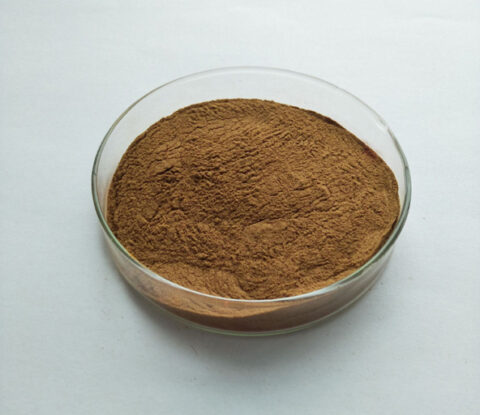


The functions of rhubarb in traditional Chinese medicine include purging and attacking accumulation, clearing heat and fire, cooling blood and detoxifying, removing blood stasis and promoting menstruation, and promoting dampness and reducing jaundice. Used for constipation caused by excessive heat accumulation, blood heat vomiting and bleeding, redness of the eyes and throat swelling, carbuncles and sores, abdominal pain caused by intestinal abscess, obstruction of blood stasis meridian, postpartum blood stasis, traumatic injury, damp heat dysentery, jaundice and red urine, gonorrhea, edema; External treatment for burns and scalds.

Rhubarb (Da Huang) Extract Powder 10:1, 20:1, 50:1 TLC
【Other names】: Da Huang, Radix et Rhizoma Rhei, Rhubarb, Chinese rhubarb
【Botanical source】: Rheum palmatum L, Rheum tanguticum Maxim. ex Balf, Rheum officinale Baill.
【Part used】: Dried roots and rhizomes of Polygonaceae plants Rheum palmatum L, Rheum tanguticum Maxim. ex Balf., or medicinal Rheum officinale Baill. At the end of autumn, when the stems and leaves wither or sprout in the following spring, dig them up, remove the fine roots, scrape off the outer skin, cut the petals or segments, and string them together to dry or directly dry.
【Specification】: 10:1, 20:1, 50:1 TLC
【Appearance】: Brownish yellow fine powder
【Particle size】: 95% pass 80 mesh size
Rhubarb (Da Huang) Extract Powder Production Flowchart
Rhubarb (Da Huang) raw materials – natural air drying–Coarse powder(40 mesh) -Low temperature water extraction – 1st Reflux Extraction(10 times water,2 Hrs) – 2nd Reflux Extraction8 times water,1.5 Hrs) – 3rd Reflux Extraction(6 times water,1 Hrs) – Extraction Solution-combine&Filtrate-Concentrate-Extractum-spray drying – screening – packaging – detection of physical and chemical indicators – warehousing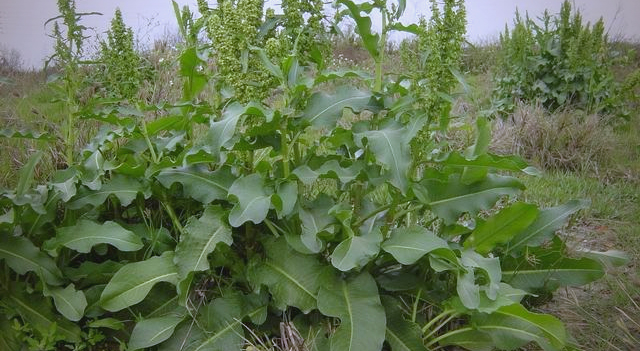
Specification Sheet of Rhubarb (Da Huang) Extract Powder
| Product name: | Da Huang Extract | ||
| Specification: | 10:1 TLC | ||
| Part used: | Dried roots of Rheum officinale Baill. | ||
| Solvent used: | Hot water | ||
| Process: | Raw materials crushed, extracted, concentrated and spray-dried to powder | ||
| Non GMO according to regulation (EC) 1829/2003 and 1830/2003 or United States requirements. Non allergen according to Directive 2007/68 amending Annex IIIa to Directive 2000/13/EC and US Food allergen labelling and consumer protection act 2004. | |||
| Heavy Metals: | |||
| Lead: | NMT 3ppm | Cadmium: | NMT 1ppm |
| Arsenic: | NMT 2ppm | Mercury: | NMT 1ppm |
| Residual solvents: | Comply to USP | ||
| Pesticides residues: | Conform to Regulation USP<561> | ||
| Microbiology: | |||
| Total plate count: | 10000cfu/g Max | Yeasts and molds: | 1000cfu/g Max |
| E.coli: | Not detected in (g)10 | Salmonella spp.: | Not detected in (g)25 |
| Staphylococcus aureus: | Not detected in (g)10 | Clostridium spp.: | Not Present in 0.1 g of food |
| Organoleptic quality | Method | Specifications | |
| Aspect: | Visual : ( CQ-MO-148) | Powder | |
| Color: | Visual : ( CQ-MO-148) | Brownish | |
| Flavor: | Sensory: (CQ-MO-148) | Characteristic | |
| Analytical quality | Method | Specifications | |
| Identification: | TLC | Conform | |
| Loss on drying: | USP <731> | < 10% | |
| Bulk density: | USP <616> Method I | 40 – 60 g/100mL | |
| Particle size: | Analytical sieving || USP <786> | 100% through 80meshes | |
| Packaging suitable for foodstuff. | |||
Extended Reading
Rhubarb (Da Huang) Function and Efficacy Recorded in TCM
Rhubarb is a highly distinctive and important medicine in traditional Chinese medicine, with strong and potent properties, and is known as the “general”. Its function is rapid, adept at attacking accumulation, guiding stagnation, purging fire, and detoxifying, forming a sharp contrast with the mild nourishing jujube. The following is a detailed explanation of the traditional Chinese medicine effects of rhubarb:
The core functions of rhubarb can be summarized as “attacking, purging fire, promoting blood circulation, and dispelling dampness”.
1. Purging and attacking accumulation
Meaning: By stimulating the intestines, it strongly promotes bowel movements and clears accumulated stool and food waste in the intestines.
Characteristic: Strong laxative effect. Used raw and taken after frying, it has strong diarrhea ability; If brewed with alcohol or fried for a long time, the diarrhea will be weakened and the blood activating effect will be enhanced.
Application: Used to treat constipation caused by excess heat accumulation, with symptoms such as dry stools, several days of obstruction, abdominal distension and pain, refusal to press, persistent high fever, and thick yellow tongue coating. This is the most classic application of rhubarb.
2. Clearing heat and purging fire
Meaning: By purging and promoting bowel movements, the pathogenic heat of the upper burner and head and face is guided to emerge from the stool, reflecting the thinking of “treating upper diseases and lower diseases”.
Application: Used to treat diseases caused by excessive internal heat, such as:
Red and swollen eyes, sore throat, and mouth sores.
High fever, dizziness, delirium, and madness.
The famous Liangge San utilizes the characteristic of rhubarb to clear the heat of the chest and diaphragm.
3. Cooling blood to stop bleeding
Meaning: Clearing the heat evil in the blood, thereby treating bleeding caused by excessive blood heat.
Application: Used for vomiting blood, epistaxis (nosebleeds), hemoptysis, rectal bleeding, etc. caused by blood heat. Rhubarb can not only stop bleeding, but also remove blood stasis, allowing for hemostasis without leaving any blood stasis, which is its advantage.
4. Promote blood circulation and remove blood stasis
Meaning: Breaking and dispersing blood stasis, unblocking meridians.
Application: Used for treating various blood stasis syndromes.
Postpartum blood stasis, abdominal pain, and incomplete lochia in women.
Injuries from falls and bruises, swelling and pain.
Accumulation of pathological conditions (lumps in the body).
Classic Taohe Chengqi Tang and Dahuang Jiechong Wan both use rhubarb to promote blood circulation and break blood stasis.
5. Relieve dampness and reduce yellowing
Meaning: Clear away dampness and heat, alleviate jaundice.
Application: Mainly used to treat jaundice caused by damp heat in the liver and gallbladder, such as acute hepatitis, cholecystitis, etc. The representative formula is Yin Chen Hao Tang, in which rhubarb is combined with Yin Chen and Zhi Zi to guide the dissipation of dampness and heat from the two bowels.
Modern Pharmacological Effects of Rhubarb (Da Huang)
The modern pharmacological research on rhubarb is very in-depth, and its powerful traditional effects are backed by solid scientific evidence. The pharmacological activity of rhubarb mainly comes from its anthraquinone derivatives (such as senoside, emodin, etc.), tannins, phenylbutanone, polysaccharides, and other components. The following are the main modern pharmacological effects of rhubarb:
1.The effect on the digestive system (confirming the concept of “diarrhea and accumulation”)
Diarrhea effect:
Mechanism: This is the most famous function of rhubarb. The components of its senna glycosides are metabolized by bacteria in the large intestine into the active form of rhein anthrone, which stimulates the intestinal wall nerve plexus, promotes colonic peristalsis, and inhibits the absorption of water and electrolytes in the intestinal lumen, thereby producing a strong laxative effect.
Characteristics: The main site of action is in the colon, and it takes effect 6-10 hours after taking the medication to expel soft stool. This is completely consistent with the use of traditional Chinese medicine to treat constipation caused by accumulation of excess heat.
Gallbladder and hepatoprotective effects:
Mechanism: Rhubarb can promote bile secretion, relax the sphincter muscle of Oedipus, thereby promoting bile flow and reducing jaundice. At the same time, it has a protective effect on various liver injury models, can reduce liver cell necrosis and degeneration, and lower transaminase levels.
Corresponding: This provides a basis for traditional Chinese medicine to treat jaundice caused by “damp heat in the liver and gallbladder” (such as Yin Chen Hao Tang).
Anti ulcer and protection of gastrointestinal mucosa:
Mechanism: Although seemingly contradictory, rhubarb does have anti ulcer effects. Its tannins and other components can reduce gastric acid secretion, decrease gastric protease activity, and promote gastric mucosal formation, thus having therapeutic and preventive effects on experimental gastric ulcers.
Explanation: This reflects the bidirectional regulation and complexity of traditional Chinese medicine, where small doses or different components may exert protective effects opposite to diarrhea.
2.The effect on the urinary system (confirming the principle of “clearing the bowels and promoting diuresis”)
Diuretics and improvement of renal function:
Mechanism: Rhubarb can improve renal hemodynamics, inhibit the proliferation of glomerular mesangial cells, and delay the progression of chronic renal failure. Its diuretic effect is related to its inhibition of Na ⁺, K ⁺ – ATPase in renal tubular epithelial cells.
Application: Rhubarb preparations (such as oral administration or enema) are widely used in modern Chinese medicine and integrated traditional Chinese and Western medicine to treat chronic renal failure, by clearing the organs and reducing blood urea nitrogen and creatinine levels.
3. The effect on the blood system (confirming the principle of “cooling blood and promoting blood circulation”)
Hemostatic effect:
Mechanism: Tannins in rhubarb can converge and stop bleeding; Its anthraquinone components can promote platelet adhesion and aggregation, increase fibrinogen content, and shorten clotting time.
Characteristics: Rhubarb can stop bleeding without leaving blood stasis, and has a good effect on upper and lower gastrointestinal bleeding, which complements its “blood activating” effect.
Improving blood rheology:
Mechanism: Rhubarb can reduce blood viscosity, improve microcirculation, and inhibit platelet aggregation. This is highly consistent with its effectiveness in promoting blood circulation and removing blood stasis, and can be used to treat blood stasis syndrome.
4. Anti inflammatory and anti pathogenic microbial effects (confirming “clearing heat, purging fire, and detoxifying”)
Broad spectrum antibacterial: Rhubarb has inhibitory effects on various bacteria (such as Staphylococcus, Streptococcus, Shigella), fungi, and viruses (such as influenza virus).
Anti inflammatory effect: Emodin can inhibit the production and release of inflammatory mediators (such as tumor necrosis factor – α, interleukin-1, etc.), and alleviate inflammatory reactions.
Correspondence: This scientifically explains why rhubarb can treat infectious diseases caused by “excess heat and toxin”, such as carbuncle, carbuncle (appendicitis), dysentery, etc.
5. Antitumor effect
Mechanism: Emodin, rhein and other components have been proven to have anti-tumor activity. They can inhibit the proliferation of tumor cells, induce apoptosis (programmed cell death), suppress tumor angiogenesis, and enhance the sensitivity of chemotherapy drugs.
Research: In vitro and animal experiments, it has inhibitory effect on many cancer cell lines, such as liver cancer, gastric cancer, pancreatic cancer, leukemia, etc.
6. Regulating immune function
Mechanism: Rhubarb has a bidirectional regulatory effect on the immune system. On the one hand, it can inhibit overactive immune responses (such as suppressing humoral immunity); On the other hand, its polysaccharide components can enhance non-specific immune function.
Application: This makes it have research potential in the treatment of autoimmune diseases and organ transplant rejection.
7. Antioxidant and anti-aging effects
Mechanism: Ingredients such as emodin and emodin have the ability to scavenge free radicals and resist lipid peroxidation.